Flashcards
French month and season words: 24 contextual cards
Recall twelve French months, four seasons and eight date phrases with 24 cards. Use en or au and plan events at the start or end of a month.
- A1
- 24 cards
- With example sentences
- Nothing is saved
- Learn this in the A1 notebook →
In short
Use en with month names: en janvier, en août. For seasons, use au printemps but en été, en automne, en hiver. Month and season names stay lower-case. The 24 cards also help you distinguish ce mois-ci from le mois prochain.
Yellow the idea to rememberBlue French to learn
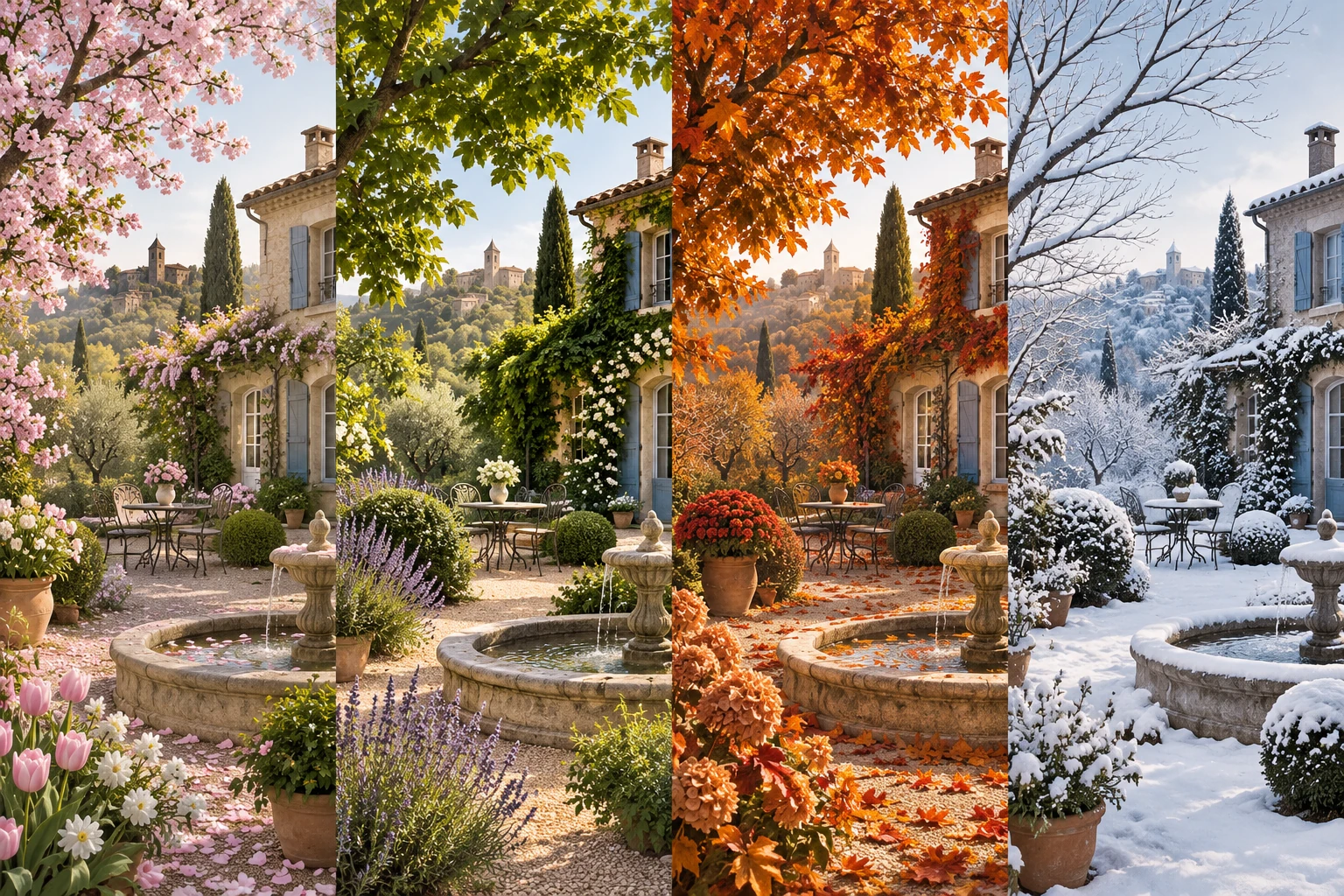
A calendar becomes useful when the words connect to a real plan. The first twelve cards give months with event examples. The next four give seasons with their normal prepositions. The final eight locate an event within a month, year or stated date range.
The whole deck
All 24 cards, with an example each
Twelve months
- janvierJanuaryMon examen est en janvier.
- févrierFebruaryNous réservons la salle en février.
- marsMarchLe stage commence en mars.
- avrilAprilJe visite ma sœur en avril.
- maiMayNotre voyage est en mai.
- juinJuneLa fête du groupe est en juin.
- juilletJulyJe travaille au musée en juillet.
- aoûtAugustMes cousins arrivent en août.
- septembreSeptemberLes cours reprennent en septembre.
- octobreOctoberL’atelier de photo commence en octobre.
- novembreNovemberLe concert est en novembre.
- décembreDecemberNous préparons une rencontre en décembre.
Four seasons
- le printempsspringAu printemps, nous organisons un pique-nique.
- l’étésummerEn été, je participe à un stage.
- l’automneautumnEn automne, le club accueille les nouveaux membres.
- l’hiverwinterEn hiver, nous nous retrouvons à la bibliothèque.
Eight planning phrases
- au début du moisat the beginning of the monthLe loyer est à payer au début du mois.
- à la fin du moisat the end of the monthLa visite est à la fin du mois.
- ce mois-cithis monthNous avons deux ateliers ce mois-ci.
- le mois prochainnext monthLe nouveau cours commence le mois prochain.
- cette annéethis yearCette année, j’apprends le français.
- l’année prochainenext yearJe veux voyager l’année prochaine.
- à partir de lundifrom Monday onwardsLes inscriptions sont ouvertes à partir de lundi.
- jusqu’à vendrediuntil FridayJe suis à Paris jusqu’à vendredi.
Keep the preposition with the time word
| Pattern | Example |
|---|---|
| en + month | en février |
| au + printemps | au printemps |
| en + other season | en automne |
| à la fin de + month | à la fin de juin |
Printemps is the season that uses au in the basic season expression. The cards show en with the other three seasons. To be more precise than a month name, add au début de or à la fin de: au début de septembre, à la fin de novembre. These phrases identify part of the month without giving a numbered date.
This month and next month move with today
Ce mois-ci names the month containing the reference day. Le mois prochain names the following month. In December, next month is January of the following year. The month name and year may therefore both change at that boundary. When arranging something important, an exact date can make a relative phrase clearer.
For active recall, choose three real plans and place each one in a month or season. Then add one detail from the final group, such as au début du mois or jusqu’à vendredi. This turns the cards into short scheduling sentences rather than a list recited in order.