Gap-fill
Relative où in French: the place where, the day when
Use où for places and moments during a flat viewing. Explore six places, compare où with que, then complete a moving-day story.
- A2
- 6 gaps
- Translation included
- Learn this in the A2 notebook →
In short
Relative où means “where” after a named place and “when” after a named time: la ville où j’habite, le jour où je déménage. Keep the accent: ou means “or”. Choose où when the clause tells you what happens there or then.
Yellow the idea to rememberBlue French to learnRed watch out
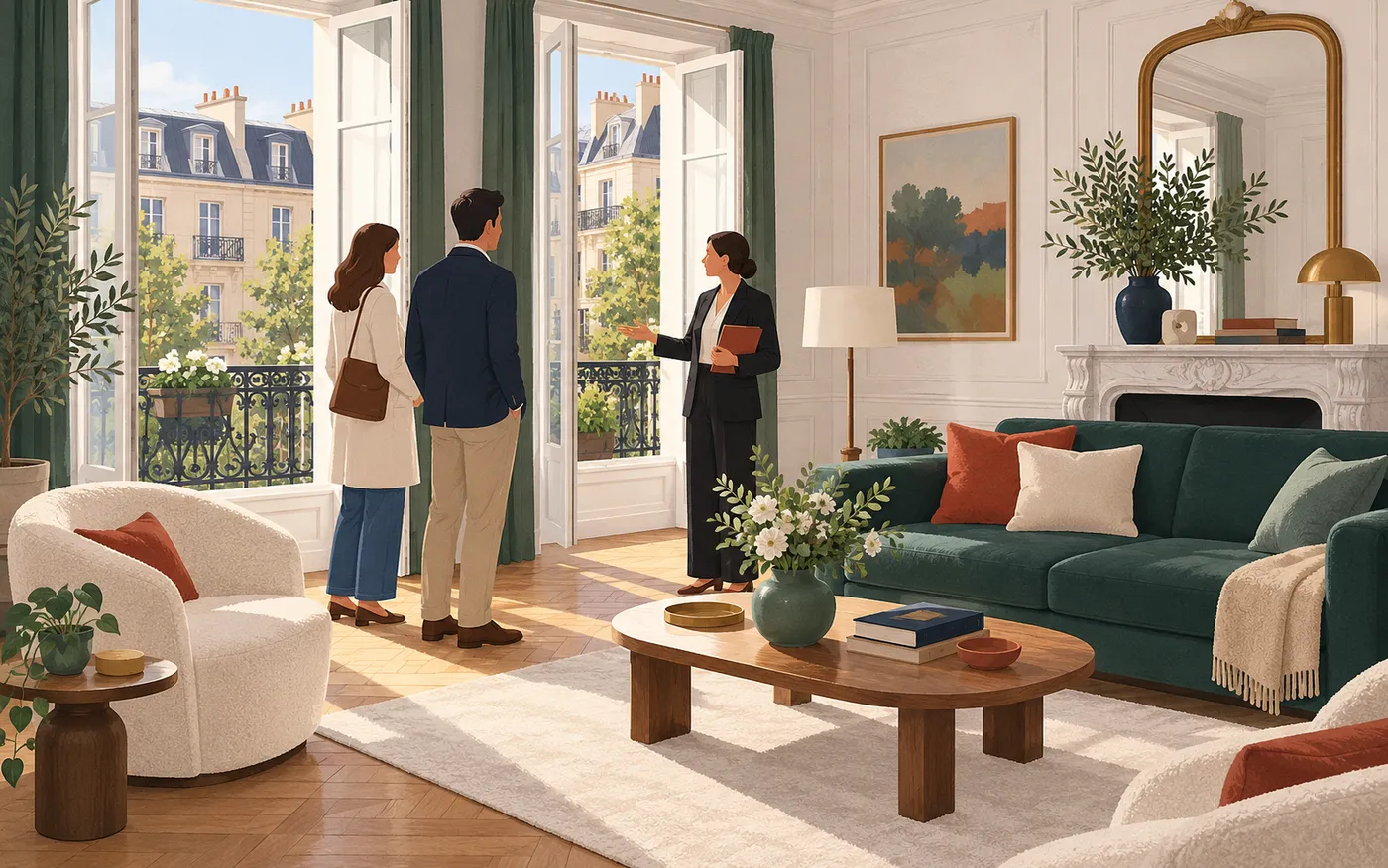
A flat viewing: where does each activity happen?
Find:
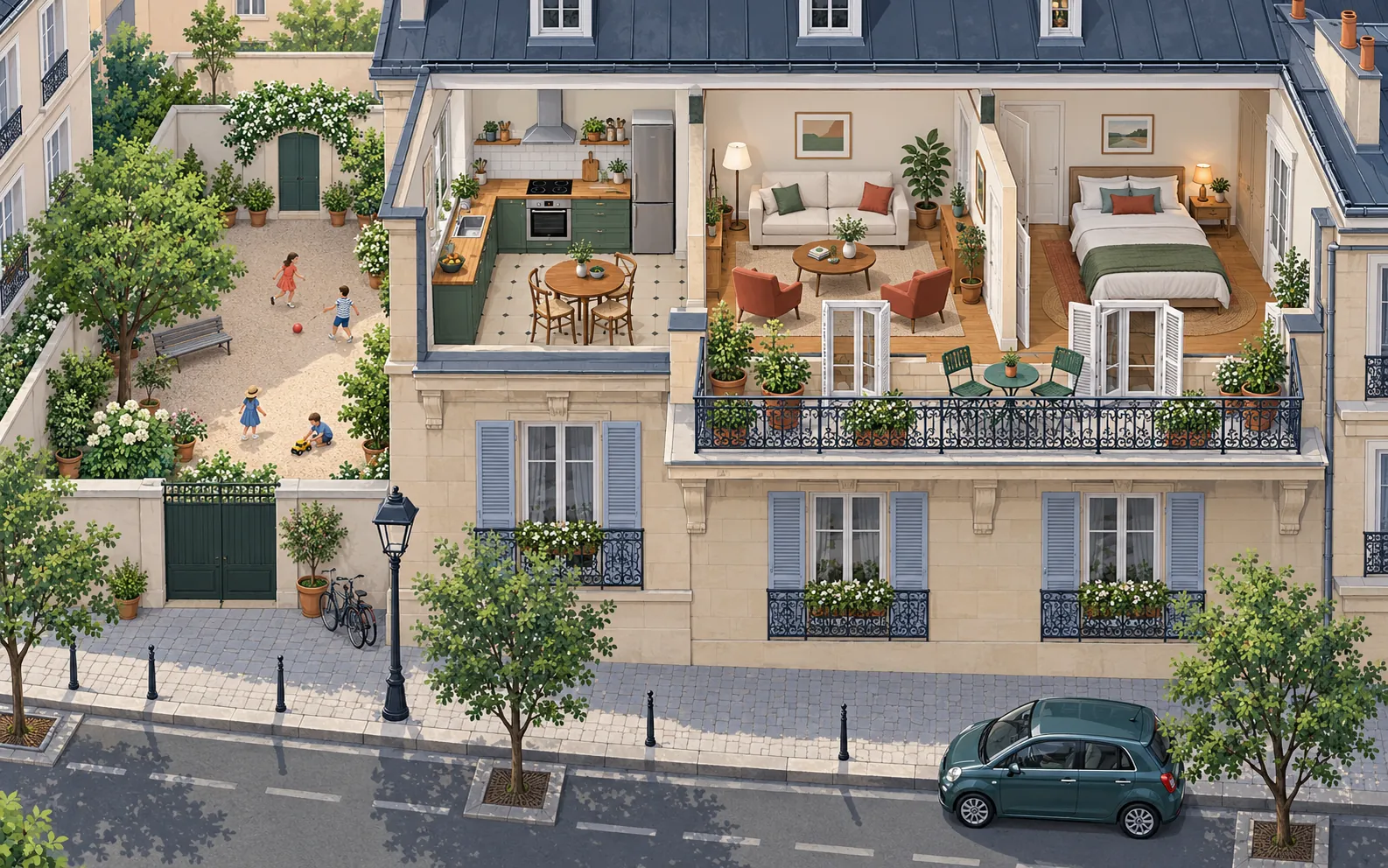
When do you use où as a relative pronoun?
| French | English | Role |
|---|---|---|
| la maison où nous habitons | the house where we live | We live in the house: location. |
| la maison que nous visitons | the house we are visiting | We visit the house: direct object. |
| la maison qui coûte trop cher | the house that costs too much | The house costs too much: subject. |
A place name alone cannot choose the pronoun. Compare Nous habitons dans cette maison with Nous visitons cette maison. The first gives où; the second gives que. With où, leave out a second location pronoun: la maison où nous habitons, with no extra y.
Can où refer to a time in French?
Je me souviens du jour où nous avons signé le bail.
I remember the day when we signed the lease.
The relative identifies the day of signing. English can leave out “when”; French keeps où here.
| French | English |
|---|---|
| le jour où tout commence | the day when everything starts |
| la semaine où nous déménageons | the week when we move |
| l’année où nous avons quitté Lyon | the year when we left Lyon |
Complete the story with où, que, qui or ou. A room can be a location, a subject or an object; the gap’s role decides.
Enfin chez nous
Voici l’appartement (direct object of visiter) nous visitons aujourd’hui. Le salon, (subject of donner) donne sur la cour, est très calme. C’est la pièce (place of lire) je voudrais lire le soir.
Je me souviens du jour (the day when) nous avons vu l’annonce. Nous cherchions un appartement avec un balcon (an alternative) une terrasse. Maintenant, nous attendons le moment (the moment when) nous pourrons emménager.
Read it in English
Here is the flat we are visiting today. The living room, which overlooks the courtyard, is very quiet. It is the room where I would like to read in the evening.
I remember the day when we saw the advert. We were looking for a flat with a balcony or a terrace. Now we are waiting for the moment when we can move in.