Sorting game
Je me prépare or je prépare: getting ready versus preparing something
Sort je me prépare and je prépare in French. Distinguish getting yourself ready from preparing breakfast, clothes or a bag with clear object clues.
- A1
- 10 words to sort
- 2 boxes
- Tap to play
- Learn this in the A1 notebook →
In short
Je me prépare means “I’m getting ready”. Je prépare mon sac means “I’m preparing my bag”: the action has a named object. In the examples here, se préparer describes the person getting ready, while préparer describes getting a thing or meal ready.
Yellow the idea to rememberBlue French to learn
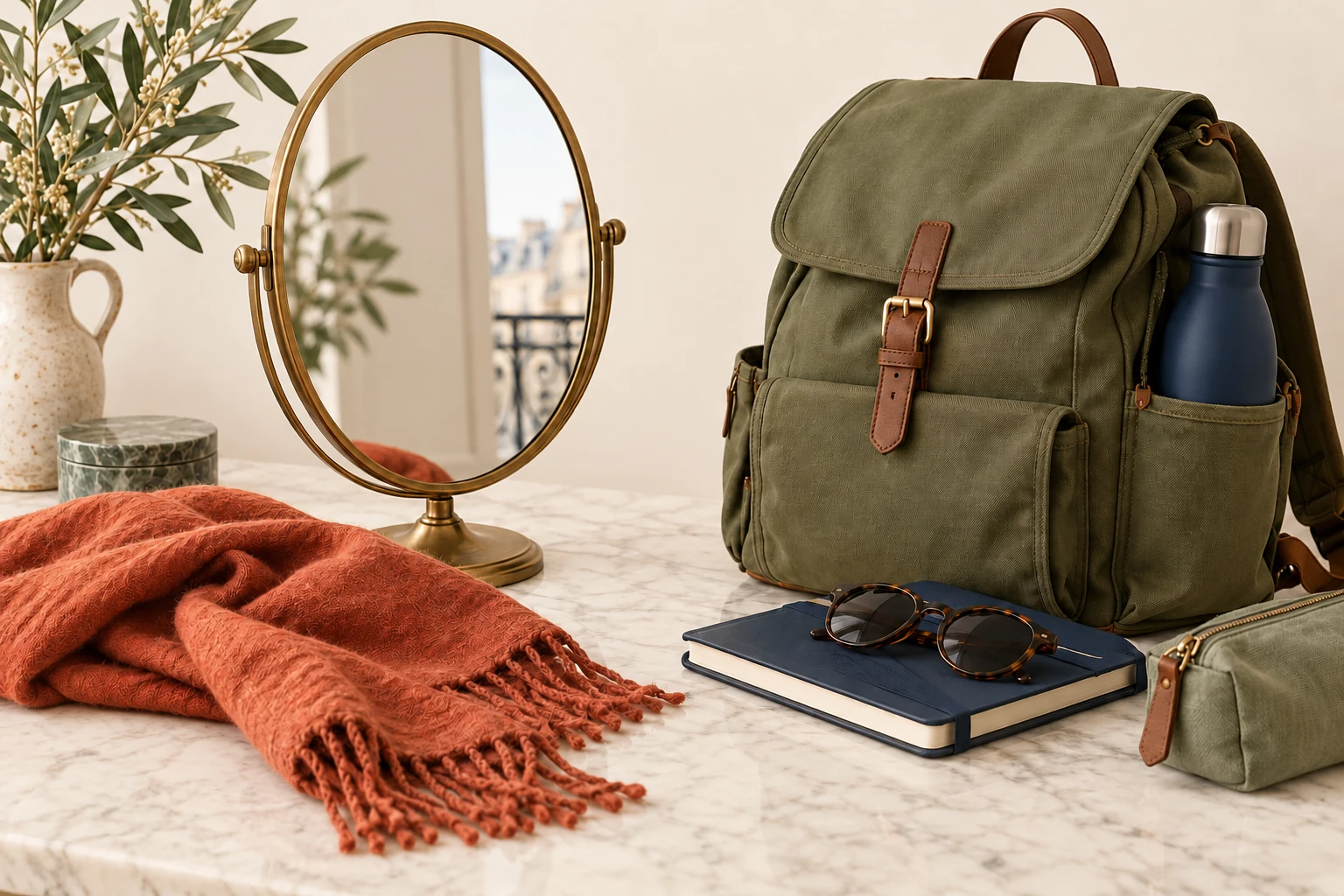
Before leaving home, you can get yourself ready and prepare something else. The two actions may happen in the same morning, but their sentence structures differ. Look for the reflexive pronoun me, te, se, nous or vous. Then look for a direct object such as mon sac or le petit déjeuner.
Je me prépare pour le cours.I’m getting ready for class.
Focus: The person gets ready
Elle se prépare pour sortir.
She is getting ready to go out.
Je prépare mon sac pour le cours.I’m preparing my bag for class.
Focus: A named object gets prepared
Elle prépare le petit déjeuner.
She is preparing breakfast.
Tap a word, then the box it belongs in.
Keep both nous and both vous when needed
Nous nous préparons contains a subject nous followed by a reflexive nous. They are not a repeated word to delete. Nous préparons un repas has only the subject nous because the object is un repas. The same contrast appears in vous vous préparez and vous préparez la table.
Je me prépare, puis je prépare mon sac.
I get ready, then I prepare my bag.
The sentence describes two actions in sequence. The first prepares the speaker; the second prepares the bag. Both verbs use the present je form prépare, so the visible difference is me and the named object. The tense alone cannot distinguish their meanings.
Read the whole construction
French can also use a reflexive pronoun to mean preparing something for oneself: Je me prépare un café means I’m making myself a coffee. The direct object un café changes the reading. The sorting cards keep that additional construction separate: each getting-ready card has no direct object, and each object-preparation card names what is being prepared. Look beyond me alone when reading a new sentence.