Quiz

À rebours de: against a trend or literally backwards?

Read à rebours de in eight French contexts contrasting a trend, expectation or interpretation, alongside literal backwards movement.

In short

À rebours de + noun means contrary to a named trend, expectation or view. À rebours de cette idée challenges an idea. In a physical context, tourner à rebours can mean to turn backwards. Find the reference point before choosing the paraphrase.

Yellow the idea to rememberBlue French to learn
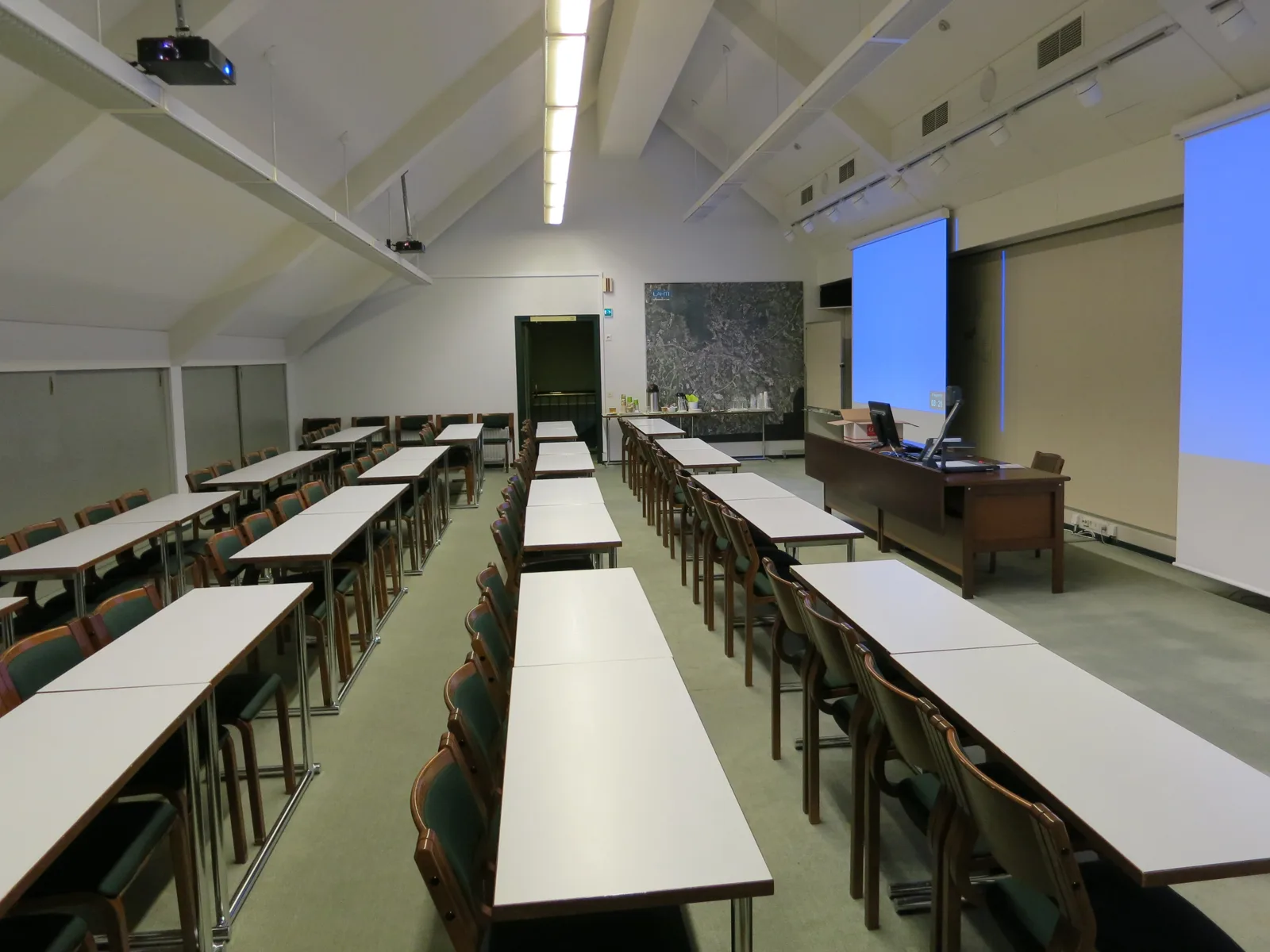
Rows of desks and chairs face screens in Lahti City Hall’s attic meeting room.
The meeting examples compare a decision with a stated trend or expectation; the reference point must remain identifiable. Photo: Trogain / Wikimedia Commons · CC BY-SA 4.0 · https://creativecommons.org/licenses/by-sa/4.0/ · resized and converted to WebP; derivative under the same licence.

The expression has a direction metaphor. A trend or usual interpretation supplies one direction, and the described action or view goes against it. The formal phrase does not merely mean that something is unusual or that it happens occasionally. State what it runs counter to.

ContextReading
À rebours de la tendance, les inscriptions augmentent ici.Against the trend: registrations rise here.
À rebours des attentes, la proposition échoue.Contrary to expectations: the proposal fails.
Le mécanisme tourne à rebours.Literal backwards turning.

A useful paraphrase of the abstract construction is contrairement à or à l’encontre de, adjusted to the sentence. Preserve the actual reference noun. If the contrast concerns one newspaper’s interpretation, do not expand it to “against everything everyone believes”.

  1. Question 1No account needed
    “À rebours de la tendance nationale, ce centre conserve un accueil sans rendez-vous.” What is the reference point?

    Choose one answer.

    Answer and explanation

    The national trend. The de-phrase names the trend against which this centre’s practice is contrasted.

  2. Question 2No account needed
    Which paraphrase preserves the first example?

    Choose one answer.

    Answer and explanation

    Contrairement à la tendance. À rebours de marks a contrary direction in relation to the named trend.

  3. Question 3No account needed
    “Le mécanisme tourne à rebours.” Which reading fits this explicit machine context?

    Choose one answer.

    Answer and explanation

    The mechanism turns backwards.. Here the motion is literal and no abstract de-complement is supplied.

  4. Question 4No account needed
    “À rebours des attentes, les inscriptions ont diminué.” What happened?

    Choose one answer.

    Answer and explanation

    The decline differs from what had been expected.. The sentence contrasts the decline with the expectations named.

  5. Question 5No account needed
    “Cette lecture va à rebours de l’interprétation habituelle.” What is contrasted?

    Choose one answer.

    Answer and explanation

    A reading and the usual interpretation. The phrase concerns an intellectual interpretation rather than literal movement.

  6. Question 6No account needed
    Which sentence lacks a clear reference for the abstract contrast?

    Choose one answer.

    Answer and explanation

    À rebours, ce choix est différent.. An abstract “against” relation needs a recoverable trend, expectation or idea.

  7. Question 7No account needed
    Does à rebours de prove the new view is correct?

    Choose one answer.

    Answer and explanation

    No, it states a relation to a reference view.. Contrary direction does not establish the evidence for either view.

  8. Question 8No account needed
    Which preposition belongs before the named trend?

    Choose one answer.

    Answer and explanation

    à rebours de cette tendance. The expression takes de before its reference noun phrase.

Opposition is not a verdict

An author can write à rebours de l’idée reçue before a well-supported correction or before an unsupported assertion. The expression tells you that a received view is being challenged, not that the challenge succeeds. Continue by reading the evidence and the scope of the competing claims.