Gap-fill
A1 French gap-fill: a rainy day becomes a drawing afternoon
Fill ten verb gaps in a rainy-day change of plan. Practise present preferences and aller plus infinitive as friends move from an outdoor outing to drawing.
- A1
- 10 gaps
- Translation included
- Learn this in the A1 notebook →
In short
The present describes the situation now; aller + infinitive announces the next plan. Il pleut says it is raining. Nous allons dessiner says we are going to draw. In the gaps, conjugate the verb named in the hint and keep the following infinitive unchanged.
Yellow the idea to rememberBlue French to learn
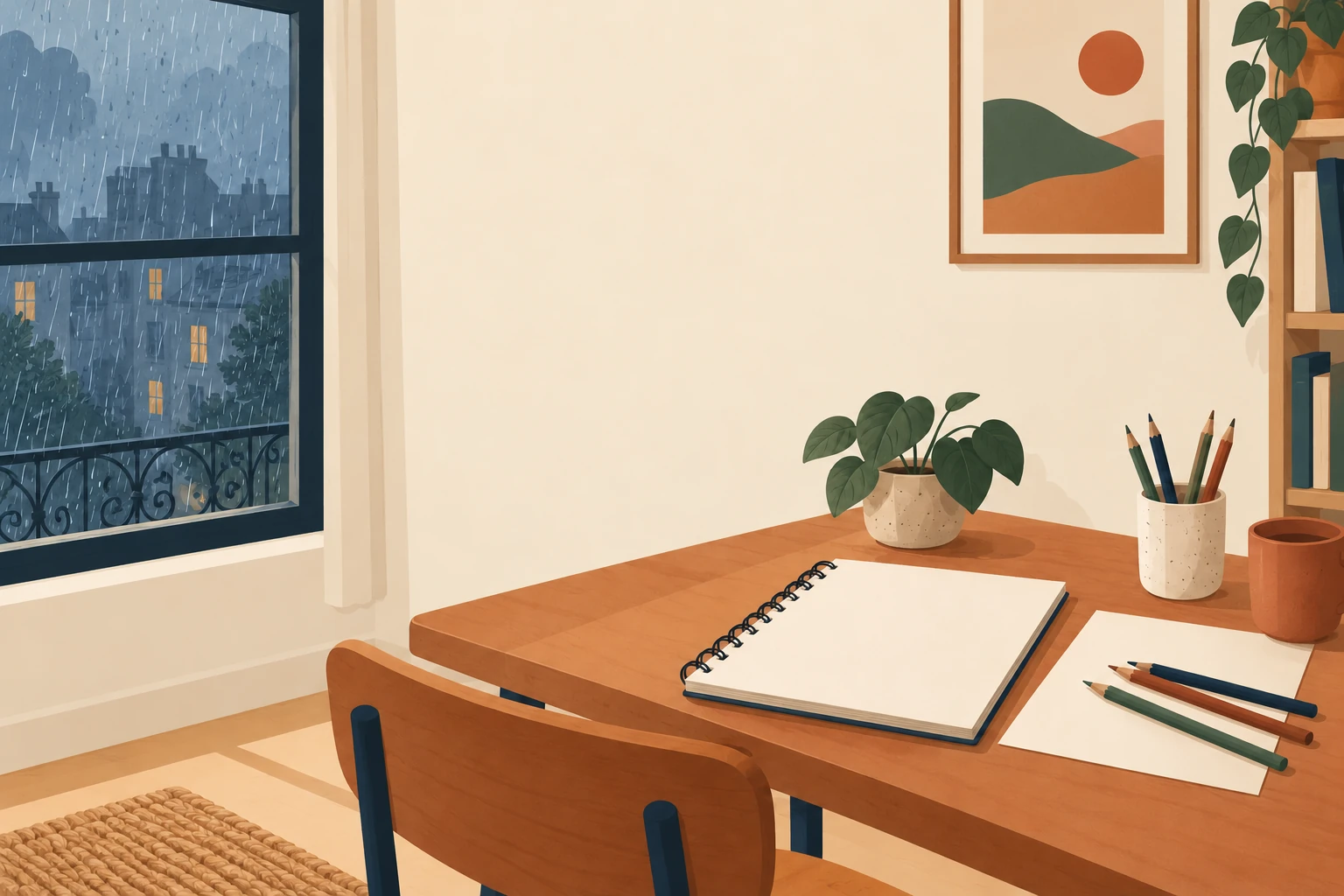
Camille and Léa planned an outdoor afternoon, but the weather changes their choice. The story now stays indoors. Each hint names the verb, subject and tense, so you can focus on the required form rather than guessing among different plausible actions. There are ten gaps.
Un après-midi avec du papier et des crayons
Il est quatorze heures. Camille regarde par la fenêtre : il (pleuvoir, present, il) beaucoup. Les deux amies veulent observer les oiseaux dans le parc, mais Léa (préférer, present, elle) rester au sec. Camille (aimer, present, elle) aussi les activités calmes. « Nous (aller, present, nous) dessiner ici », propose-t-elle. Léa accepte avec plaisir.
Camille cherche du papier dans son placard. Elle trouve un grand carnet et le pose sur la table. « Je (aller, present, je) prendre mes crayons », dit Léa. Elle ouvre son sac. Elle (avoir, present, elle) des crayons de plusieurs couleurs, mais une seule gomme. Les deux amies peuvent la partager. Camille (mettre, present, elle) une petite plante au milieu de la table. Elles (aller, present, elles) dessiner ses feuilles.
Léa observe la plante puis commence son dessin. Camille (regarder, present, elle) la forme du pot. Elles parlent doucement et choisissent leurs couleurs. Dehors, la pluie continue, mais l’après-midi est agréable. « La prochaine fois, nous (aller, present, nous) dessiner les oiseaux », dit Camille. Pour aujourd’hui, la plante est un bon modèle.
Read it in English
It is two o’clock. Camille looks through the window: it is raining heavily. The two friends want to watch birds in the park, but Léa prefers to stay dry. Camille also likes quiet activities. “We are going to draw here,” she suggests. Léa happily agrees.
Camille looks for paper in her cupboard. She finds a large sketchbook and puts it on the table. “I’m going to get my pencils,” says Léa. She opens her bag. She has pencils in several colours, but only one eraser. The two friends can share it. Camille puts a small plant in the middle of the table. They are going to draw its leaves.
Léa observes the plant and then begins her drawing. Camille looks at the shape of the pot. They talk quietly and choose their colours. Outside, the rain continues, but the afternoon is pleasant. “Next time, we are going to draw the birds,” says Camille. For today, the plant is a good model.
Conjugate aller and leave the action in the infinitive
| Subject | Aller | Planned action |
|---|---|---|
| Je | vais | prendre mes crayons |
| Nous | allons | dessiner ici |
| Elles | vont | dessiner ses feuilles |
The conjugated word changes with the subject: je vais, nous allons, elles vont. The second verb stays in the infinitive, such as prendre or dessiner. In elle regarde, there is only one verb and it is already conjugated in the present. Keep those two sentence patterns separate.
The changed plan keeps the shared hobby while adapting the setting. To describe a similar change, state the present reason first and the new action second: Il pleut. Nous allons rester à la maison. Each sentence gives one clear piece of information.