Graded story

A1 French reading: the passenger brings the map

Read an A1 French day-trip story with three named adults. Track the driver, the passenger with the map and the friend waiting with lunch.

In short

Malik drives, Ana brings the map and gives directions, and Julie waits at the museum with lunch. Follow the explicit names and actions. Being a passenger does not stop Ana from helping with the route; driving and navigating are separate roles in this story.

Yellow the idea to rememberBlue French to learn

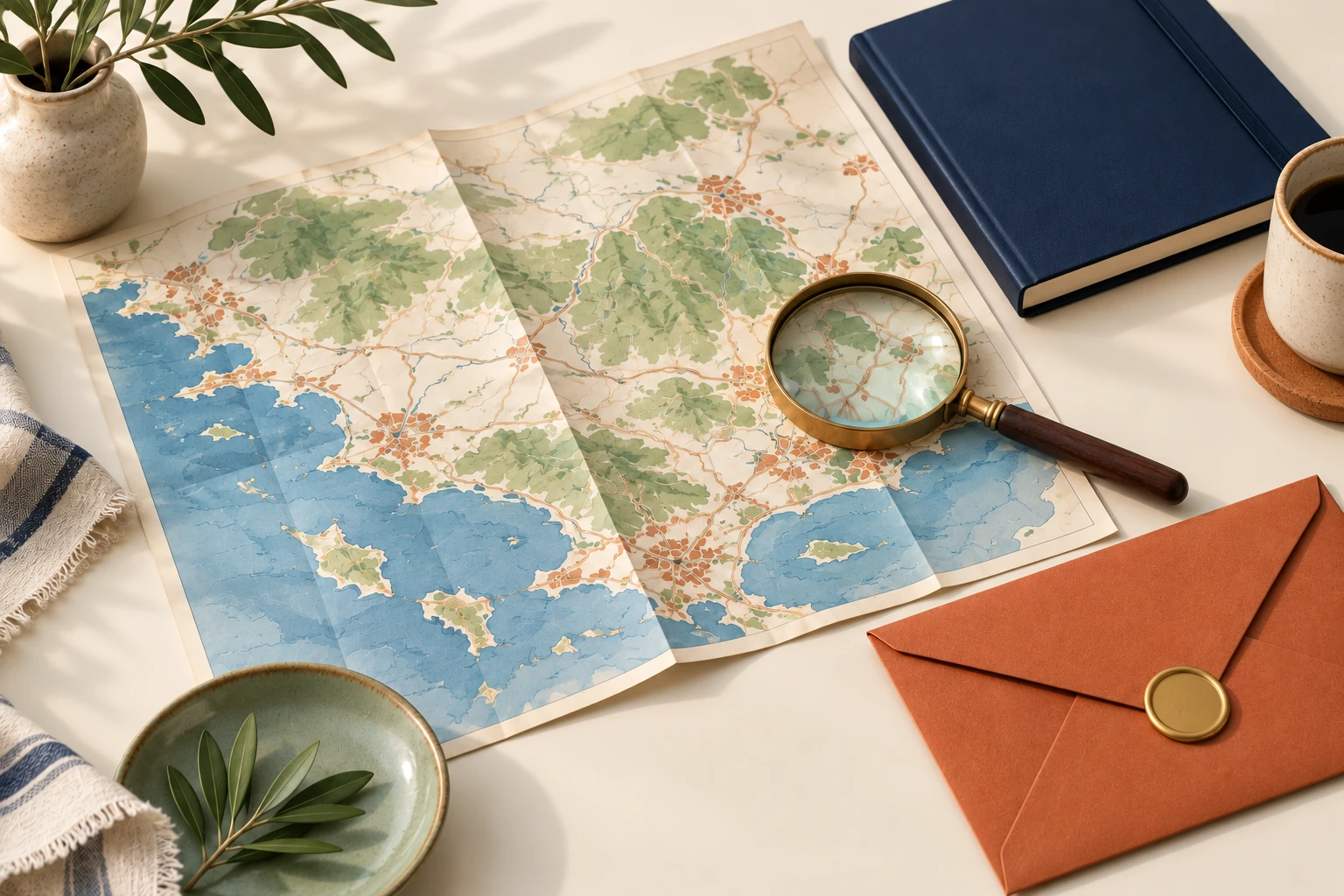
An illustrated road map lies beside a magnifying glass, a blue notebook and a closed envelope.
Ana uses a map to follow the route. The story supplies the crossroads, bridge and museum; the illustration introduces the object une carte. Illustration: Atelier

Three adults meet for a day out, but they do not all travel in the same car. Read for each person’s task first. Then follow the place clues that lead Malik and Ana to Julie.

A1 · Three people, three clear roles

La carte sur les genoux

Ce matin, Malik et Ana préparent une sortie à la campagne. Malik va conduire sa voiture. Ana est passagère1. Leur amie Julie va les retrouver devant le petit musée du village à onze heures. Avant le départ2, Ana prend une grande carte et la pose sur ses genoux.

Malik regarde la route. Ana regarde la carte3. « Au prochain carrefour, tu vas tourner à droite », dit-elle. Malik suit son indication. La voiture passe devant une ferme, puis elle arrive près d’un pont. Ana trouve le pont sur la carte. « Nous sommes ici. Le village est tout près. »

Julie envoie un message. Elle est déjà devant le musée, avec trois sandwichs dans son sac. Ana répond : « Nous arrivons dans dix minutes. Malik conduit et moi, je regarde la carte. » Puis Ana range son téléphone. Elle continue à donner des indications4 à Malik.

À onze heures, Malik gare la voiture sur la petite place. Julie les attend près de l’entrée5 du musée. « Qui apporte la carte ? », demande-t-elle. Ana la montre. « C’est moi ! Et Malik conduit. » Julie sourit et ouvre son sac. « Parfait. Moi, j’apporte le déjeuner6. »

Read it in English

This morning, Malik and Ana prepare a trip to the countryside. Malik is going to drive his car. Ana is a passenger. Their friend Julie is going to meet them in front of the village’s small museum at eleven. Before departure, Ana takes a large map and puts it on her lap.

Malik watches the road. Ana looks at the map. “At the next crossroads, you’re going to turn right,” she says. Malik follows her direction. The car passes a farm, then reaches a bridge. Ana finds the bridge on the map. “We’re here. The village is very close.”

Julie sends a message. She is already in front of the museum, with three sandwiches in her bag. Ana replies: “We’ll arrive in ten minutes. Malik is driving and I’m looking at the map.” Then Ana puts away her phone. She continues giving Malik directions.

At eleven, Malik parks the car in the little square. Julie waits for them near the museum entrance. “Who’s bringing the map?” she asks. Ana shows it. “I am! And Malik is driving.” Julie smiles and opens her bag. “Perfect. I’m bringing lunch.”

Question 1No account needed
Who has the map and gives directions?

Choose one answer.

Answer and explanation

Ana. Ana takes the map, finds the bridge on it and continues giving directions.

Question 2No account needed
Where is Julie while Malik and Ana are travelling?

Choose one answer.

Answer and explanation

In front of the museum. The text says Julie is already devant le musée.

Question 3No account needed
What does Julie bring?

Choose one answer.

Answer and explanation

Lunch for the group. Julie has three sandwiches and says Moi, j’apporte le déjeuner.

Match the verb to its named subject

Malik conduit and Ana regarde la carte establish the two roles inside the car. Julie les attend places Julie at the meeting point. Later, C’est moi refers to Ana because Ana is the person speaking and showing the map. Her reply confirms an earlier fact rather than changing who has it.

Malik conduit et Ana lui indique le chemin.

Malik drives and Ana gives directions.

The route details support the journey, but the people’s responsibilities are the main reading clues. Retell the story with one sentence per person. Keeping the name in each sentence is useful when several people appear close together in a short passage.