Graded story

A1 French story: a seaside walk when the tide is out

Read an A1 French seaside story about a familiar view at low tide. Learn six glossed words and follow the meeting point above the beach.

In short

At marée basse, low tide exposes more sand and rocks than the visitors see in Nora’s high-tide photograph. The meeting point stays the blue bench above the beach. The difference between the two views comes from the tide, not a change of town.

Yellow the idea to rememberBlue French to learn

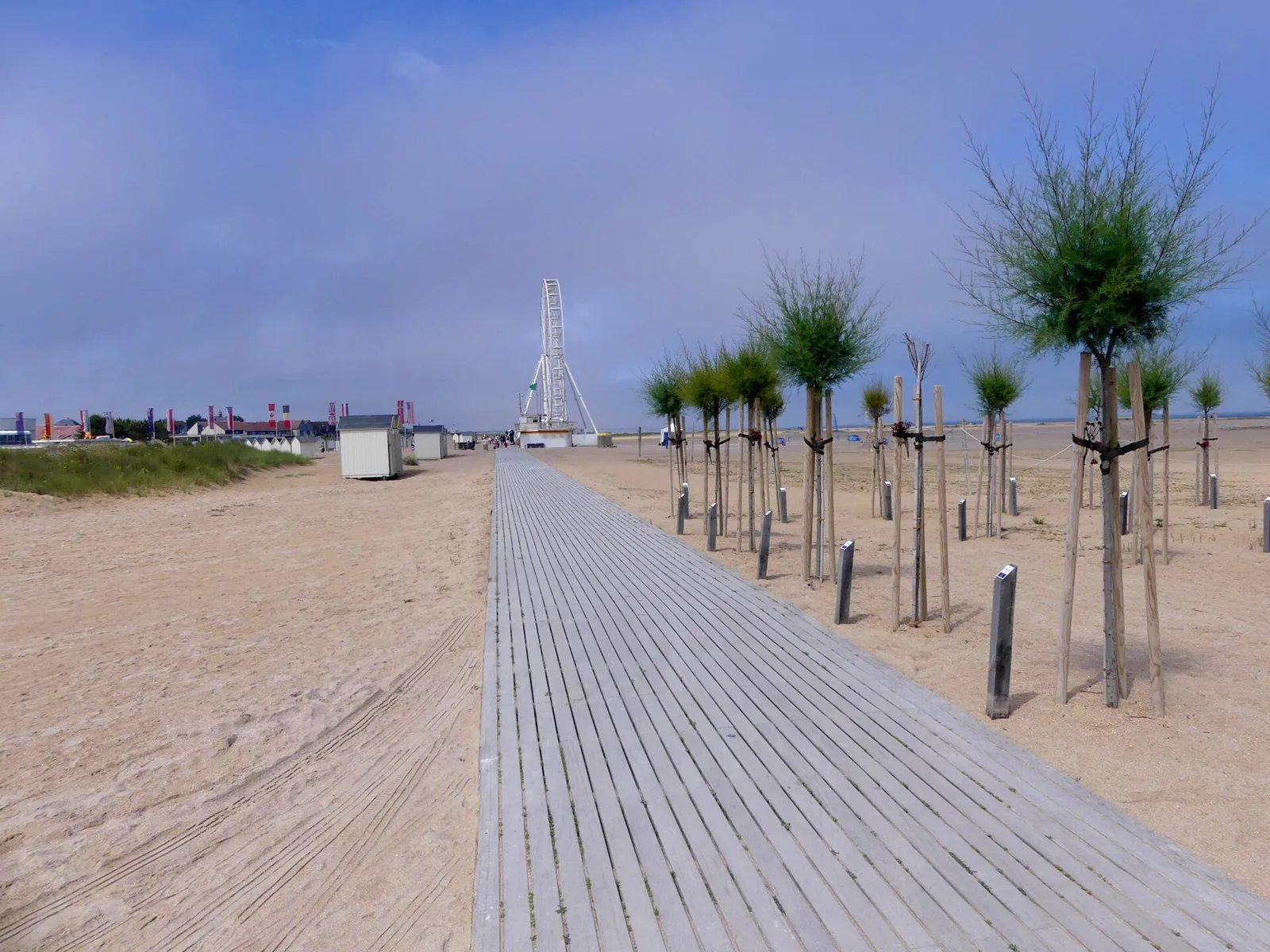
A wooden walkway crosses a broad sandy beach at Ouistreham, beside a row of young trees and a distant observation wheel.
Ouistreham beach and promenade at low tide. The story below introduces a different meeting place: a blue bench above a beach with exposed rocks. Photo: Florian Pépellin · CC BY-SA 4.0 · https://creativecommons.org/licenses/by-sa/4.0/ · resized and converted to WebP; derivative under the same licence.

Émilie and Hugo compare a real view in the story with a photograph they know. Read for the visible difference first, then follow the explanation and the meeting with Nora. Six glosses help you identify the beach, the tide and the promenade.

A1 · A seaside outing at low tide

La même plage, une autre vue

Ce dimanche, Émilie arrive au bord de la mer avec son frère Hugo. Ils passent la journée dans une petite ville de la côte. Leur amie Nora va les retrouver à midi, près du banc bleu, au-dessus de la plage1. Pour le moment, Émilie et Hugo regardent la mer depuis la promenade.

Émilie connaît cette vue sur une photo chez Nora. Mais aujourd’hui, la mer semble plus loin. Devant eux, une grande partie du sable2 est visible. Des rochers3 apparaissent aussi près de l’eau. « Pourquoi la plage est si grande ? » demande Hugo.

Émilie lit un petit panneau sur la promenade. « C’est la marée basse4, explique-t-elle. La mer est plus basse et le sable est découvert. Sur la photo de Nora, c’est la marée haute5. » Hugo regarde encore les rochers. Il comprend pourquoi la vue est différente.

À midi, Nora arrive près du banc bleu avec son sac. Elle montre du doigt sa maison, de l’autre côté de la rue. « La photo est dans mon salon. Vous allez la voir après le déjeuner. » Les trois amis restent un moment sur la promenade6. Puis ils partent manger chez Nora.

Read it in English

This Sunday, Émilie arrives by the sea with her brother Hugo. They are spending the day in a small coastal town. Their friend Nora is going to meet them at noon by the blue bench above the beach. For now, Émilie and Hugo look at the sea from the promenade.

Émilie knows this view from a photo at Nora’s home. But today, the sea seems farther away. A large stretch of sand is visible in front of them. Rocks also appear near the water. “Why is the beach so big?” Hugo asks.

Émilie reads a small sign on the promenade. “It’s low tide,” she explains. “The sea is lower and the sand is uncovered. In Nora’s photo, it’s high tide.” Hugo looks at the rocks again. He understands why the view is different.

At noon, Nora arrives by the blue bench with her bag. She points to her house on the other side of the street. “The photo is in my living room. You’re going to see it after lunch.” The three friends stay on the promenade for a moment. Then they leave to eat at Nora’s home.

Question 1No account needed
Why does the view look different from Nora’s photograph?

Choose one answer.

Answer and explanation

It is low tide now; the photo shows high tide. Émilie explicitly contrasts marée basse today with marée haute in the photograph.

Question 2No account needed
Where do the friends meet Nora?

Choose one answer.

Answer and explanation

Beside the blue bench above the beach. The opening and final paragraphs identify the blue bench as the meeting point.

Question 3No account needed
What will they do after lunch?

Choose one answer.

Answer and explanation

See the photo in Nora’s living room. Nora says Vous allez la voir après le déjeuner, referring to the photo.

Keep today and the photograph separate

Aujourd’hui refers to the low-tide view in front of the visitors. Sur la photo identifies the other view, with high tide. Plus loin describes how the sea seems from the promenade; the story explains the difference through the changing tide, without moving the meeting point.

Nous nous retrouvons près du banc bleu, au-dessus de la plage.

We are meeting by the blue bench, above the beach.

Près du banc bleu gives a precise landmark. Au-dessus de la plage distinguishes the promenade-level meeting place from the sand below. In a short outing description, both the object and its position can matter for finding the right location.