A2 · Proximity is different from a window view
Les feuilles dans le coin de la photo
Noé cherche un appartement avec une vue sur un espace vert. Il trouve une annonce qui dit : « À deux minutes du parc. Fenêtre sur cour. » Sur la photo, on aperçoit un morceau de fenêtre et quelques feuilles. Noé regarde surtout l’image et imagine le parc derrière la vitre.
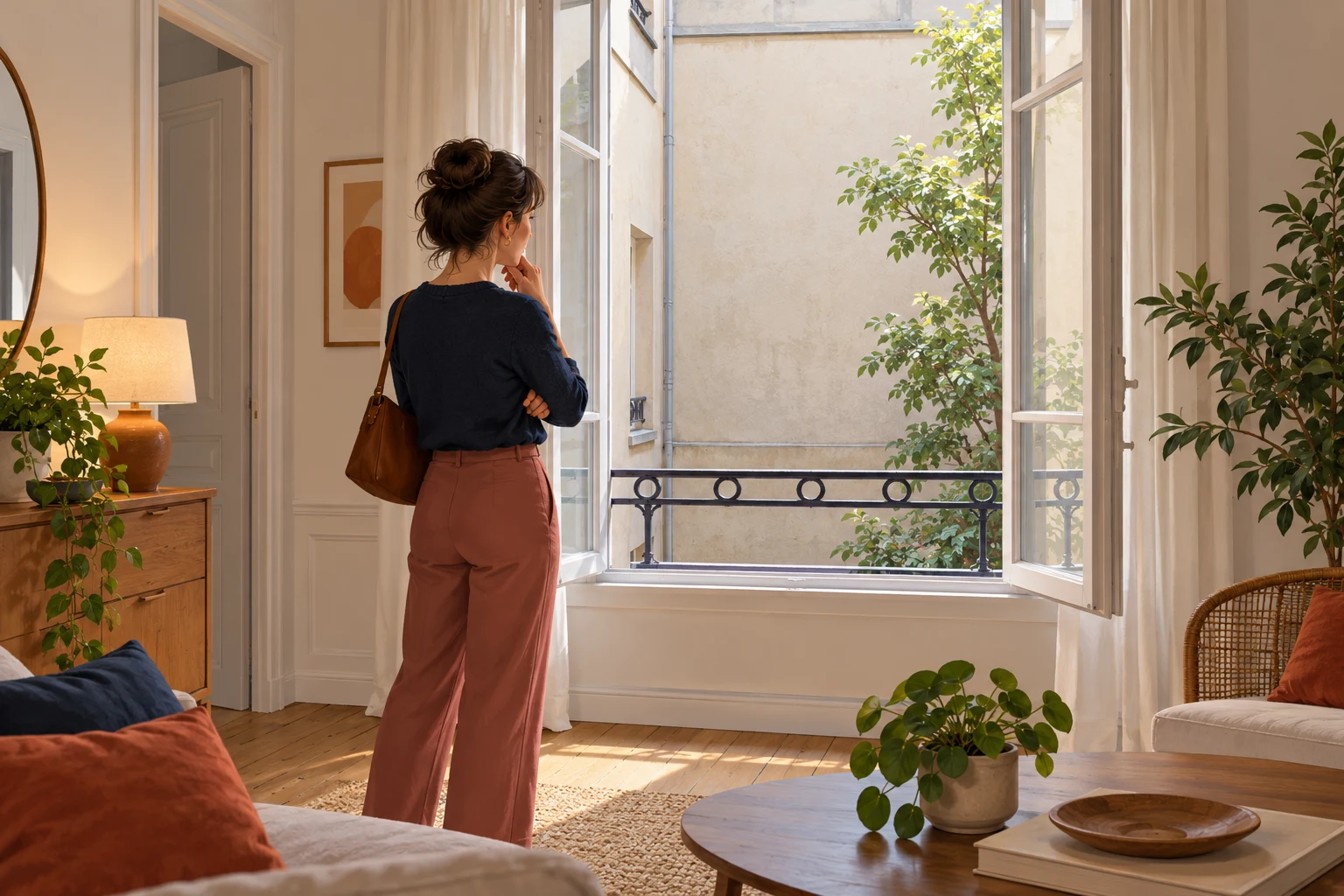
Le lendemain, il visite le logement. La pièce est claire et la cuisine lui plaît. Mais quand il s’approche de la fenêtre, il voit surtout un grand mur1. À gauche, un petit arbre2 pousse dans la cour3. Ses branches expliquent les feuilles visibles sur la photo.
« Je pensais voir le parc depuis ici », dit Noé. L’agente lui montre le texte de l’annonce. Le parc est proche, mais la fenêtre donne sur la cour. Puis elle ouvre la photo complète sur sa tablette. L’image publiée était recadrée4 : elle montrait le côté de la fenêtre avec les feuilles, en laissant presque tout le mur hors du cadre.
Noé comprend la différence entre la proximité du parc et la vue5 depuis l’appartement. L’agente lui propose de regarder la cour une nouvelle fois. Il prend le temps d’observer ce qu’il peut vraiment voir en restant près du bureau.
Le logement a plusieurs qualités, mais Noé garde sa priorité. Il décide de continuer sa recherche6. Pour les prochaines annonces, il va lire la description de la vue et demander une photo plus large de la fenêtre avant de se déplacer.
Read it in English
Noé is looking for a flat with a view over green space. He finds an advert saying: “Two minutes from the park. Window facing the courtyard.” In the photo, part of a window and some leaves can be seen. Noé mainly looks at the image and imagines the park behind the glass.
The next day, he views the home. The room is bright and he likes the kitchen. But when he approaches the window, he mainly sees a large wall. On the left, a small tree grows in the courtyard. Its branches explain the leaves visible in the photo.
“I thought I would see the park from here,” Noé says. The agent shows him the advert’s text. The park is nearby, but the window faces the courtyard. Then she opens the full photograph on her tablet. The published image was cropped: it showed the side of the window with the leaves, without most of the wall.
Noé understands the difference between proximity to the park and the view from the flat. The agent offers to let him look at the courtyard again. He takes time to observe what he can actually see from near the desk.
The flat has several good points, but Noé keeps his priority. He decides to continue searching. For future adverts, he is going to read the view description and ask for a wider window photo before travelling to a viewing.