A2 · A viewing adds one practical detail
La porte du couloir
Léa cherche un appartement où elle peut vivre et ranger le matériel de son association de théâtre. Elle a plusieurs boîtes de tissus et des décors1 pliables. L’annonce qu’elle regarde décrit une chambre, un séjour et une cuisine. Sur les photos, le séjour lui semble agréable, mais un peu petit pour tout son matériel.
Elle organise quand même une visite2. Dans l’appartement, l’agent qui l’accueille lui montre d’abord la cuisine et la chambre. Puis ils passent dans le couloir. Léa remarque une porte étroite que les photos ne montraient pas. « Qu’est-ce qu’il y a derrière ? », demande-t-elle.
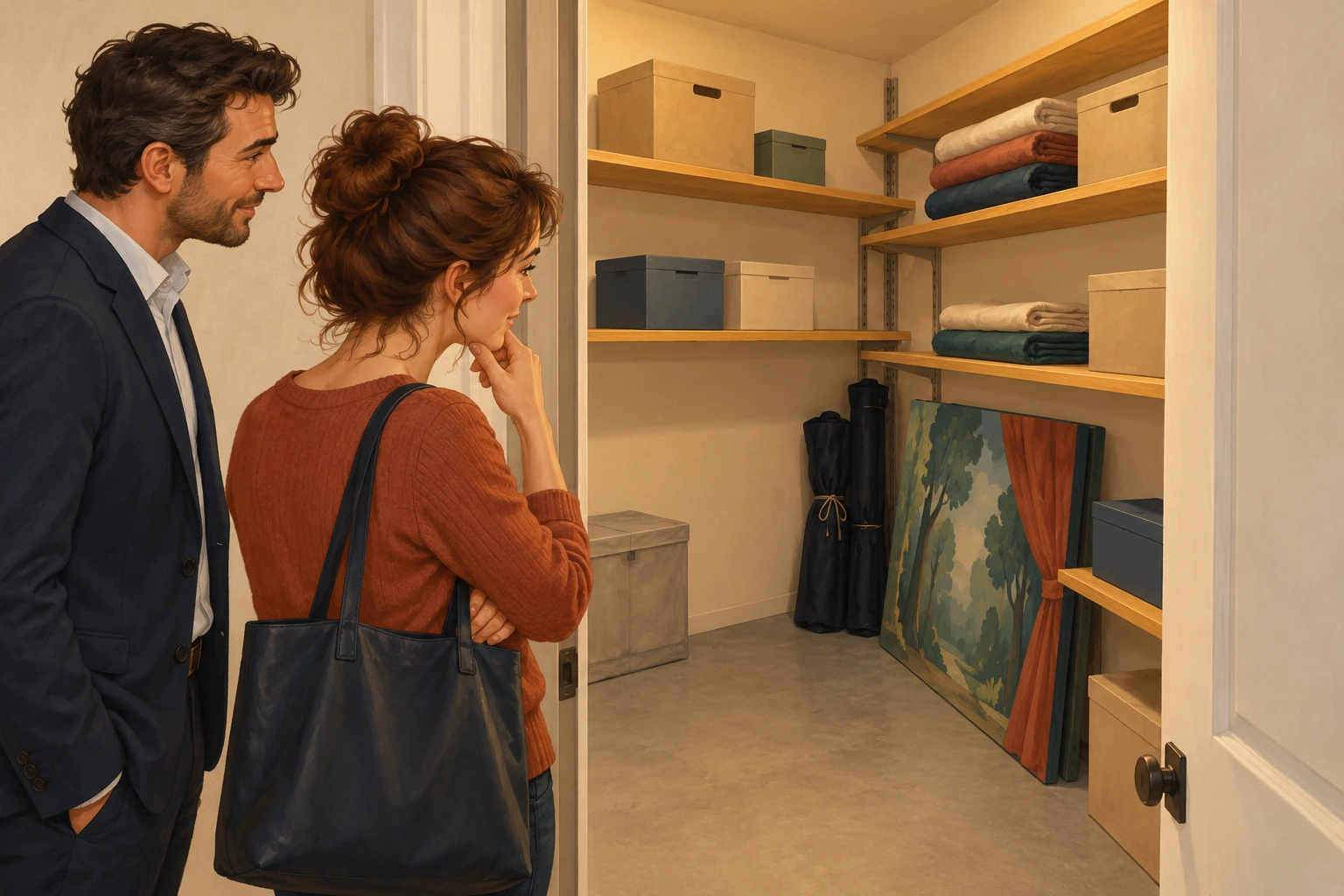
L’agent ouvre la porte. C’est un petit débarras3 sans fenêtre, avec des étagères4 sur deux murs. Il précise que cet espace fait partie de l’appartement proposé. Ce n’est pas une chambre supplémentaire : c’est un endroit où l’on peut ranger des affaires.
Léa mesure la largeur d’une étagère avec son mètre. Ses boîtes de tissus peuvent y tenir. Elle demande aussi les dimensions du sol pour ses décors pliables. L’agent lui laisse noter les mesures et prendre une photo de la pièce.
Avant la visite, Léa hésitait à cause du rangement5. Maintenant, elle voit une solution concrète. Elle décide de déposer une demande6 pour cet appartement. Elle garde cependant les mesures dans son carnet pour vérifier tranquillement, chez elle, la taille de toutes ses boîtes.
Read it in English
Léa is looking for a flat where she can live and store the equipment for her theatre association. She has several boxes of fabric and folding scenery. The advert she is looking at describes a bedroom, living room and kitchen. In the photos, the living room looks pleasant but rather small for all her equipment.
She arranges a viewing anyway. In the flat, the agent who welcomes her first shows the kitchen and bedroom. Then they enter the corridor. Léa notices a narrow door that the photos did not show. “What’s behind it?” she asks.
The agent opens the door. It is a small windowless storage room with shelves on two walls. He specifies that this space is part of the offered flat. It is not an extra bedroom: it is somewhere to store things.
Léa measures the width of a shelf with her tape measure. Her fabric boxes can fit there. She also asks for the floor dimensions for her folding scenery. The agent lets her note the measurements and take a photo of the room.
Before the viewing, Léa was hesitating because of storage. Now she sees a concrete solution. She decides to submit an application for the flat. However, she keeps the measurements in her notebook to check all her boxes’ sizes calmly at home.