B1 · Read, follow the clues, then answer
Le cahier et les mains
Une nouvelle responsabilité
Après trente-deux ans derrière son four, Alain prépare son départ. Le mois prochain, Mina va reprendre1 la boulangerie. Elle y travaille depuis deux ans et connaît les clients. Pourtant, assurer seule la production lui semble différent : jusqu’ici, Alain prenait les dernières décisions.
Ce qui se note
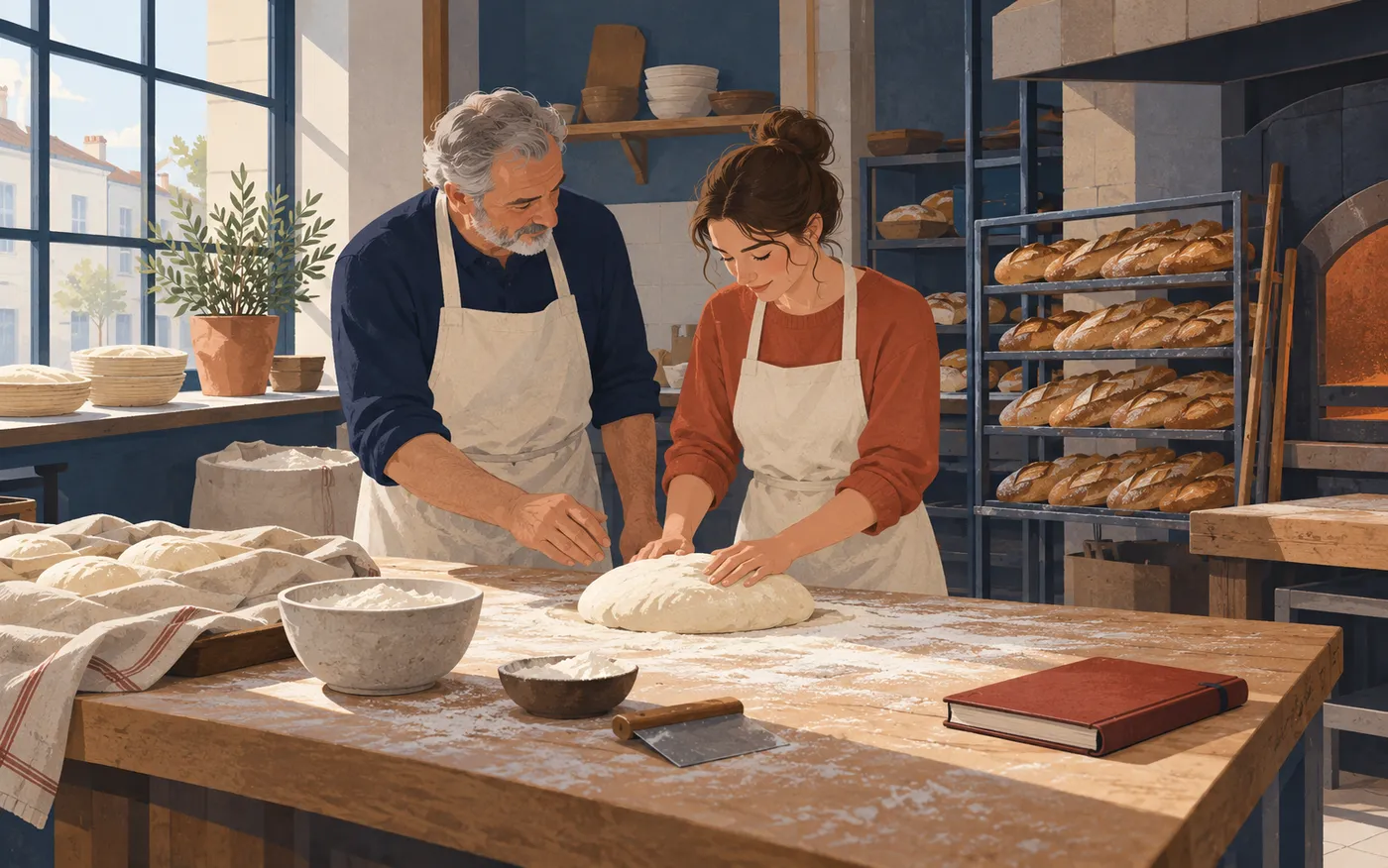
Sur une table, il pose un gros cahier2. On y trouve les recettes, les coordonnées des fournisseurs3 et les commandes habituelles du vendredi. Mina ajoute les horaires de livraison. Elle photographie aussi le tableau qui indique les quantités préparées chaque jour. Ces informations l’aideront à organiser ses premières semaines.
Ce qui se sent
À cinq heures du matin, Alain lui montre une autre partie du métier. Mina touche la pâte4. « Elle colle davantage aujourd’hui », remarque-t-elle. Alain lui demande de comparer avec la veille et d’attendre un peu avant de continuer. La température de la pièce a changé. Le temps indiqué dans la recette reste un repère5, pas une réponse à toutes les situations.
Décider seule
Plus tard, Mina sort une fournée. Alain lui fait écouter le pain qui craque en refroidissant. Puis elle choisit seule le moment de sortir la suivante. Il lui transmet ainsi son savoir-faire6, en la laissant essayer et expliquer ses choix. À la fin de la semaine, Mina ferme le cahier avec soulagement7. Elle gardera les recettes, mais aussi l’habitude d’observer. Alain lui promet de passer le premier lundi, cette fois pour acheter sa baguette. Pour Mina, cette visite sera un signe de confiance8.
Read it in English
After thirty-two years at his oven, Alain is preparing to leave. Next month, Mina will take over the bakery. She has worked there for two years and knows the customers. Yet managing production alone feels different: until now, Alain made the final decisions.
He puts a thick notebook on a table. It contains recipes, suppliers’ contact details and the usual Friday orders. Mina adds delivery times. She also photographs the chart showing the quantities prepared each day. This information will help her organise her first few weeks.
At five in the morning, Alain shows her another part of the job. Mina touches the dough. “It is stickier today,” she remarks. Alain asks her to compare it with the previous day and wait a little before continuing. The room’s temperature has changed. The time in the recipe remains a guide rather than an answer to every situation.
Later, Mina takes a batch out. Alain has her listen to the bread crackling as it cools. Then she chooses for herself when to take out the next batch. This is how he passes on his know-how, by letting her try and explain her choices. At the end of the week, Mina closes the notebook with relief. She will keep the recipes, and the habit of observing. Alain promises to come on the first Monday, this time to buy his baguette. For Mina, the visit will be a sign of trust.