B2 · local feature · eight glosses
Une usine, plusieurs usages
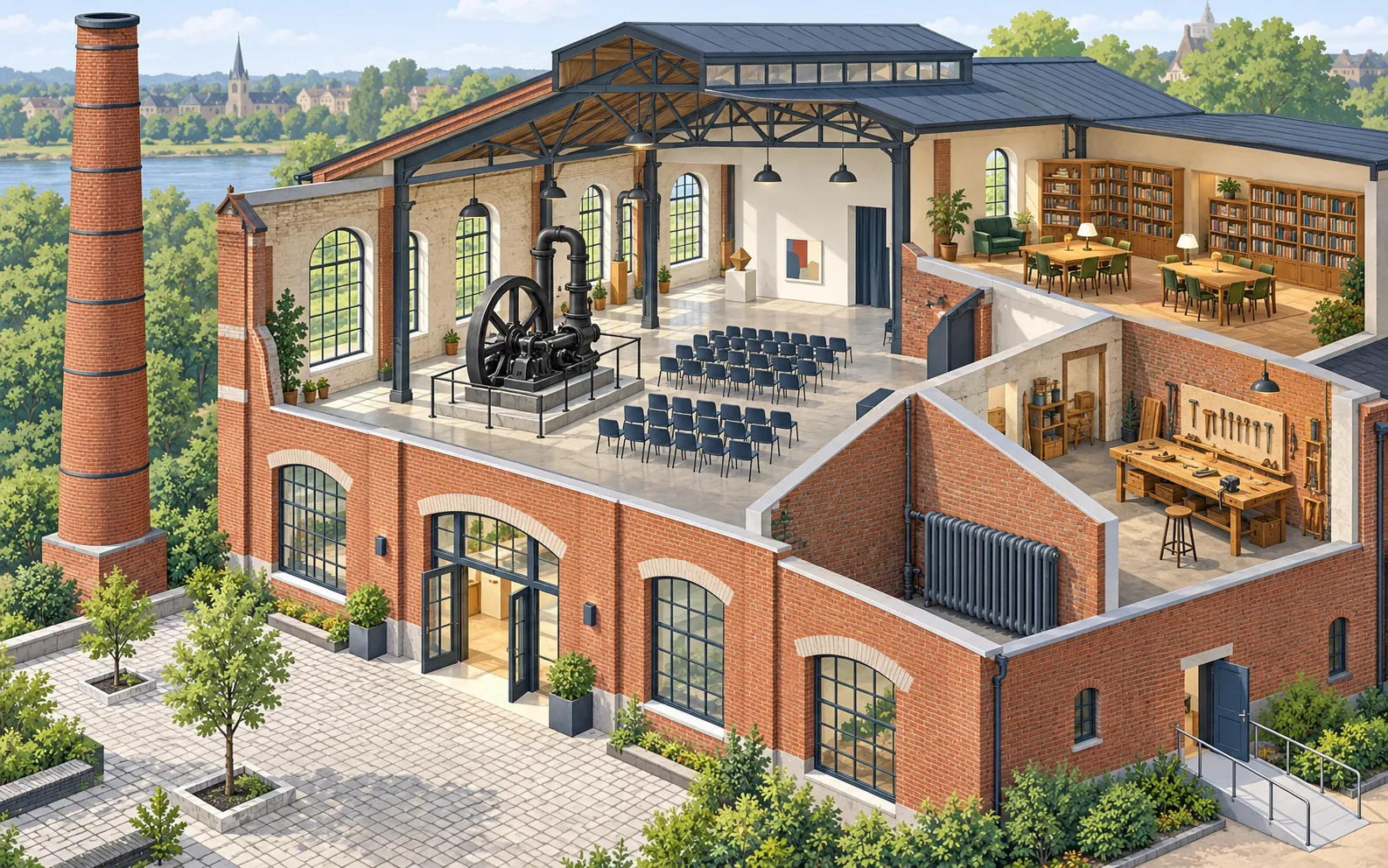
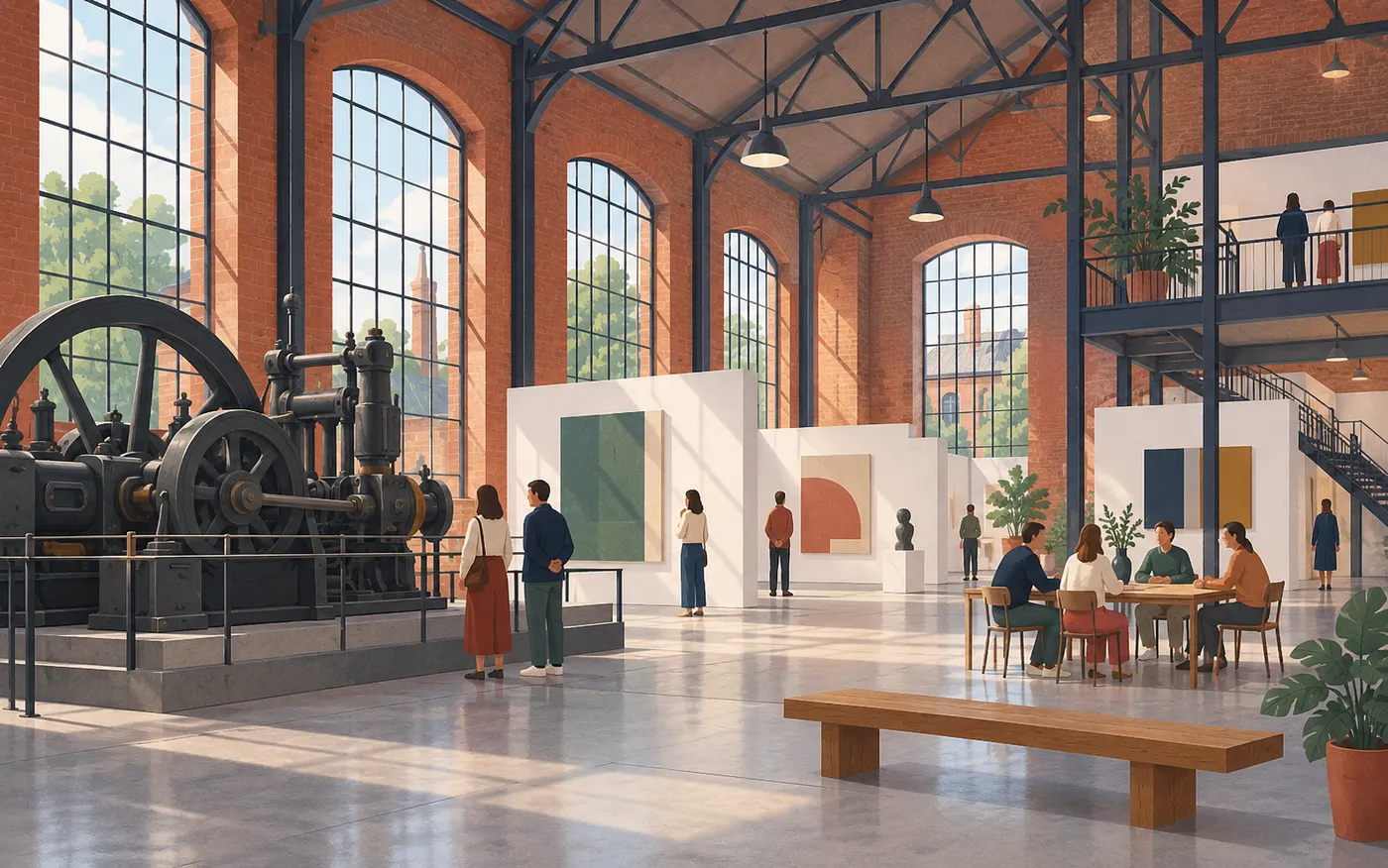
Après vingt ans de fermeture, l’ancienne usine de pompes accueille des ateliers, des concerts et une salle de lecture. La commune a conservé la cheminée et une partie des machines. Pour les anciens ouvriers, ces traces donnent au lieu une épaisseur1 que des murs neufs n’auraient pas.
« Il ne fallait pas garder seulement une façade », explique André, qui y a travaillé trente ans. Il souhaiterait que les visites racontent aussi les accidents et les conflits sociaux. À ses yeux, le patrimoine2 industriel perd son sens si l’on efface les conditions de travail derrière de belles photographies.
L’association des riverains soutient la transformation, mais s’inquiète des horaires. L’entrée principale donne sur une cour qui ferme dès qu’une entreprise loue la grande salle. Les habitants doivent alors passer par un accès latéral, moins visible. L’association réclame un cheminement3 public permanent et un programme d’activités gratuites. « Un lieu public doit rester accessible4 au quotidien », insiste sa présidente.
La responsable du site répond que les locations financent une partie du chauffage et de l’entretien. Le budget des travaux est bouclé5, mais celui du fonctionnement dépend encore de ces recettes. Renoncer à toutes les locations obligerait la commune à augmenter sa subvention6 ou à réduire les heures d’ouverture.
Une commission doit maintenant arbitrer7 entre ces usages. Elle étudie un calendrier réservant certains jours aux activités locales et la création d’une entrée indépendante. La transformation du bâtiment est terminée ; celle de son rôle dans la ville reste en chantier8.
Read it in English
After twenty years of closure, the former pump factory hosts workshops, concerts and a reading room. The town has kept the chimney and some machines. For former workers, these traces give the place a depth that new walls would not have.
"It was important to keep more than a façade," explains André, who worked there for thirty years. He would like tours to describe accidents and labour disputes too. In his view, industrial heritage loses its meaning if working conditions are erased behind beautiful photographs.
The residents’ association supports the conversion but is concerned about opening times. The main entrance leads onto a courtyard that closes whenever a company hires the large hall. Residents then have to use a less visible side entrance. The association calls for a permanent public route and a programme of free activities. "A public venue must remain accessible in everyday life," its chair insists.
The site manager replies that hires pay for part of the heating and maintenance. The building works budget is finalised, but the operating budget still depends on this income. Giving up all hires would force the town to increase its subsidy or reduce opening hours.
A committee must now decide between these uses. It is considering a calendar setting aside certain days for local activities and the creation of a separate entrance. The building’s transformation is finished; the transformation of its role in the town is still being worked on.