Original B2 reading
Autour de la même table
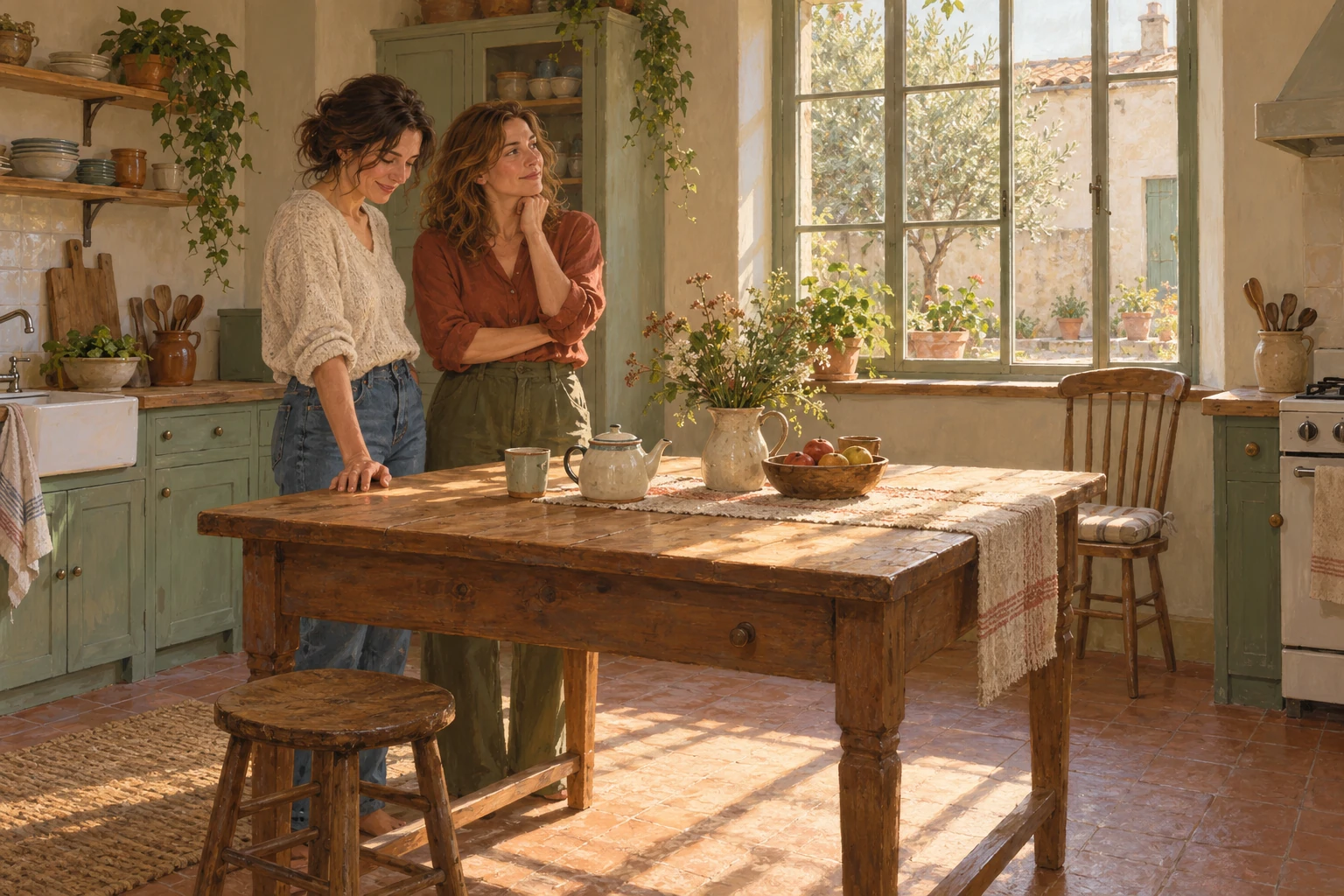
Pour préparer la vente de la maison, deux sœurs devaient décrire la cuisine de leur enfance. Claire a commencé : une grande pièce lumineuse1, une table solide, une fenêtre ouverte sur la cour. Elle se souvenait surtout des dimanches où leur mère préparait une pâte pendant qu’elles dessinaient.
Inès reconnaissait la table et la fenêtre. Pourtant, elle aurait choisi d’autres mots. La pièce lui paraissait étroite2 quand elle devait passer derrière les adultes. Le dimanche, elle attendait souvent qu’on lui laisse une place pour dessiner. Ce que Claire appelait une table solide était pour elle un obstacle impossible à déplacer.
Elles ne parlaient pas de deux cuisines successives. La table était restée au même endroit pendant toute cette période. Leur désaccord venait de la place que chacune occupait autour d’elle. Claire, l’aînée3, avait sa chaise près de la fenêtre ; Inès s’installait sur un tabouret4 que l’on rangeait après le repas.
En revenant dans la maison vide, elles ont trouvé la pièce plus petite que dans le récit de Claire. Celle-ci n’a pas renoncé à son souvenir de lumière. Inès, de son côté, a remarqué que la fenêtre donnait vraiment sur une cour dégagée5. Elles pouvaient reconnaître les mêmes détails sans leur donner la même importance.
Pour l’annonce, elles ont retenu une description factuelle : une fenêtre sur cour et une table centrale. Pour leur carnet6 familial, elles ont gardé les deux récits. Elles ne cherchaient plus à remplacer l’un par l’autre. La cuisine avait aussi été l’espace depuis lequel chacune regardait sa sœur.
Read it in English
To prepare the house sale, two sisters needed to describe their childhood kitchen. Claire began: a large bright room, a sturdy table, a window opening onto the courtyard. She chiefly remembered Sundays when their mother made pastry while they drew.
Inès recognised the table and window. Yet she would have chosen different words. The room seemed narrow when she had to squeeze behind adults. On Sundays, she often waited for someone to leave her space to draw. What Claire called a sturdy table was, for her, an obstacle impossible to move.
They were not describing two successive kitchens. The table had remained in the same place throughout that period. Their disagreement came from the place each occupied around it. Claire, the elder, had her chair near the window; Inès sat on a stool put away after meals.
Returning to the empty house, they found the room smaller than in Claire’s account. She did not abandon her memory of light. Inès, for her part, noticed that the window really did overlook a clear courtyard. They could recognise the same details without giving them the same importance.
For the listing, they kept a factual description: a courtyard window and a central table. For their family notebook, they kept both accounts. They were no longer trying to replace one with the other. The kitchen had also been the space from which each watched her sister.