Phrasebook

Discuss rest and workload with a French activity organiser

Use four French scenes to ask about breaks, standing time, a seated option and passing on one exercise while keeping your practical needs clear.

In short

Ask specific questions about duration, pauses and alternatives: Combien de temps reste-t-on debout ? and Puis-je participer en restant assise ? If you decline one exercise, make that scope clear: Je voudrais seulement passer mon tour pour cet exercice. The organiser can respond to the arrangement you need.

Yellow the idea to rememberBlue French to learn
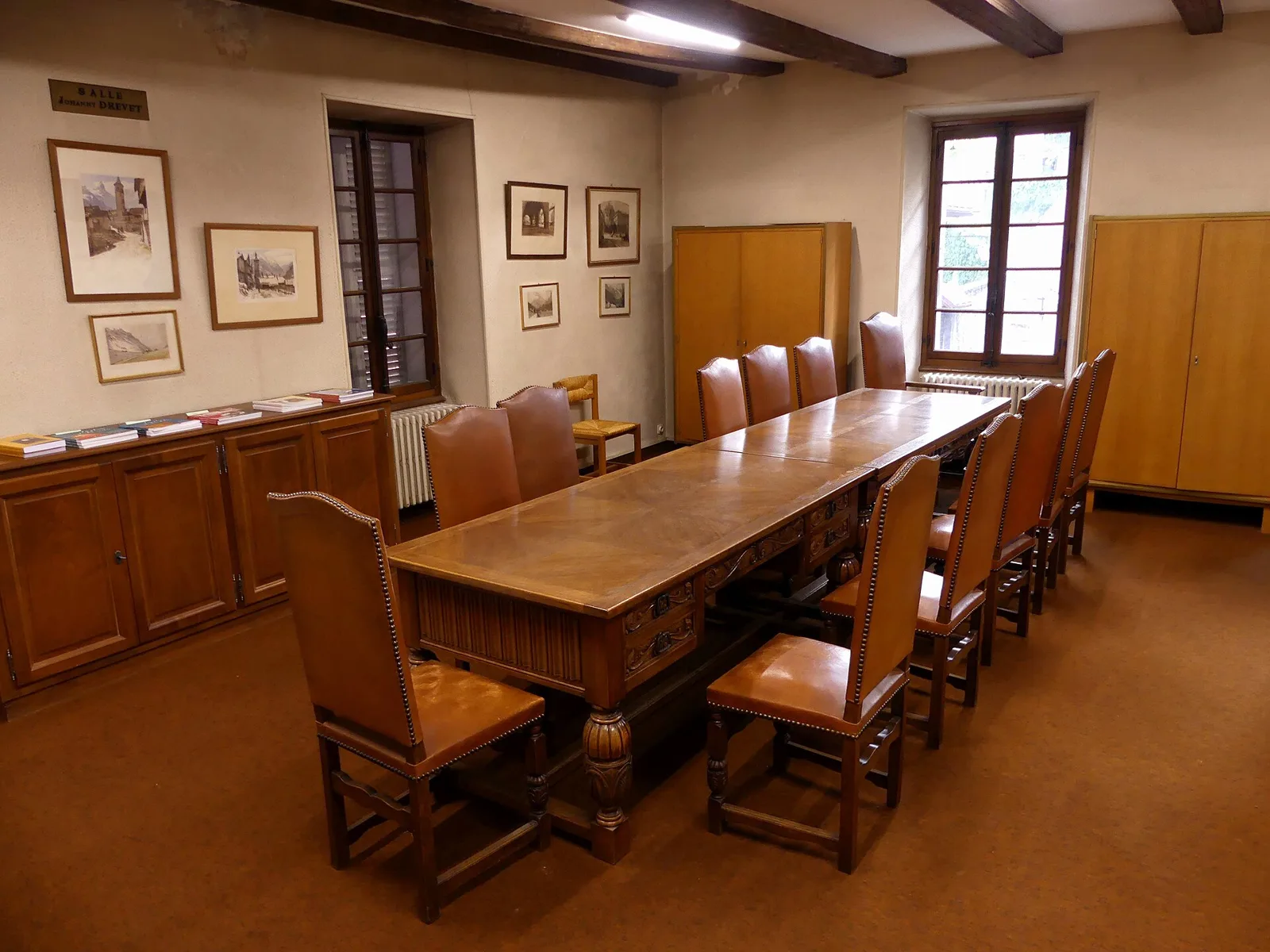
A long wooden table and chairs fill a local association’s meeting room.
A local association’s meeting room in Albertville, photographed in 2024. Resized and converted to WebP; derivative shared under CC BY-SA 4.0 (https://creativecommons.org/licenses/by-sa/4.0/). Florian Pépellin · Wikimedia Commons · CC BY-SA 4.0

A label such as activité facile does not tell you how long participants stand or whether they can leave briefly. The scenes below replace broad assumptions with practical questions. Follow up when a reply leaves the duration, seating or timing unclear.

1

Ask about breaks

Confirm what the programme actually allows.

YouBonjour, des pauses sont-elles prévues pendant l’atelier ?Hello, are breaks planned during the workshop?
The activity organiserOui, une pause de quinze minutes est prévue au milieu.Yes, a fifteen-minute break is planned halfway through.
YouPuis-je aussi sortir quelques minutes si j’en ai besoin ?May I also step out for a few minutes if I need to?
The activity organiserOui. Prévenez simplement la personne à l’accueil.Yes. Just let the person at reception know.
YouMerci. Où pourrai-je attendre au calme ?Thank you. Where could I wait somewhere quiet?
The activity organiserVous pouvez utiliser la petite salle à côté.You can use the small room next door.
2

Check the pace

Ask for concrete duration rather than an undefined easy label.

YouCombien de temps reste-t-on debout pendant cette activité ?How long does one remain standing during this activity?
The activity organiserOn reste debout environ vingt minutes pendant la première partie.Participants stand for about twenty minutes during the first part.
YouEst-il possible de s’arrêter avant la fin de cette partie ?Is it possible to stop before that part ends?
The activity organiserOui, vous pouvez rejoindre les sièges sur le côté.Yes, you can move to the seats at the side.
YouL’activité suivante commence-t-elle tout de suite ?Does the next activity start immediately?
The activity organiserNon, nous prévoyons cinq minutes pour changer de place.No, we allow five minutes to change places.
3

Request a seated option

Describe the arrangement you need.

YouJe souhaite participer en restant assise. Est-ce possible ?I’d like to take part while remaining seated. Is that possible?
The activity organiserPour la discussion, oui. Pour l’exercice suivant, je dois vérifier.For the discussion, yes. For the next exercise, I need to check.
YouMerci. Pouvez-vous me confirmer cela avant vendredi ?Thank you. Could you confirm that before Friday?
The activity organiserOui, je demanderai à l’animateur cet après-midi.Yes, I’ll ask the facilitator this afternoon.
YouSi ce n’est pas possible, je participerai seulement à la discussion.If it isn’t possible, I’ll join only the discussion.
The activity organiserD’accord, je note votre préférence.All right, I’ll note your preference.
4

Opt out of one part

Keep the scope of a refusal clear.

YouJe préfère ne pas faire cette partie de l’activité.I prefer not to do this part of the activity.
The activity organiserSouhaitez-vous quitter l’atelier ?Would you like to leave the workshop?
YouNon, je voudrais seulement passer mon tour pour cet exercice.No, I’d only like to pass on this exercise.
The activity organiserD’accord. Vous pouvez rester ici comme observatrice.All right. You can stay here as an observer.
YouMerci. Je reprendrai avec le groupe pour la discussion.Thank you. I’ll rejoin the group for the discussion.
The activity organiserElle commencera après la pause.It will begin after the break.

Concrete information is easier to use

Ask about the feature that matters: time standing, access to a chair, the transition between activities or a place to wait. Vous pouvez rejoindre les sièges gives a specific alternative. If the answer is incomplete, follow up on the missing detail rather than assuming the whole session suits you.

An unconfirmed option remains unconfirmed

In the third scene, the organiser can confirm the discussion arrangement but must check the exercise. The speaker asks for an answer before Friday and states a fallback. This keeps participation possible without turning “I will ask” into “it is already arranged”.

The examples use assise and observatrice for a female speaker. A male speaker would say assis and observateur. You can state the practical request without supplying a diagnosis. If you choose to explain more, keep the information relevant to the arrangement you want.

For practice, choose one activity and write two questions about its actual conditions. Finish with the option you would prefer if the first arrangement is unavailable. Clear scope helps both sides distinguish a full cancellation from passing on one part.