Using an analogy in a French argument: link, limit, conclusion
Develop a French analogy from a vivid comparison into a precise argument. Compare stronger and weaker versions, test the limit and write a measured conclusion.
In short
Make the resemblance explicit, name a difference that matters, then state the conclusion the comparison supports. In French, de même que, la comparaison porte sur and l’analogie trouve sa limite dans give you a clear route through those three moves.
Yellow the idea to rememberBlue French to learnRed watch out
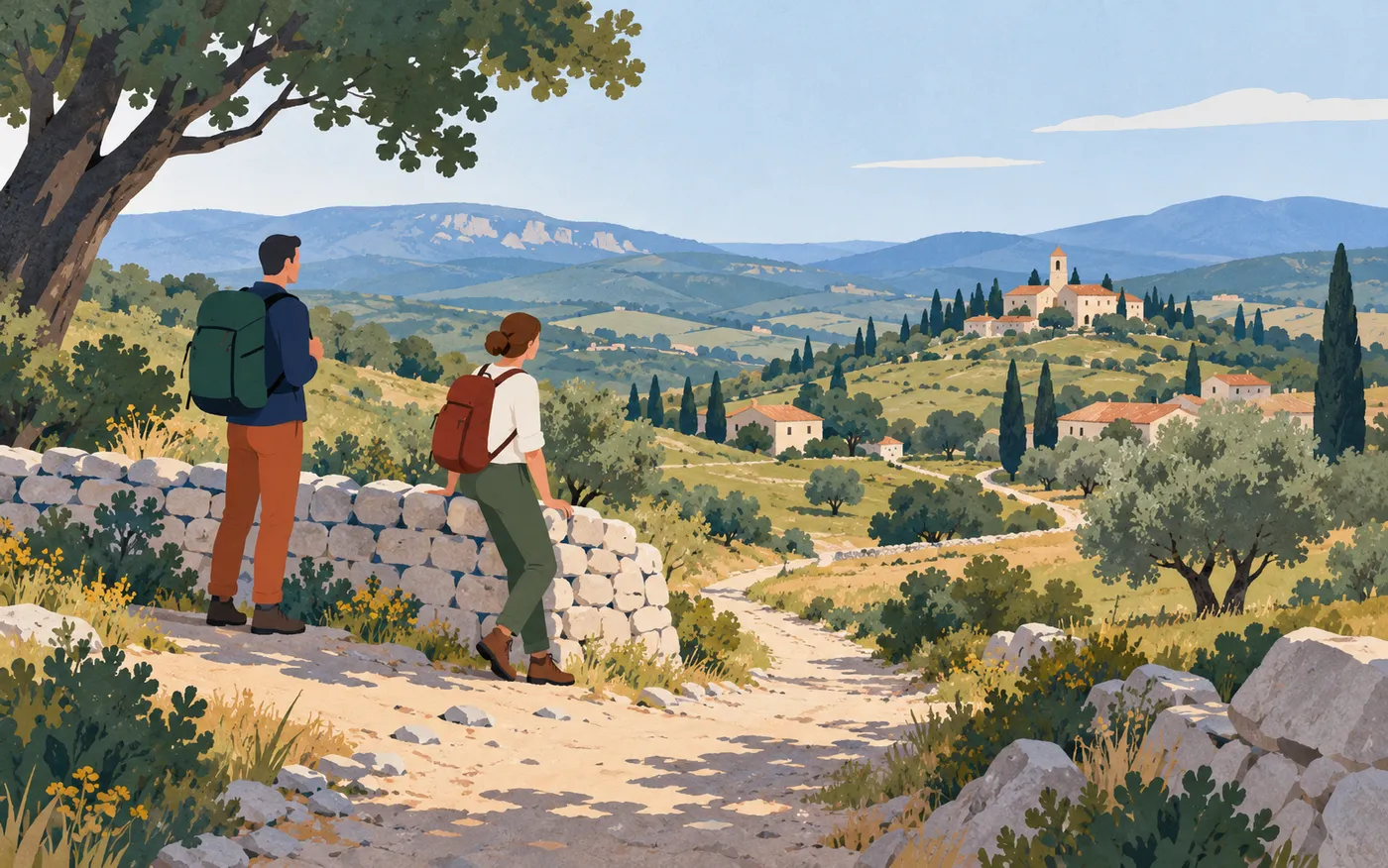
How do you use an analogy in a French argument?
Préparer un atelier, c’est comme préparer un trajet : on choisit un point de départ et quelques étapes, tout en gardant la possibilité de changer de direction.
Preparing a workshop is like preparing a journey: you choose a starting point and a few stages, while keeping the option of changing direction.
| Journey | Workshop | Shared function |
|---|---|---|
| un point de départ | les connaissances du groupe | Know where you are starting. |
| des étapes | une progression d’activités | Give the activity a direction. |
| un changement d’itinéraire | une adaptation aux échanges | Adjust when conditions change. |
La comparaison porte sur…The comparison concerns…
Focus: name the relevant resemblance
La comparaison porte sur la fonction d’orientation de la préparation.
The comparison concerns preparation’s orienting function.
L’analogie trouve sa limite dans…The analogy reaches its limit in…
Focus: identify what weakens a specific inference
L’analogie trouve sa limite dans la définition de la destination : les participants peuvent redéfinir ensemble l’objectif de l’atelier.
The analogy reaches its limit in how the destination is defined: participants can redefine the workshop’s objective together.
A developed paragraph in French
De même qu’un itinéraire aide à organiser un déplacement, une préparation donne à l’animateur des repères pour conduire un atelier. La comparaison porte sur une relation précise : disposer de quelques étapes permet de situer l’activité en cours et de choisir la suivante. Elle éclaire ainsi l’intérêt d’une progression préparée.
Just as an itinerary helps organise a journey, preparation gives a facilitator reference points for leading a workshop. The comparison concerns a precise relationship: having a few stages helps locate the current activity and choose the next. It thus clarifies the value of a prepared progression.
Le rapprochement trouve toutefois sa limite dans la définition de la destination. L’objectif d’un atelier peut se préciser, voire se transformer, au fil des échanges entre les participants. Un itinéraire peut lui aussi évoluer, mais l’image du trajet serait trompeuse si elle servait à présenter le programme comme intangible.
The parallel reaches its limit, however, in how the destination is defined. A workshop’s objective can become clearer, or even change, through exchanges among participants. An itinerary can also evolve, but the journey image would mislead if it were used to present the programme as fixed.
L’analogie invite donc à concevoir la préparation comme un cadre ajustable. Pour soutenir l’affirmation selon laquelle elle améliore les résultats des ateliers, il faudrait encore examiner des situations concrètes et leurs effets. La comparaison rend le raisonnement lisible ; l’évaluation des effets appelle un autre appui.
The analogy therefore invites us to see preparation as an adaptable framework. Supporting the assertion that it improves workshop outcomes would also require examining concrete situations and their effects. The comparison makes the reasoning clear; evaluating effects calls for another kind of support.
- Un atelier est un trajet ; il faut donc suivre toutes les étapes prévues.Comme un itinéraire, une préparation peut donner des repères tout en restant adaptable.
The first version turns a useful resemblance into an obligation to follow every planned stage.
- Un trajet se fait dehors et un atelier dedans : la comparaison est donc inutile.La question est de savoir si les étapes préparées aident à orienter l’activité.
Indoor versus outdoor location misses the relationship the analogy actually uses.