Matching game
French body-side language: droit, droite, gauche and des deux côtés
Match six French body-side phrases to clear English descriptions. Learn droit, droite, gauche and des deux côtés, using the viewpoint of a person facing you.
- A1
- 6 pairs
- Tap to match
- Learn this in the A1 notebook →
In short
Body-side words refer to the person’s own right and left. Viewed from the front, her right appears on the left of the image. Use droit with masculine bras, droite with feminine main or épaule, and gauche in both genders. Des deux côtés means on both sides.
Yellow the idea to rememberBlue French to learn
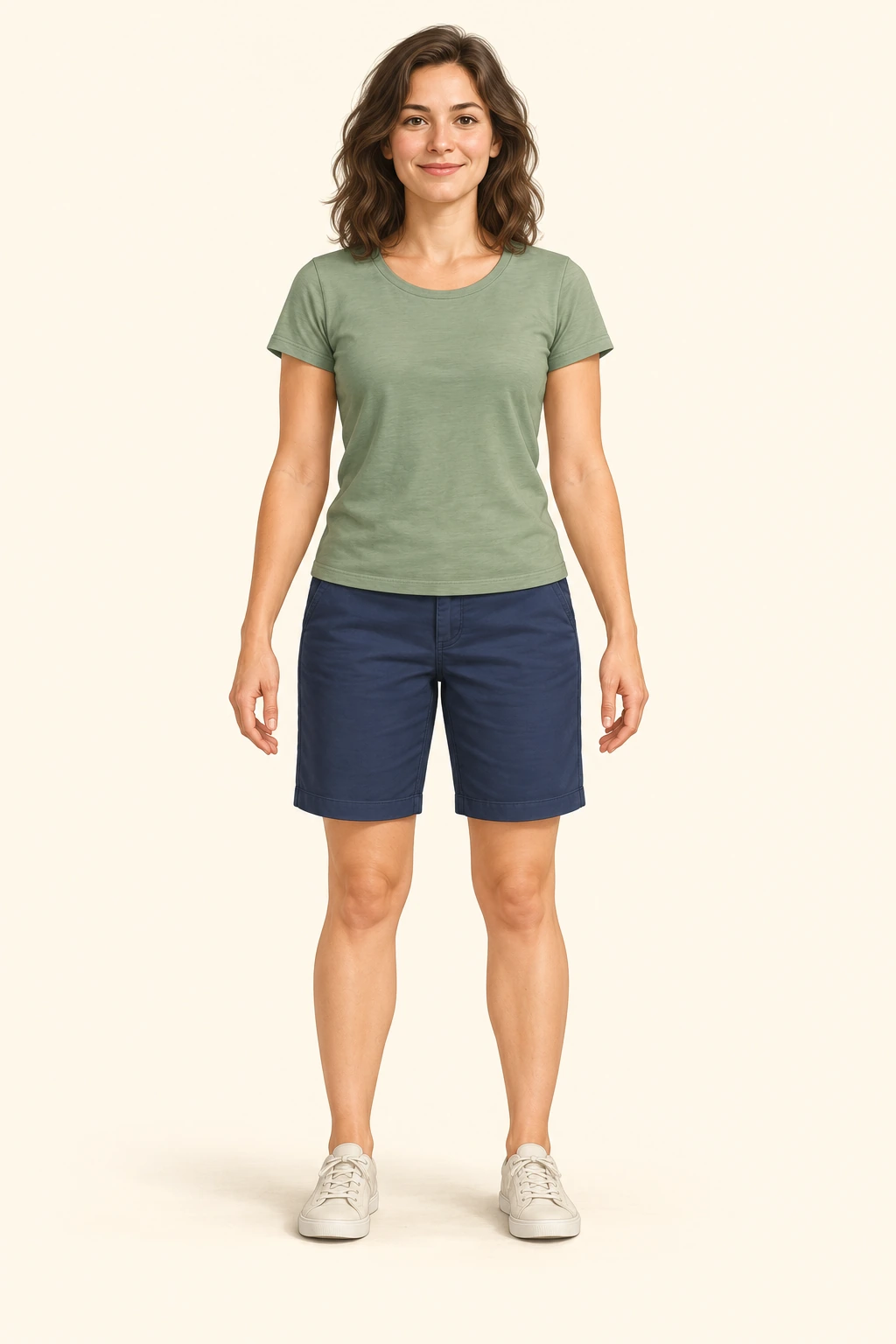
The person faces you. The descriptions below always use her own right and left. The written key states the orientation in every one-sided description, so you can connect the body-part phrase to the correct side.
| Person’s side | Where it appears to the viewer |
|---|---|
| Her right | Left side of the image |
| Her left | Right side of the image |
| Both sides | Both sides of her body |
Tap one on the left, then its partner on the right.
Droit changes with the body-part noun
| Masculine noun | Feminine noun |
|---|---|
| Le bras droit | La main droite |
| Le genou droit | L’épaule droite |
| Le bras gauche | La main gauche |
Bras and genou are masculine, so the right-side adjective is droit. Main and épaule are feminine, so it becomes droite. Gauche has the same singular spelling with masculine and feminine nouns. The person’s gender does not control these endings; the named body part does.
Elle montre sa main droite.
She points to her right hand.
Il montre son bras gauche.
He points to his left arm.
Des deux côtés describes both sides
Des deux côtés is a location phrase meaning on both sides. Les deux genoux names both knees. One states a location; the other names two body parts. Compare these with un genou, which names just one knee.
When describing your own side, say ma main droite or mon bras gauche from your own viewpoint. When describing a picture, name whose side you mean. That explicit owner prevents the image’s left edge from being confused with the person’s left.