French dish descriptions: doux does not mean sucré
Distinguish doux, sucré, salé and épicé in simple French food descriptions. Read mildness separately from sweetness and ask a precise follow-up question.
In short
In a sauce described as douce, pas piquante, douce means mild. Sucré describes sweetness; salé describes saltiness or a savoury category; épicé means spiced. Doux has several senses, so a mild sauce or mild cheese description alone does not tell you how much sugar it contains.
Yellow the idea to rememberBlue French to learn
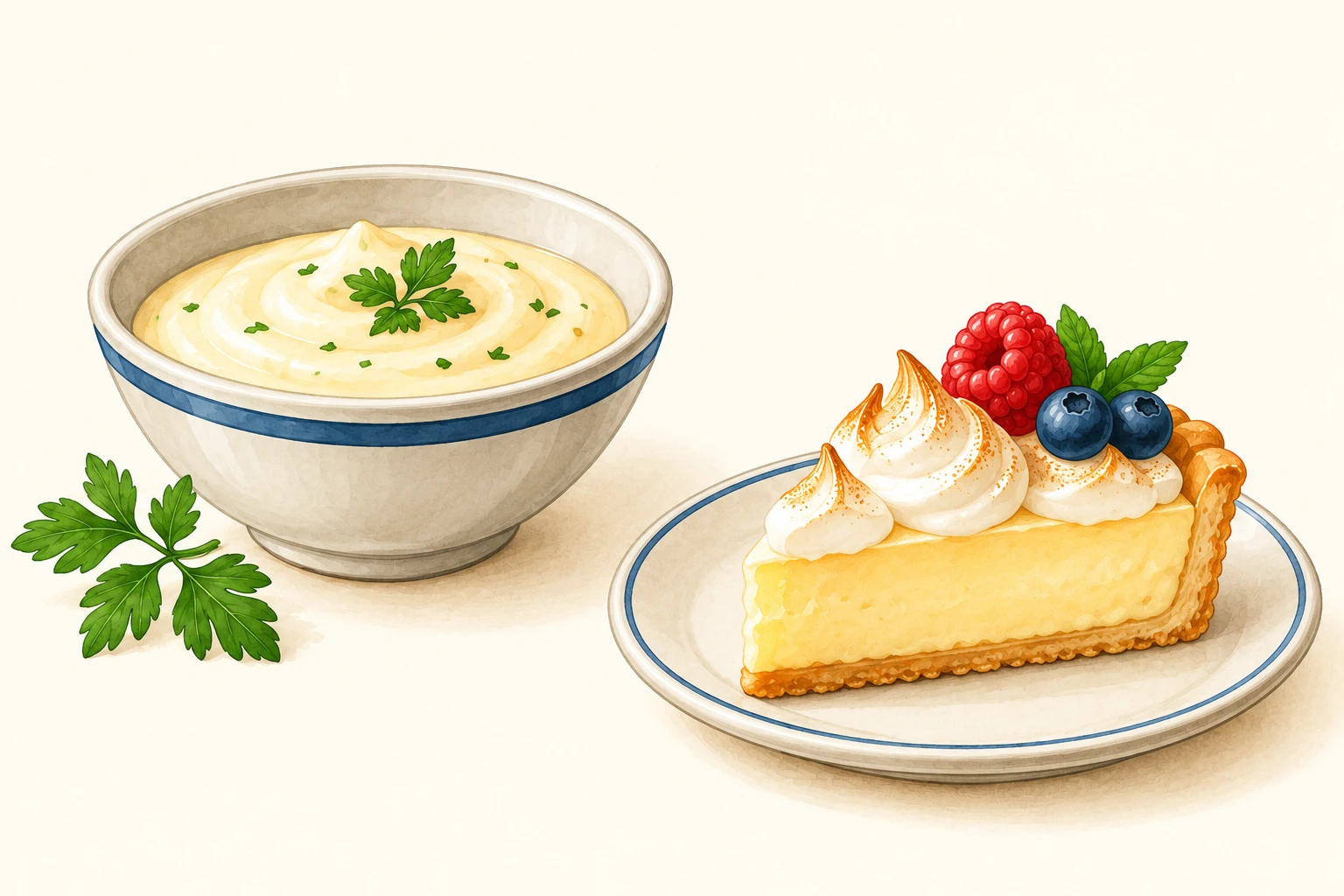
A learner sees sauce douce and expects a sugary dessert sauce. The description may instead be contrasting mild and hot versions of the same sauce. Read the nearby words before choosing the English meaning. A food can also have more than one property: it can be sweet and spiced, or mild and salty.
| French | Meaning in this supplied context | Useful follow-up |
|---|---|---|
| Une sauce douce, pas piquante | A mild sauce, not hot | Est-ce qu’elle est sucrée ? |
| Un dessert sucré | A sweet dessert | Il y a du chocolat ? |
| Un fromage doux, au goût peu fort | A mild cheese with a gentle flavour | Il est salé ? |
| Un plat épicé, avec du cumin et de la cannelle | A spiced dish; heat is not specified | Il est piquant ? |
Doux and douce can describe intensity
Doux is the masculine form: un fromage doux. Douce is the feminine form: une sauce douce. In the examples here, the added phrases pas piquante and au goût peu fort tell you that the contrast concerns intensity. They do not turn doux into a statement about ingredients or a measurement of sugar.
La sauce est douce, mais elle n’est pas sucrée.
The sauce is mild, but it is not sweet.
Le fromage a un goût doux.
The cheese has a mild taste.
Sucré names sweetness directly
Un dessert sucré identifies a sweet dessert. Une sauce sucrée identifies a sweet sauce. Doux can have a sweet sense in other contexts, so the lesson is to avoid translating it automatically from the word alone. For this menu question, Est-ce que c’est sucré ? asks directly about the taste you want to identify.
Épicé and piquant ask different questions
Épicé says that a dish is spiced. Depending on the dish and speaker, it may suggest heat, but spices such as cinnamon do not automatically mean a hot chilli sensation. Piquant is the more direct word to ask about that sensation. The supplied cumin-and-cinnamon example states the spices without claiming a heat level.
For an everyday preference, combine the property and the question: Je préfère une sauce douce. Elle est sucrée ? You identify the mild option and then ask about sweetness as a separate detail. That gives the server a precise question to answer.