Sorting game
French groups in photos: all, some or just one?
Sort nine French group descriptions by all four, exactly two or just one. Use a four-person picture and key with badges, glasses, clothing and a hat.
- A1
- 9 words to sort
- 3 boxes
- Tap to play
- Learn this in the A1 notebook →
In short
Toutes les quatre refers to all four women; quelques personnes refers here to the two explicitly named people; une seule personne refers to exactly one. The group has four badges, two people with glasses and one hat. Use the picture and its named key to sort each description.
Yellow the idea to rememberBlue French to learn
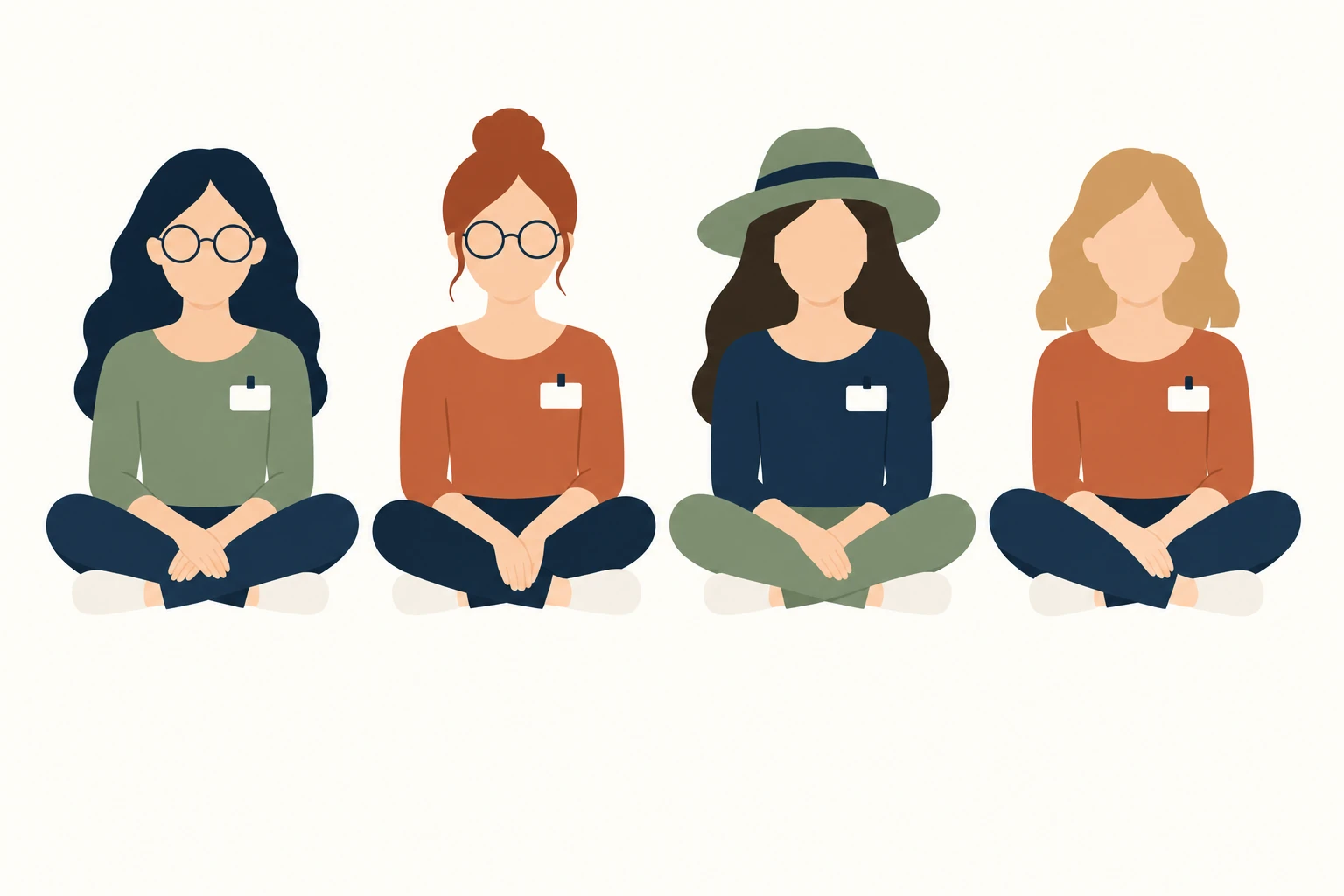
From left to right, the illustration shows Nora, Inès, Lina and Zoé. All four are seated and have badges. The key names the other pictured features. In this exercise, the middle bucket always contains an explicitly stated two-person subset; quelques alone does not give an exact number.
| Person | Glasses | Other visible details |
|---|---|---|
| Nora | Yes | Green jumper; dark hair |
| Inès | Yes | Orange jumper; red hair in a bun |
| Lina | No | Navy jumper; green hat; dark hair |
| Zoé | No | Orange jumper; blond hair |
Tap a word, then the box it belongs in.
Tous and toutes follow the phrase being used
Toutes les quatre refers to the four women. Tous les membres uses the masculine grammatical noun membres. The reference is still the complete group, but the word accompanying the quantifier changes. Quelques personnes does not mean all people; this task names the two intended people after the colon.
Toutes les quatre ont un badge, mais seules Nora et Inès portent des lunettes.
All four have a badge, but only Nora and Inès wear glasses.
An explicit only-one statement is stronger than an isolated one
Une seule personne excludes the other three for the stated feature. Une personne can simply identify one person in ordinary language without saying no one else qualifies. Here the key gives blond hair only to Zoé, so that card also has an exact-one answer. Use the complete scene rather than treating une as always meaning only one.
For a group description of your own, identify the complete group first. Then add a count or names for the subset. Trois personnes portent des lunettes is more exact than quelques personnes when the number matters.