Dialogue
Gamin or enfant: a French conversation about childhood
Read a childhood conversation to compare gamin, gamine and enfant. Practise your replies, then choose familiar or neutral wording for three situations.
- A2
- 10 lines
- Practice mode
- Learn this in the A2 notebook →
In short
Enfant is the neutral word for a child; gamin and gamine mean “kid” in familiar language. In a memory, quand j’étais gamin sounds conversational. In tu te comportes comme un gamin, the comparison criticises someone’s behaviour.
Yellow the idea to rememberBlue French to learnRed watch out
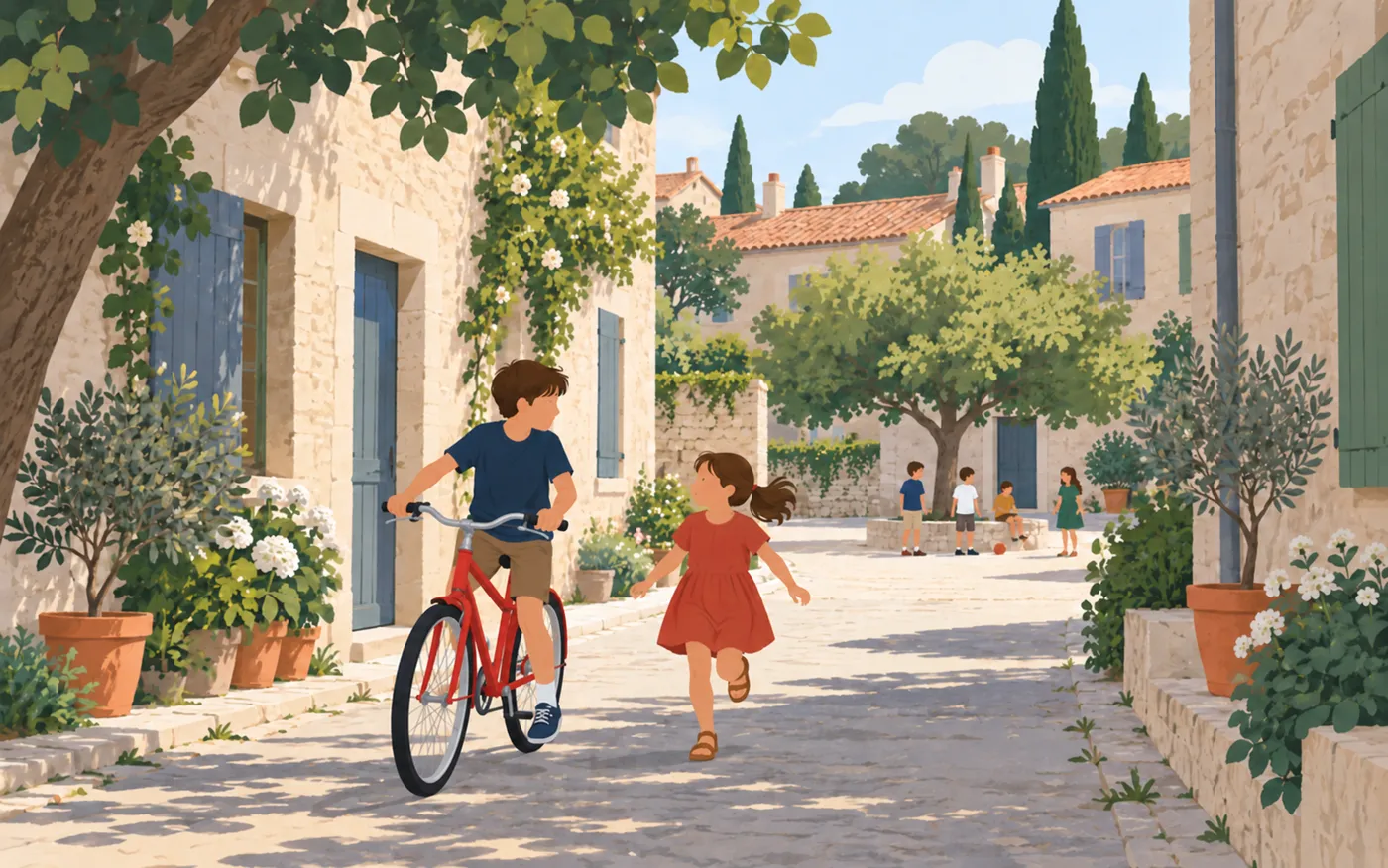
An old photo, a familiar voice
Camille and Samir are looking at a family photo. Practise Samir’s part: hide his lines, answer from the English cues, then reveal the French. Notice how the conversation moves from children in the photograph to a memory of being a kid.
- Camille
C’est toi sur cette photo, avec le vélo rouge ?
English
Is that you in this photo, with the red bike?
- Samir
Oui ! Quand j’étais gamin, je faisais du vélo tous les jours.
Say yes. Explain that you rode your bike every day as a kid.
English
Yes! When I was a kid, I used to ride my bike every day.
- Camille
Et la petite fille à côté de toi, c’est qui ?
English
And who is the little girl next to you?
- Samir
C’est ma sœur. Elle était encore toute petite.
Say it is your sister and that she was still very little.
English
That’s my sister. She was still very little.
- Camille
Vous jouiez souvent ensemble ?
English
Did you often play together?
- Samir
Oui, on jouait avec les autres enfants du quartier.
Say you used to play with the other children in the neighbourhood.
English
Yes, we used to play with the other children in the neighbourhood.
- Camille
Vous aviez l’air heureux !
English
You looked happy!
- Samir
On était une bande de gamins toujours dehors.
Describe yourselves as a bunch of kids who were always outside.
English
We were a bunch of kids who were always outside.
- Camille
Et ta sœur, elle aimait le vélo aussi ?
English
And did your sister like cycling too?
- Samir
Oui, déjà gamine, elle adorait ça.
Say she loved it even as a kid; use the feminine form.
English
Yes, she loved it even as a kid.
un enfant / une enfanta child
Focus: neutral description or family relationship
les enfants du quartier
Les enfants jouent dans le jardin.
The children are playing in the garden.
un gamin / une gaminea kid
Focus: a familiar way to talk about a child
quand j’étais gamin / gamine
Quand j’étais gamine, je jouais au foot.
When I was a kid, I used to play football.
What is the difference between gamin and enfant?
Mes enfants ont trente et trente-deux ans.
My children are thirty and thirty-two.
Enfants names a family relationship here. Both children are adults.
Arrête de te comporter comme un gamin !
Stop behaving like a kid!
The criticism comes from the whole phrase: the speaker is annoyed by the behaviour.
For a school notice, choose les enfants. In a chat about childhood, les gamins fits a familiar voice. Warmth or irritation comes from the sentence and tone: compare a happy memory with a sharp instruction. Keep the feminine and plural forms clear: une gamine, des gamines, des gamins.