Gaucher or droitier: left-handed and right-handed in French
Learn gaucher, gauchère, droitier and droitière for handedness. Separate the hand a person writes with from their seat on the left or right.
In short
Gaucher / gauchère means left-handed; droitier / droitière means right-handed. These words describe handedness. À gauche and à droite describe location or direction. A left-handed person can sit on the right: Nora est gauchère et elle est à droite de la table.
Yellow the idea to rememberBlue French to learn
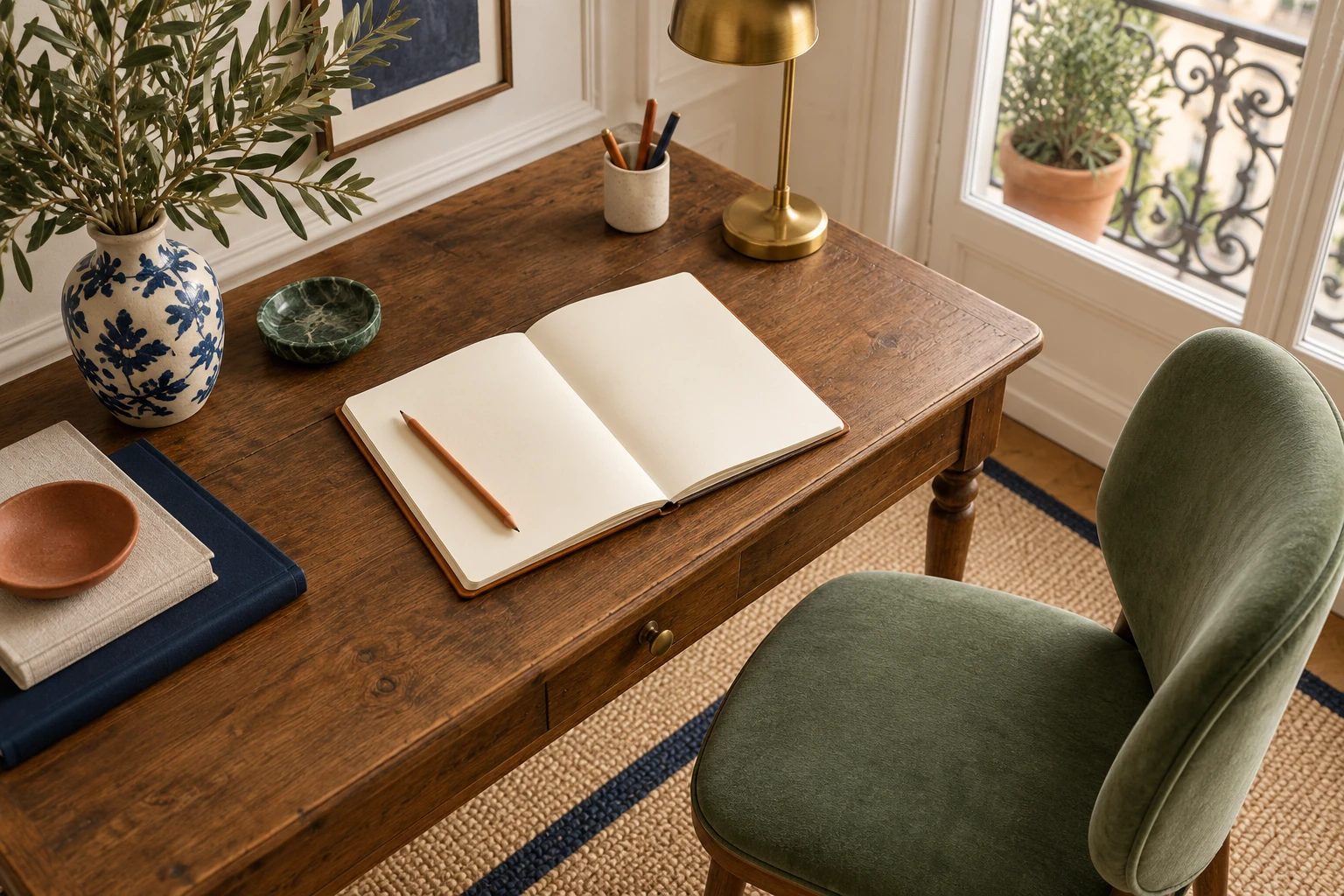
The words resemble each other, but they answer different questions. Quelle main ? concerns the hand used for an activity. Où ? concerns the person’s position. Do not use a seat on the left as proof that someone is gaucher. The dialogue gives the handedness explicitly.
| French | Meaning | Job |
|---|---|---|
| Il est gaucher. | He is left-handed. | Describe the person’s handedness. |
| Elle est gauchère. | She is left-handed. | Feminine handedness adjective. |
| Il est droitier. | He is right-handed. | Describe the person’s handedness. |
| Elle est droitière. | She is right-handed. | Feminine handedness adjective. |
| Il est à gauche. | He is on the left. | Locate the person. |
| Elle est à droite. | She is on the right. | Locate the person. |
Choosing a seat at a drawing workshop
- Nora
Je peux m’asseoir à cette table ?
May I sit at this table?
English
May I sit at this table?
- Romain
Oui. Tu préfères quelle place ?
English
Yes. Which place do you prefer?
- Nora
La place à droite, s’il te plaît.
The place on the right, please.
English
The place on the right, please.
- Romain
D’accord. Tu es droitière ?
English
All right. Are you right-handed?
- Nora
Non, je suis gauchère.
No, I am left-handed.
English
No, I am left-handed.
- Romain
Ah, tu écris de la main gauche ?
English
Ah, you write with your left hand?
- Nora
Oui. Et toi, tu es gaucher ?
Yes. And are you left-handed?
English
Yes. And are you left-handed?
- Romain
Non, je suis droitier. J’écris de la main droite.
English
No, I am right-handed. I write with my right hand.
- Nora
Tu peux me passer le crayon ?
Can you pass me the pencil?
English
Can you pass me the pencil?
- Romain
Celui qui est à gauche du carnet ?
English
The one to the left of the sketchbook?
- Nora
Oui, c’est ça.
Yes, that’s right.
English
Yes, that’s right.
- Romain
Le voici. Tu veux aussi les ciseaux ?
English
Here it is. Would you also like the scissors?
- Nora
Oui. Il y a des ciseaux pour gauchers ?
Yes. Are there scissors for left-handed people?
English
Yes. Are there scissors for left-handed people?
- Romain
Je vais demander à l’animatrice.
English
I’ll ask the workshop leader.
- Nora
Merci. Je commence mon dessin.
Thank you. I’ll start my drawing.
English
Thank you. I’ll start my drawing.
- Romain
D’accord, moi aussi.
English
All right, me too.
The person adjective changes with gender
Gaucher becomes gauchère and droitier becomes droitière with a feminine subject in these examples. The accent and ending are part of the feminine form. The location phrases à gauche and à droite do not change with the person’s gender: Nora est à droite, Romain est à droite.
Je suis gaucher. J’écris de la main gauche.
I am left-handed. I write with my left hand.
Elle est droitière, mais elle est assise à gauche sur la photo.
She is right-handed, but she is seated on the left of the photo.
Name the activity when a hand choice matters
Écrire de la main gauche describes the hand used for writing. The scissors question asks whether a suitable item is available, without saying every person uses every tool in the same way. Handedness does not establish drawing skill, neatness or a personality trait. Those claims would need separate information.
For a clear introduction, keep the two meanings in separate clauses if needed: Je suis gauchère, et je m’assieds à droite. That gives the listener both facts without making one stand for the other.