Sentence builder
Non parce que… mais parce que: build precise French rebuttals
Build French rebuttals with non parce que… mais parce que, rejecting an explanation while keeping the event itself true.
- B2
- 4 sentences to build
- Tap the tiles
- Learn this in the B2 notebook →
In short
Use non parce que… mais parce que… to replace a proposed reason: Le débat est reporté, non parce que le sujet est clos, mais parce que la salle est indisponible. The postponement remains true; the first explanation is rejected and the second supplied.
Yellow the idea to rememberBlue French to learn
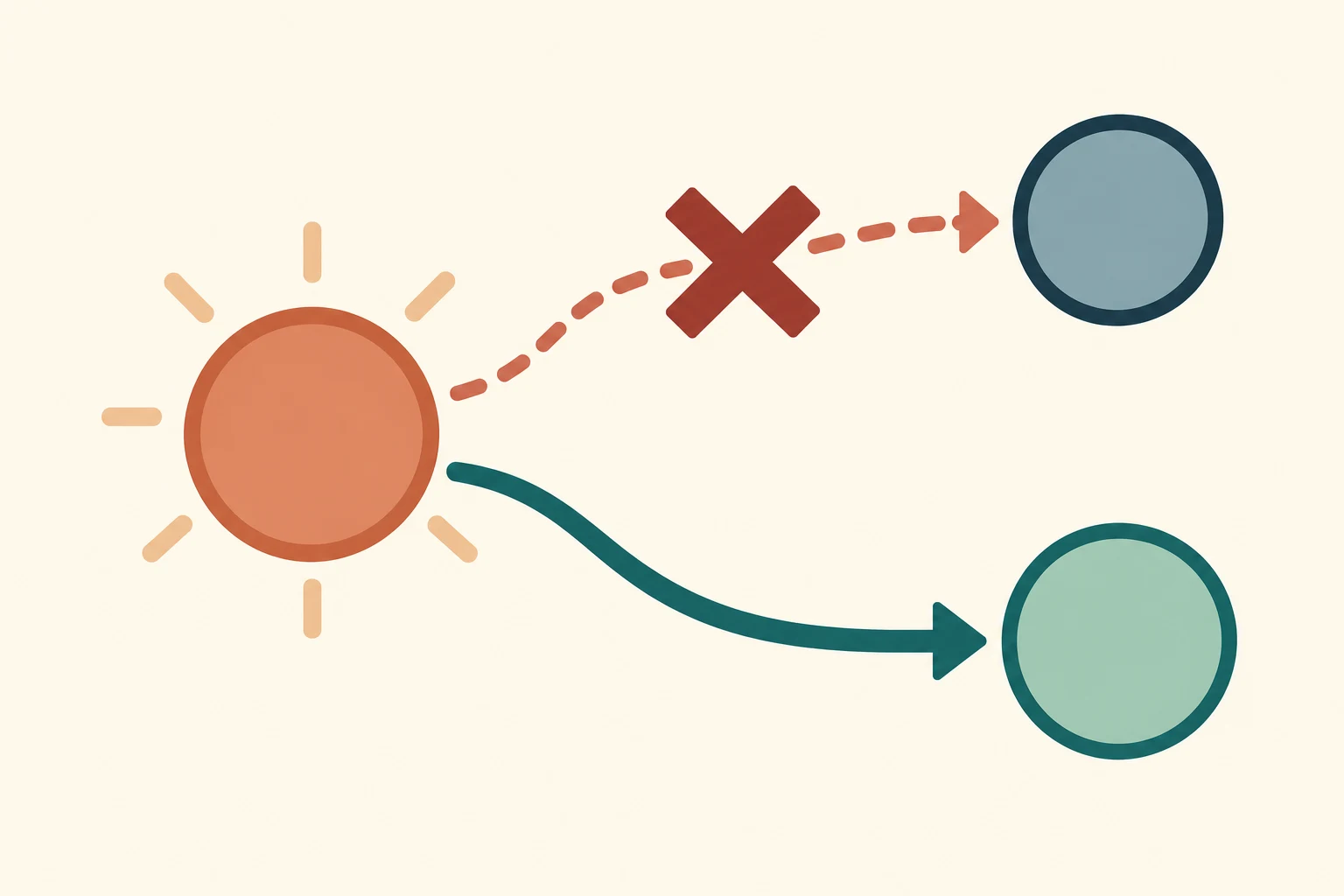
The event and its cause occupy different parts of the sentence. First state what happened. Then identify the explanation you are rejecting and give the reason you mean. This structure is useful when a reader has drawn the wrong conclusion from a real change, such as a postponed meeting or a revised article.
L’article a été modifié, non parce que la conclusion change, mais parce qu’un chiffre était erroné.
The article was changed, not because the conclusion changes, but because a figure was wrong.
| Part | Function |
|---|---|
| L’article a été modifié | Keeps the event true. |
| non parce que la conclusion change | Rejects one proposed explanation. |
| mais parce qu’un chiffre était erroné | Supplies the intended explanation. |
Do not negate the event accidentally
L’article n’a pas été modifié denies the change itself. That is different from accepting that it changed while disputing why. Placing non directly before the first parce que keeps the rejection attached to the reason. Both clauses can use the indicative when you are contrasting explanations of the stated situation. The factual status of a reason still comes from the context and evidence.
Tap the words in the right order. Tap a placed word to send it back.
The debate is postponed because the room is unavailable, rather than because the subject is closed.
I reply because clarification is useful, rather than because I am targeted.
The meeting changes location because the room is closed, rather than because fewer people are attending.
We request time because we must consult our members, rather than because we refuse.
For your own example, choose an event with two plausible explanations. Keep the event unchanged in every version, and make the supplied reason specific enough to resolve the misunderstanding. If the real reason is still unknown, do not fill the second clause with a confident explanation you cannot support.