Plage or côte: a beach, the coast and three useful accents
Choose plage or côte with a seaside scene, learn à la plage and sur la côte, then check côte, côté and cote with a short quiz.
In short
Une plage is a beach; la côte is the coast, which can include beaches, cliffs, harbours and towns. Say aller à la plage for going to the beach and habiter sur la côte for living on the coast. Both nouns are feminine.
Yellow the idea to rememberBlue French to learnRed watch out
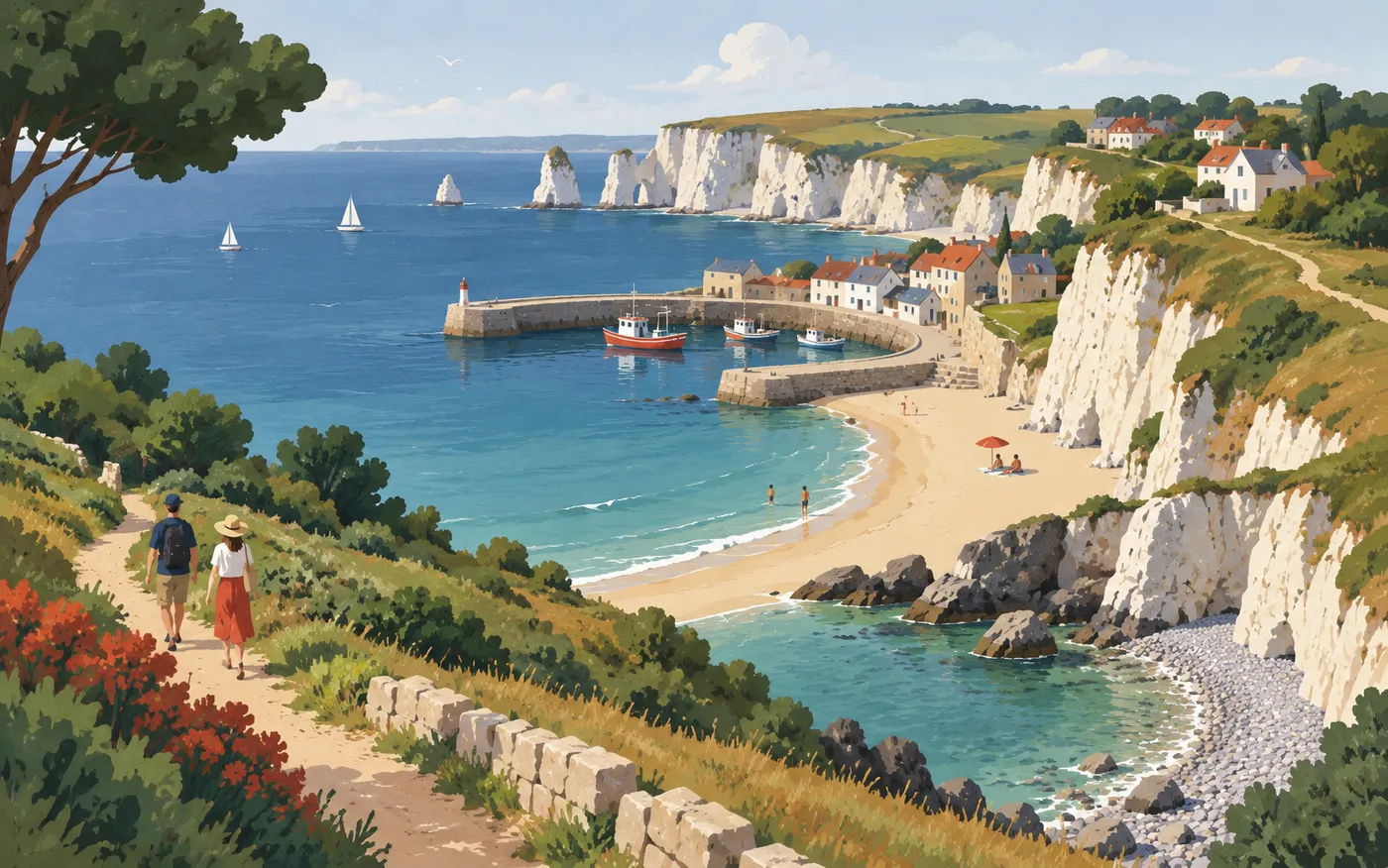
What is the difference between plage and côte?
la plagethe beach
Focus: a particular place beside the water
à la plage / sur la plage
Nous allons à la plage.
We’re going to the beach.
Les enfants jouent sur la plage.
The children are playing on the beach.
la côtethe coast
Focus: the wider land along the sea
sur la côte / le long de la côte
Ils habitent sur la côte.
They live on the coast.
La route longe la côte.
The road follows the coast.
Explore the coast
Find:
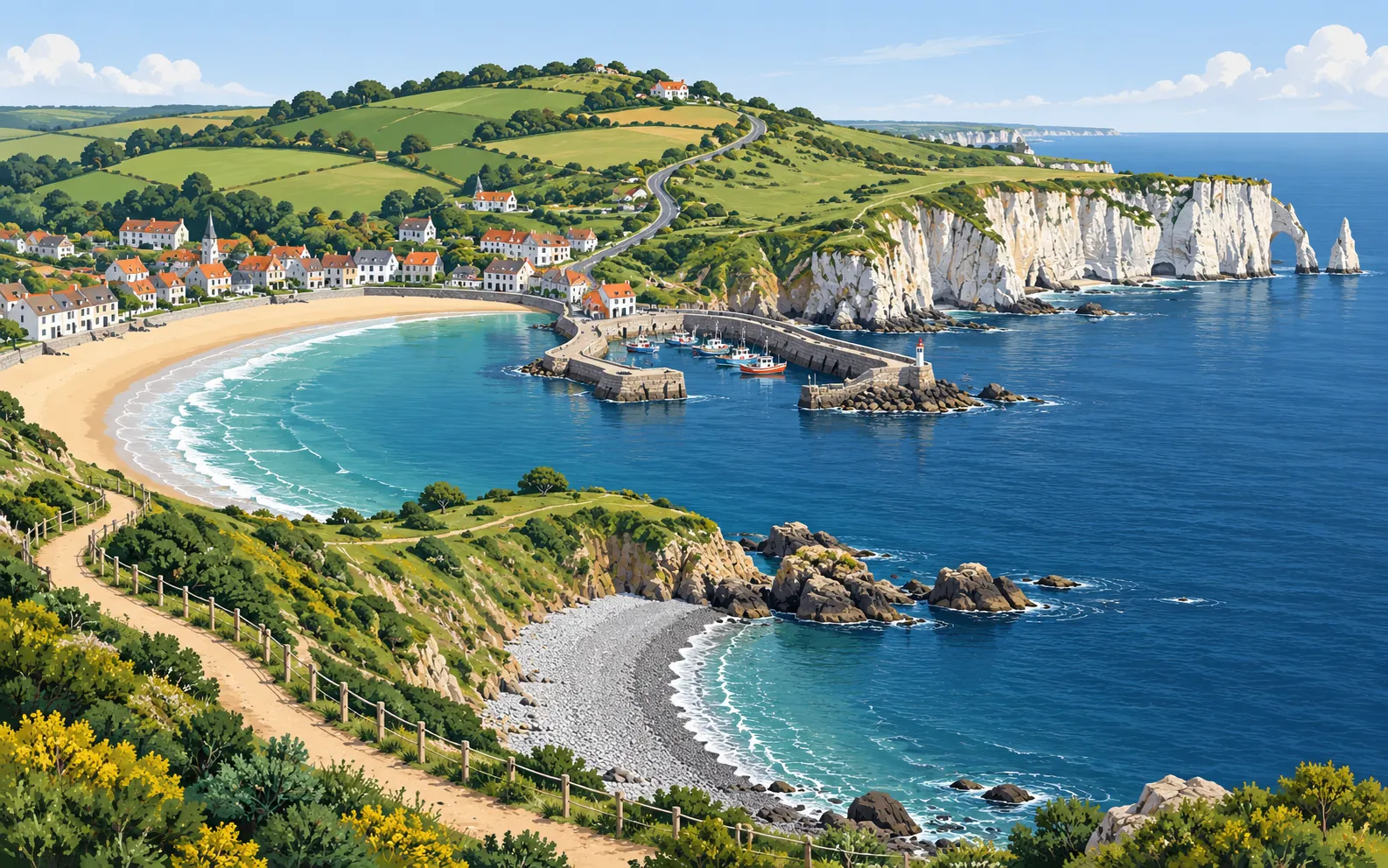
A beach can be sandy, pebbly or beside a lake: une plage au bord d’un lac. The coast is the broader seaside area. In monter une côte, however, côte means a hill or slope. The cyclists climb the inland road; the verb monter brings that meaning into focus.
What is the difference between côte, côté and cote?
| French | Meaning | Example |
|---|---|---|
| la côte | coast; hill; rib | Nous marchons le long de la côte. |
| le côté | side | Le café est du côté gauche de la rue. |
| la cote | rating; popularity in avoir la cote | Ce chanteur a la cote. |
Je suis libre sur cette plage horaire : de dix heures à midi.
I’m free in this time slot: from ten until midday.
Une plage horaire is a time slot. Here plage refers to a range, rather than a seaside place.