Real document
Read a French school memory: who lived there then?
Compare a French school memory from 2012 with a current note about the same house. Identify the former residents without treating the memory as a current address.
- A2
- Letter
- Read and answer
- Learn this in the A2 notebook →
In short
En 2012, j’habitais… describes a past residence; aujourd’hui, …habite… gives the current one. In these notes, Lina and her parents lived in the house in 2012. The Morel family lives there now. Lina’s memory does not supply her current address.
Yellow the idea to rememberBlue French to learn
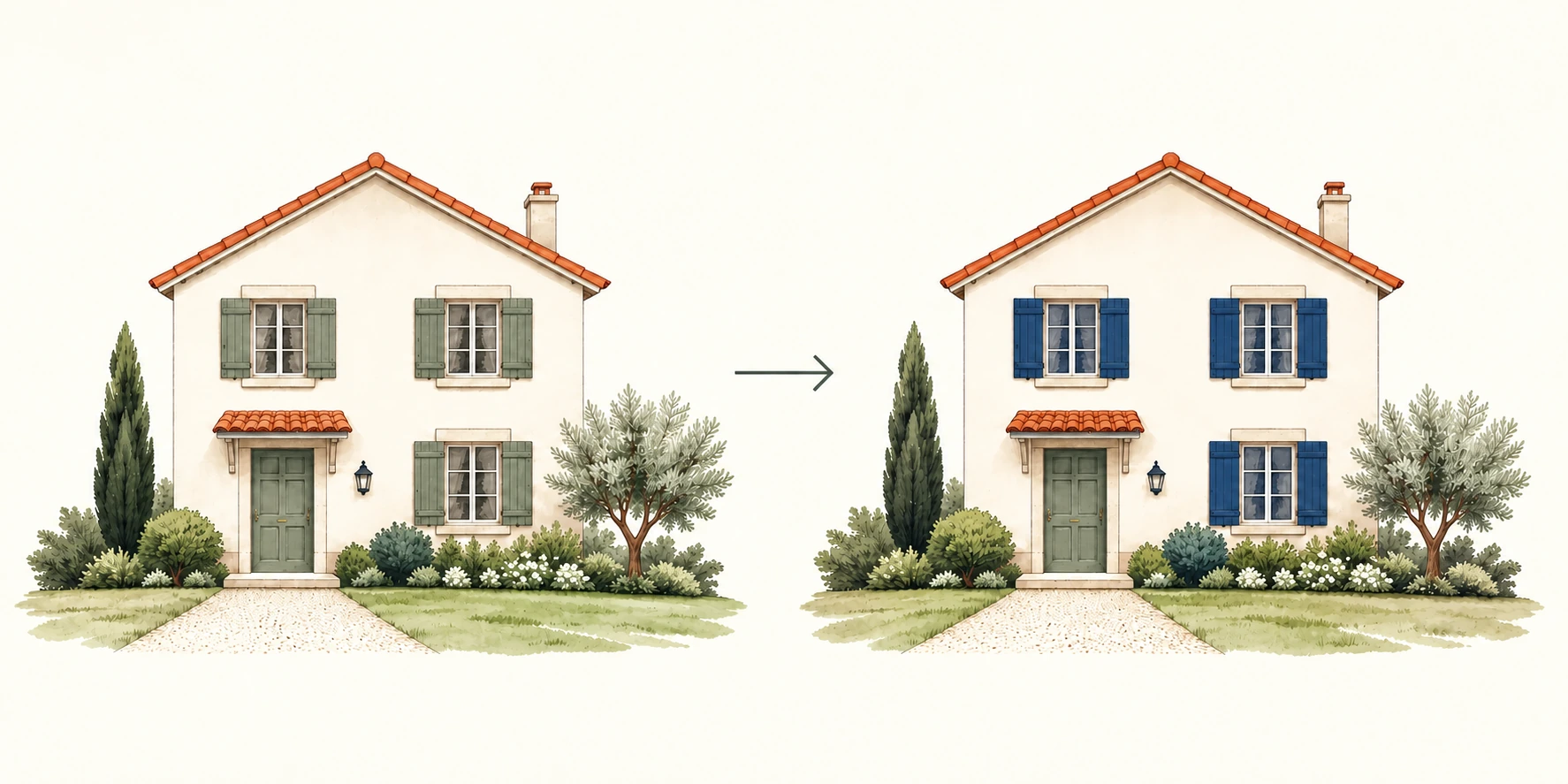
Two short documents refer to the same house near a school. Their time anchors are different. The first is Lina’s childhood recollection; the second is a present-day update written for the exercise. Keep the place fixed while changing the time and the residents.
Souvenir de Lina · en 2012
En 2012, j’avais huit ans. J’habitais avec mes parents dans la petite maison près de l’école. La famille Morel n’y habitait pas à cette époque-là.
Tous les matins, je sortais par la porte verte et je retrouvais mon amie Sara devant l’école. Mes parents travaillaient dans le quartier.
Note actuelle · la même maison
Aujourd’hui, la famille Morel habite dans cette maison. Lina et ses parents n’y habitent plus.
La porte est toujours verte. L’école est encore à côté. Cette note ne donne pas l’adresse actuelle de Lina.
Read the time words before assigning the resident
| Time anchor | Verb form | Residents named |
|---|---|---|
| En 2012 / à cette époque-là | J’habitais | Lina and her parents |
| Aujourd’hui | Habite | The Morel family |
| Aujourd’hui | N’y habitent plus | Lina and her parents no longer live there |
Habitais links Lina to the house during the remembered period. Habite links the Morel family to it today. N’y habitent plus explicitly says the earlier residents have left. Y in that sentence refers to the house, rather than naming a new place.
La porte est toujours verte, mais les habitants ont changé.
The door is still green, but the residents have changed.
A detail can stay the same while another changes. The green door and nearby school persist in the current note. Their continued presence does not imply that Lina still lives behind that door. Track the particular fact each sentence describes.
For a short summary, name the period in both sentences: En 2012, Lina habitait ici avec ses parents. Aujourd’hui, la famille Morel y habite. Repeating the anchors makes the change clear even when the reader sees the summary without the full documents.