Conjugation table
Rentrer conjugation: être for coming home, avoir for bringing things in
Conjugate rentrer with a present-first guide and seven-tense reference. Separate coming home with être from bringing an object indoors with avoir.
- A2
- 7 tenses
- Auxiliary: être (return home); avoir (bring an object in)
- Learn this in the A2 notebook →
In short
Rentrer is a regular -er verb: je rentre, nous rentrons. For coming home, say elle est rentrée. For bringing something indoors, say elle a rentré les chaises. The construction changes the compound-tense auxiliary; the main table below uses the coming-home meaning.
Yellow the idea to rememberBlue French to learn
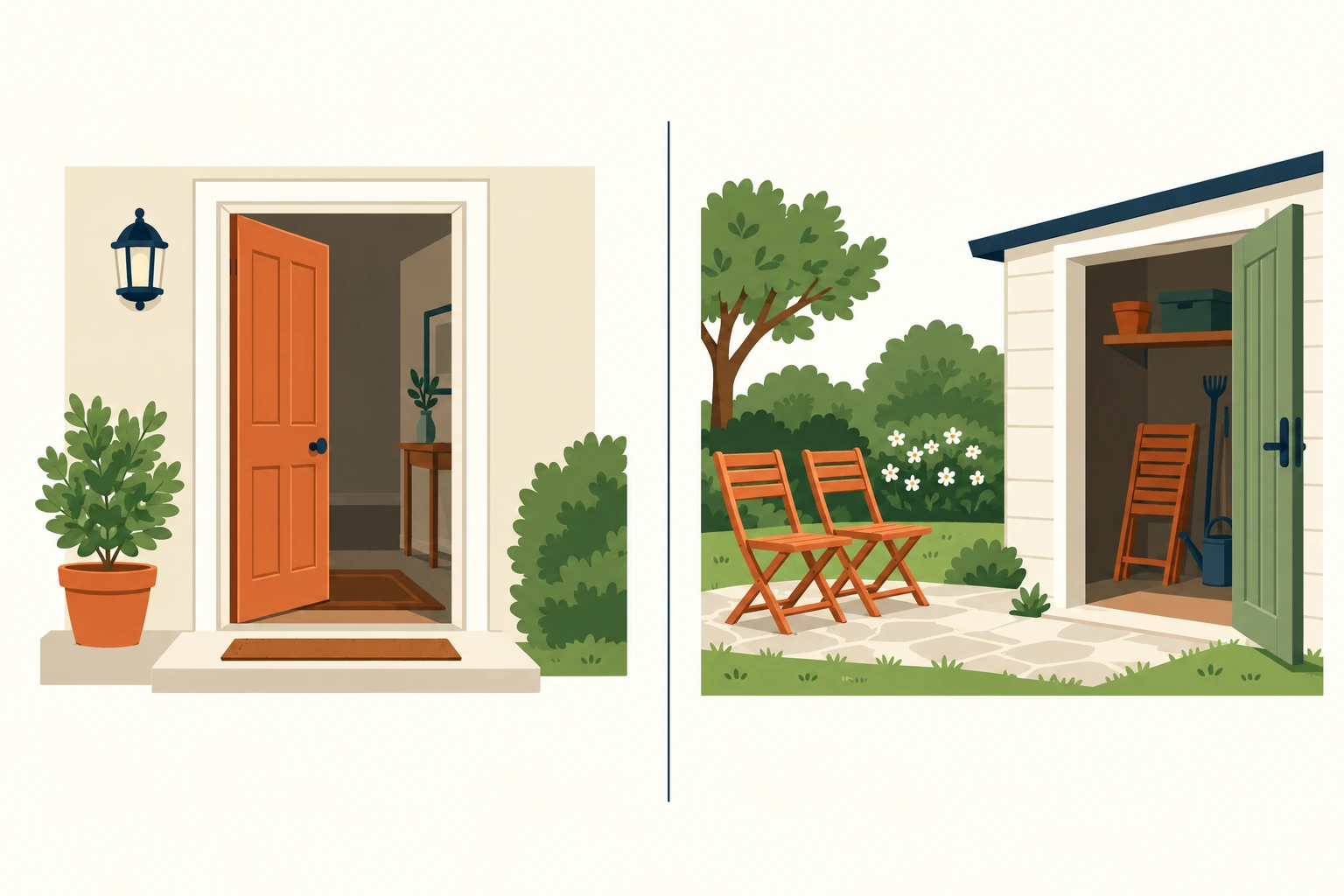
Rentrer can describe a person returning home or inside. It can also take a direct object naming something brought indoors. Look for that object before choosing the auxiliary in the passé composé. The present-tense forms themselves stay the same in both uses.
- Infinitive
- rentrer
- Past participle
- rentré
- Present participle
- rentrant
- Auxiliary
- être (return home); avoir (bring an object in)
PrésentA current action or regular return.
| je | rentre |
| tu | rentres |
| il / elle / on | rentre |
| nous | rentrons |
| vous | rentrez |
| ils / elles | rentrent |
Nous rentrons à pied le mardi.
We walk home on Tuesdays.
Passé composéA completed return; agreement with the subject is shown.
| je | suis rentré(e) |
| tu | es rentré(e) |
| il / elle / on | est rentré(e) |
| nous | sommes rentré(e)s |
| vous | êtes rentré(e)(s) |
| ils / elles | sont rentré(e)s |
Elles sont rentrées avant la pluie.
They came home before the rain.
ImparfaitHabitual returns in a past setting.
| je | rentrais |
| tu | rentrais |
| il / elle / on | rentrait |
| nous | rentrions |
| vous | rentriez |
| ils / elles | rentraient |
Quand j’étais étudiant, je rentrais en bus.
When I was a student, I used to come home by bus.
Futur simpleA future return.
| je | rentrerai |
| tu | rentreras |
| il / elle / on | rentrera |
| nous | rentrerons |
| vous | rentrerez |
| ils / elles | rentreront |
Demain, vous rentrerez avant dix-huit heures.
Tomorrow, you will come home before six p.m.
Conditionnel présentAn imagined return under a condition.
| je | rentrerais |
| tu | rentrerais |
| il / elle / on | rentrerait |
| nous | rentrerions |
| vous | rentreriez |
| ils / elles | rentreraient |
Sans cette réunion, nous rentrerions plus tôt.
Without this meeting, we would come home earlier.
Subjonctif présentAfter a trigger such as avant que.
| je | rentre |
| tu | rentres |
| il / elle / on | rentre |
| nous | rentrions |
| vous | rentriez |
| ils / elles | rentrent |
Je prépare le repas avant que tu rentres.
I prepare the meal before you come home.
ImpératifTelling someone to come inside or home.
| (tu) | rentre |
| (nous) | rentrons |
| (vous) | rentrez |
Rentre, il commence à pleuvoir !
Come inside, it’s starting to rain!
Who returns, and what is brought in?
Elle est rentrée.She came home / came back inside.
Focus: No direct object: the person returns.
Ma sœur est rentrée à vingt heures.
My sister came home at eight p.m.
Elle a rentré les chaises.She brought the chairs inside.
Focus: Les chaises is the direct object being moved indoors.
Ma sœur a rentré les chaises du jardin.
My sister brought the garden chairs inside.
À la maison and à vingt heures tell you a place and a time; they are not direct objects. Adding them does not turn a return into the object-taking construction. In a simple sentence with avoir and a following direct object, as in elle a rentré les chaises, rentré does not agree with the subject or that following object.
Read the table’s agreement notation
With être for a return, the participle agrees with the subject: il est rentré, elle est rentrée, ils sont rentrés, elles sont rentrées. Parentheses in the table show alternatives, not letters to say aloud. Vous êtes rentré can address one man formally; vous êtes rentrée addresses one woman; plural vous uses rentrés or rentrées according to the group.
- Elle a rentrée à la maison.Elle est rentrée à la maison.
This is her return, without a direct object. Use être and feminine agreement.
- Elle est rentré.Elle est rentrée.
For a female subject with être, add -e to the participle.
- Elle est rentrée les chaises.Elle a rentré les chaises.
Les chaises is a following direct object: she brings something in, so use avoir and rentré here.
Use the present first, then revisit the six reference extensions as needed. In compound practice, write two paired sentences about the same person: one where the person returns and one where the person brings an object in. The visible object makes the auxiliary choice easier to explain.