Timeline
Serving lunch in order: French first, then and finally
Follow five explicitly timed lunch preparations in French. Use d’abord, puis, ensuite and enfin to find what happens before and after each step.
- A1
- 5 moments
- Put-in-order game
- Learn this in the A1 notebook →
In short
D’abord introduces the first step, puis and ensuite move on, and enfin marks the final step. In this supplied sequence, Lila washes the tomatoes first and brings the salad to the table last. Use the stated times and connectors to follow her plan.
Yellow the idea to rememberBlue French to learn
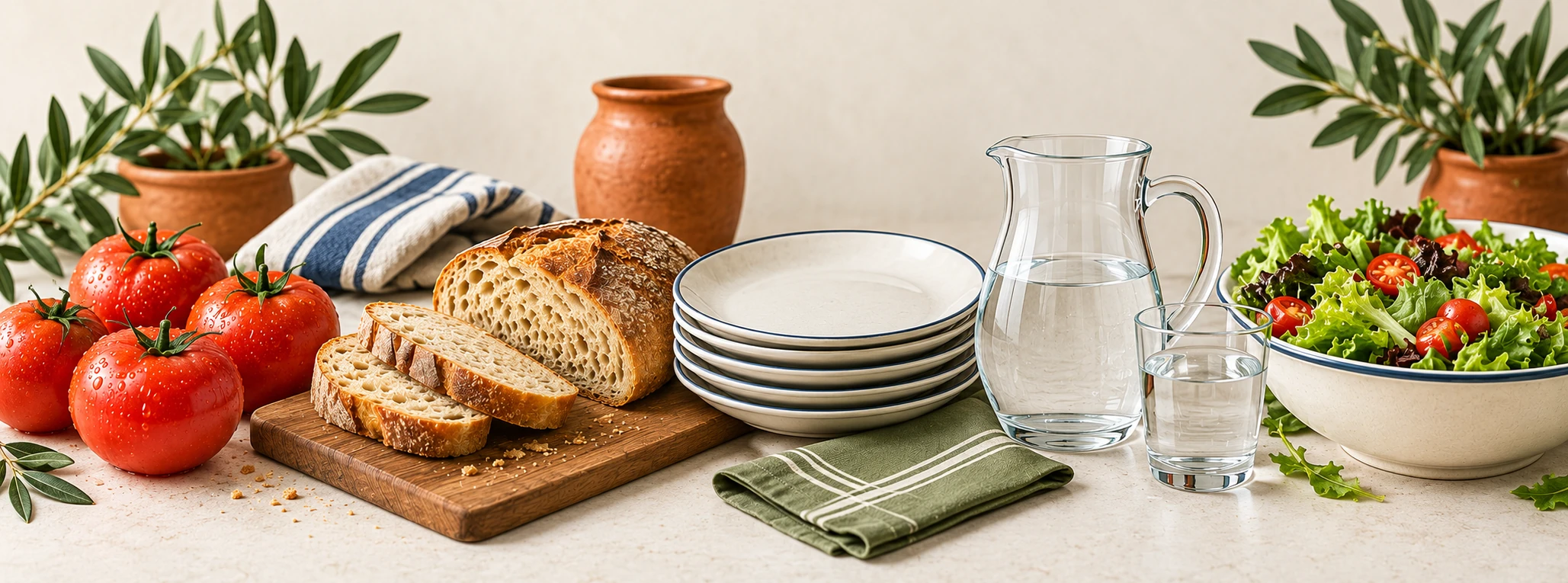
Lila has written down five preparations for one lunch. Every step has a time, and each connector links it to the steps around it. Use her written plan to decide what happens first, next and last.
- 11 h 30D’abord, Lila lave les tomates.First, Lila washes the tomatoes.
- 11 h 40Puis, elle coupe le pain.Then she cuts the bread.
- 11 h 50Ensuite, elle met les assiettes sur la table.Next she puts the plates on the table.
- 12 hAprès, elle verse de l’eau dans les verres.After that, she pours water into the glasses.
- 12 h 10Enfin, elle apporte la salade à table.Finally, she brings the salad to the table.
Read one action at a time
At 11 h 30, the action is laver les tomates. At 11 h 40, it is couper le pain. Puis connects the second action to the first. The next two lines place plates and water before the salad reaches the table. Enfin closes this particular list at 12 h 10. The word marks the final preparation in Lila’s list.
| French | Role in this plan |
|---|---|
| D’abord | Start the sequence. |
| Puis | Move to the next action. |
| Ensuite | Continue with another action. |
| Après | Move on after the preceding step. |
| Enfin | Close the listed sequence. |
Use avant and après to compare two steps
Lila coupe le pain avant de mettre les assiettes sur la table.
Lila cuts the bread before putting the plates on the table.
Elle verse l’eau après avoir mis les assiettes.
She pours the water after putting the plates down.
The second example is a recognition extension: après avoir mis refers back to the completed plate step. For an A1 answer, you can keep two short sentences instead: Elle met les assiettes. Ensuite, elle verse l’eau. The connector is enough to make the order clear without building a longer construction.
To describe your own plan, choose three real actions and put them in the order you intend. Add d’abord to the first and enfin to the last. Keep the actions specific, as in laver les tomates, rather than repeating préparer le repas for every stage.