A1 · a visitor on a quiet morning
Le chat du voisin
Ce matin, Emma travaille chez elle. Son ordinateur est sur la table de la cuisine. À neuf heures, elle ouvre la porte pour prendre son sac sur le palier1. Un petit chat gris est devant elle. Il regarde Emma et il miaule2. Elle sourit. « Bonjour, toi ! Tu cherches quelqu’un ? »
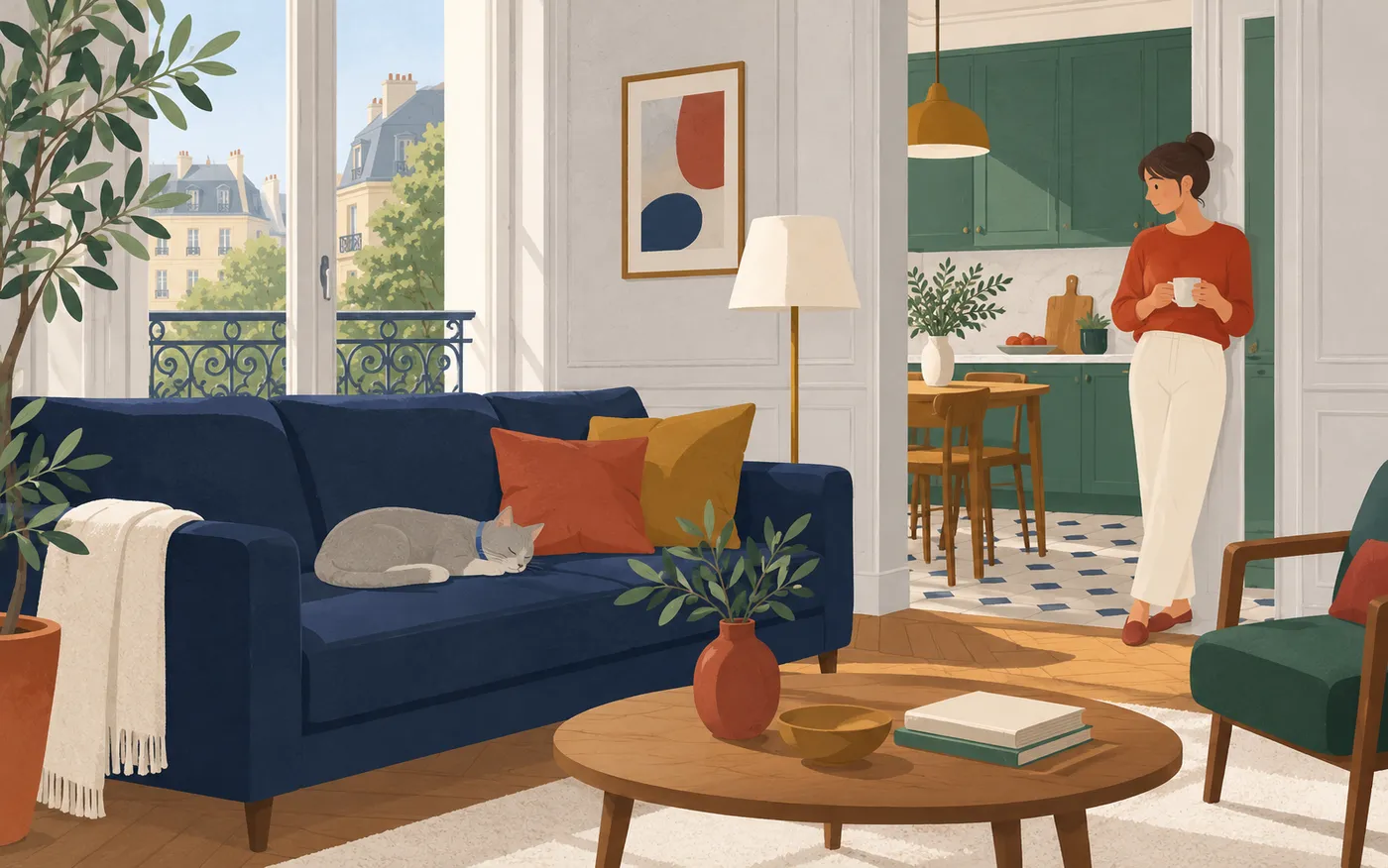
Le chat entre dans l’appartement. Il passe devant la cuisine et il va dans le salon. Puis il s’installe3 sur le canapé. Emma pose son sac et elle regarde son visiteur. « Tu es bien ici ? » Le chat ferme les yeux et il ronronne4. Emma retourne à son ordinateur, mais le chat monte sur la table. Il pose une patte5 sur le clavier.
« Ah non ! Ici, c’est mon travail ! » Emma prend doucement le chat dans ses bras. Il porte un collier6 bleu. Sur le collier, il y a un nom : Oscar. Mais il n’y a pas de numéro de téléphone. Emma regarde par la fenêtre. Personne dans la cour. « Ton maître s’inquiète7 peut-être », dit-elle.
À ce moment-là, quelqu’un frappe à la porte. C’est Marc, le voisin. Il tient une petite affiche8 avec une photo. « Bonjour, je cherche mon chat… » Oscar saute par terre et va vers Marc. « Oscar ! Tu es là ! » Emma rit. « Oui, et il aime beaucoup mon canapé. » Marc remercie Emma. Oscar regarde déjà la porte de la cuisine.
Read it in English
This morning, Emma is working at home. Her computer is on the kitchen table. At nine o’clock, she opens the door to get her bag from the landing. A little grey cat is in front of her. He looks at Emma and miaows. She smiles. ‘Hello there! Are you looking for someone?’
The cat enters the flat. He goes past the kitchen and into the living room. Then he settles down on the sofa. Emma puts down her bag and looks at her visitor. ‘Are you comfortable here?’ The cat closes his eyes and purrs. Emma goes back to her computer, but the cat climbs onto the table. He puts a paw on the keyboard.
‘Oh no! This is my work!’ Emma gently picks the cat up in her arms. He is wearing a blue collar. There is a name on the collar: Oscar. But there is no phone number. Emma looks out of the window. Nobody in the courtyard. ‘Your owner may be worried,’ she says.
Just then, someone knocks at the door. It’s Marc, the neighbour. He is holding a small poster with a photo. ‘Hello, I’m looking for my cat…’ Oscar jumps down onto the floor and goes towards Marc. ‘Oscar! You’re here!’ Emma laughs. ‘Yes, and he really likes my sofa.’ Marc thanks Emma. Oscar is already looking at the kitchen door.