A1 · A small hosting problem
Une tasse chez la voisine
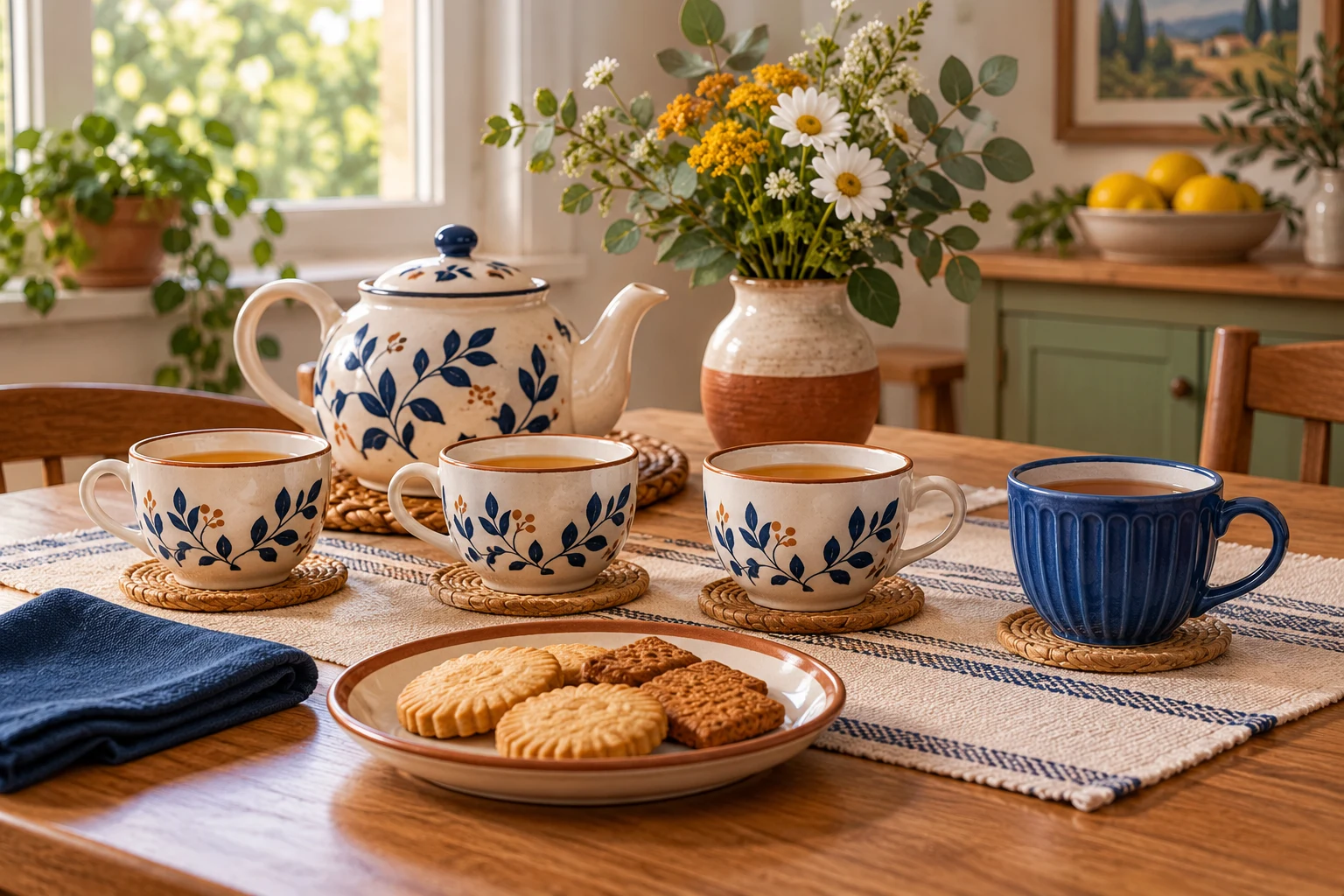
Samedi après-midi, Inès prépare du thé chez elle. Ses quatre amis arrivent à seize heures. Ils s’appellent Malik, Ana, Paul et Rose. Inès ne boit pas de thé aujourd’hui : elle a déjà un verre d’eau. Sur la table, elle pose trois tasses1, une théière et une petite assiette de biscuits. Puis elle compte2 les tasses : une, deux, trois.
« Il y a quatre invités, mais seulement trois tasses », dit-elle. Elle ouvre le placard3 de la cuisine. Il contient des verres et des assiettes, mais pas d’autre tasse. Un verre peut servir à autre chose, mais elle préfère une tasse avec une anse4 pour chaque personne qui prend du thé. Elle téléphone à sa voisine, Mme Lenoir.
« Bonjour ! Vous avez une tasse à me prêter5 pour cet après-midi ? » Mme Lenoir répond : « Oui, bien sûr. J’ai une grande tasse bleue. » Inès passe chez elle et prend la tasse. Elle revient avant ses amis. Maintenant, les quatre tasses sont prêtes6 sur la table. Quand Rose arrive, elle remarque la tasse bleue. « Elle est jolie ! » Inès sourit : « Elle est à ma voisine. Je la lui rends7 ce soir. » Il y a maintenant assez8 de tasses pour les quatre invités.
Read it in English
On Saturday afternoon, Inès prepares tea at home. Her four friends arrive at four. They are called Malik, Ana, Paul and Rose. Inès is not drinking tea today: she already has a glass of water. She puts three cups, a teapot and a small plate of biscuits on the table. Then she counts the cups: one, two, three.
“There are four guests, but only three cups,” she says. She opens the kitchen cupboard. It contains glasses and plates, but no other cup. A glass can serve another purpose, but she prefers a cup with a handle for each person having tea. She phones her neighbour, Ms Lenoir.
“Hello! Have you got a cup you could lend me for this afternoon?” Ms Lenoir replies, “Yes, of course. I have a large blue cup.” Inès goes to her home and takes the cup. She returns before her friends. Now the four cups are ready on the table. When Rose arrives, she notices the blue cup. “It’s pretty!” Inès smiles: “It belongs to my neighbour. I’m returning it to her this evening.” There are now enough cups for the four guests.