Baking a baguette at home: what works in an ordinary oven
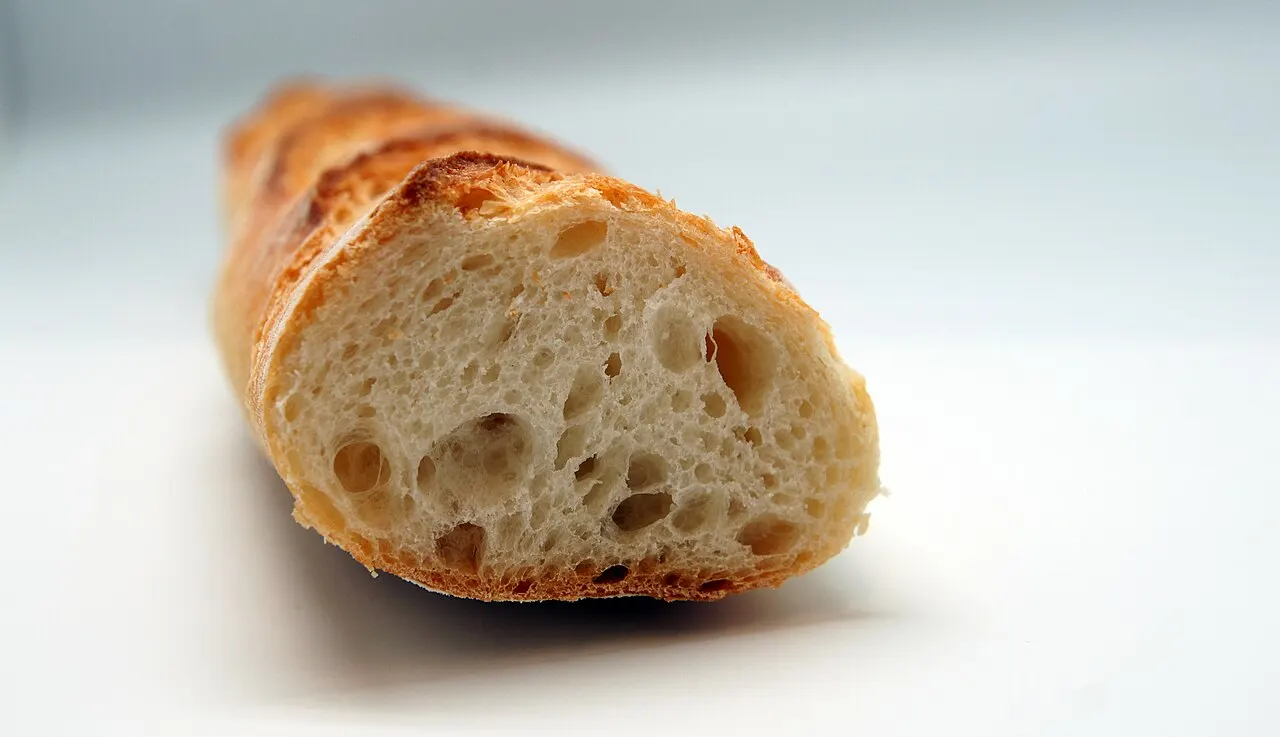
Two baguettes from an ordinary oven: T65 flour, a long slow rise, steam, and the slashes on top. With an honest note on what a home oven cannot do.
Yes, a good one: flour, water, salt, a little yeast and time. The crust comes from steam and a very hot oven, the taste from a slow rise. It will not match a baker’s deck oven, and it will be eaten within the hour all the same.
Yellow the idea to rememberBlue French to learnRed watch out
Le carnet de Mamie Jo
Baguettes maison
- farine T65bread flour350 g
- eau tièdewater245 g
- selsalt7 g
- levure fraîche de boulangeryeast5 g
- Mélanger la farine et l’eau. Laisser reposer 30 minutes.Mix the flour and water only. Rest for 30 minutes: this is l’autolyse.
- Ajouter la levure émiettée et le sel. Pétrir 8 minutes.Add the crumbled yeast and the salt. Knead for 8 minutes until smooth and elastic.
- Laisser lever 1 h 30 sous un linge, en rabattant la pâte à mi-parcours.Rise for 1 h 30 under a cloth. Halfway through, fold the dough over itself once.
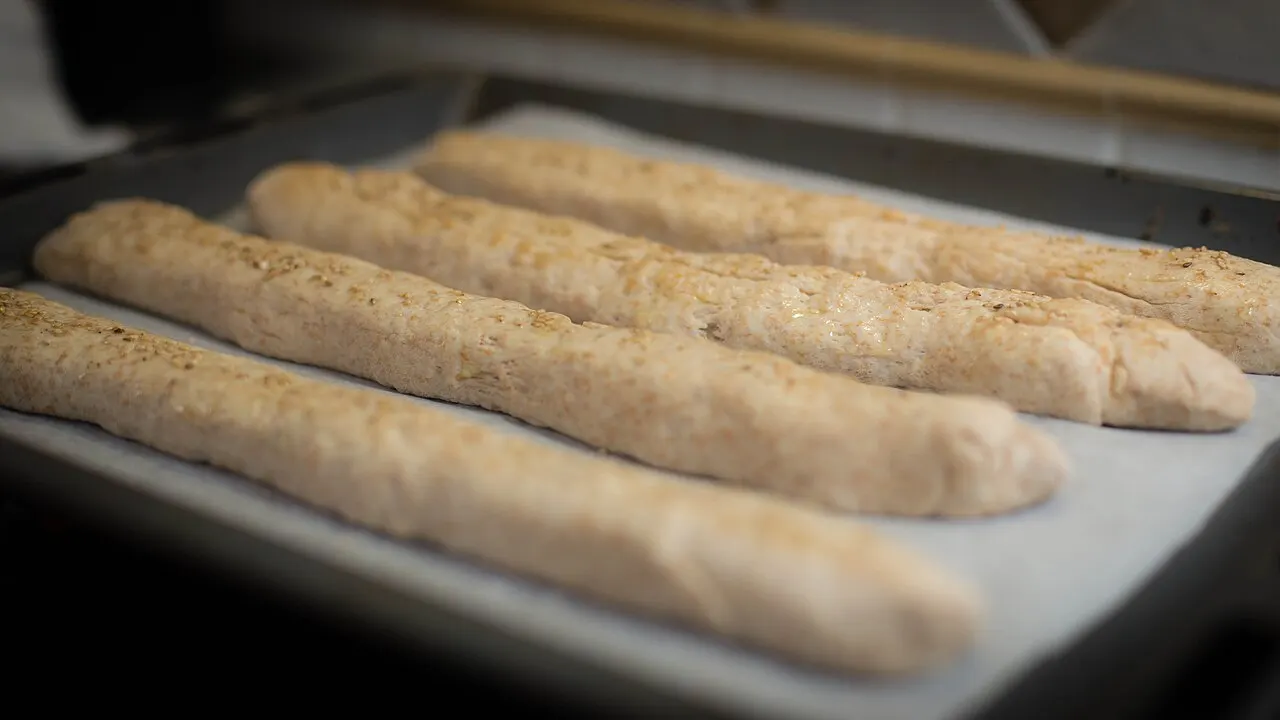
- Diviser en deux, façonner en baguettes. Laisser lever 45 minutes sur un linge fariné.Divide in two and shape into baguettes. Rise for 45 minutes in the folds of a floured cloth.
- Inciser le dessus de trois coups de lame.Slash each loaf three times with a razor blade, at a shallow angle.
- Enfourner à 250 °C avec un bol d’eau bouillante dans le four. Cuire 22 minutes.Bake at 250 °C on a preheated tray, with a bowl of boiling water in the oven, for 22 minutes.
Four 250 °C · 22 min
Laisser refroidir sur une grille.
Shopping list
Baguettes maison, for 2
Three and a half hours, twenty-five minutes of work
- Flour and water rest30 min
- Knead10 min
- First rise1 h 30
- Shape10 min
- Second rise45 min
- Bake22 min
hands onwaiting215 min in all
Heat the oven and its tray for a full twenty minutes before the loaves go in.
Pale crust, flat loaves, slashes that stay shut
- Pale, soft crust
No steam, or the oven not hot enough. Boiling water in a tray on the oven floor, and the highest setting.
- Flat loaves
Risen too long the second time. They should spring back slowly when pressed, not collapse.
- Tight, cakey crumb
Too little water or too much flour on the bench. The dough should be sticky.
- The slashes did not open
The blade went straight down. Hold it almost flat and cut fast.
Reading the flour bag
The T on a French flour bag
- T45The whitest. Pastry and brioche.
- T55All-purpose. A soft white baguette.
- T65The one for a baguette de tradition.
- T80Country bread, pain de campagne.
- T110Brown bread.
- T150Wholemeal, pain intégral.
How to tell it has risen
French bread recipes say laisser doubler de volume, not a time: the dough is ready when it has doubled, however long that takes. Put it in a straight-sided bowl and mark the starting level with a rubber band. In a cold kitchen the first rise can take two and a half hours; near a radiator, barely one. Press it gently with a floured finger: if the dent fills back slowly, it is ready.
What the bakery sells
By law, une baguette de tradition française contains only flour, water, salt and yeast or leaven, with no additives and no freezing at any stage: the rule is a decree of 13 September 1993. A good one has a thin, crackling crust, la croûte, and an open crumb, la mie. Une baguette ordinaire is cheaper and may contain additives. Ask for une tradition, pas trop cuite if you like it pale, or bien cuite for a dark crust.
Overnight in the fridge, and yesterday’s bread
- Overnight
The best trick of all. After kneading, put the dough in the fridge for twelve hours instead of the first rise. More taste, and you bake in the morning.
- Keeping it
A baguette is at its best for six hours. Wrap what is left in a cloth, never plastic.
- Stale bread
Next morning: pain perdu, French toast. Or run it under the tap for a second and give it five minutes in a hot oven.
Checked 19 November 2026. The legal definition of pain de tradition française (no freezing at any stage, no additive, only wheat flour, water and salt, raised with yeast or leaven) was read in the text of decree no. 93-1074. The recipe is 70 % water to flour, 2 % salt: ordinary baker’s proportions. Rising times depend on the room and are a guide, not a rule.