Madeleines: the recipe, and how to get the bump
A madeleine should have a bump on its back. It comes from cold batter meeting a hot oven. The recipe in French and English, with a list you can scale and a timer.
The bump, la bosse, comes from a shock: batter rested for an hour in the fridge, baked in a very hot oven. Skip the rest and the cakes come out flat.
Yellow the idea to rememberBlue French to learn
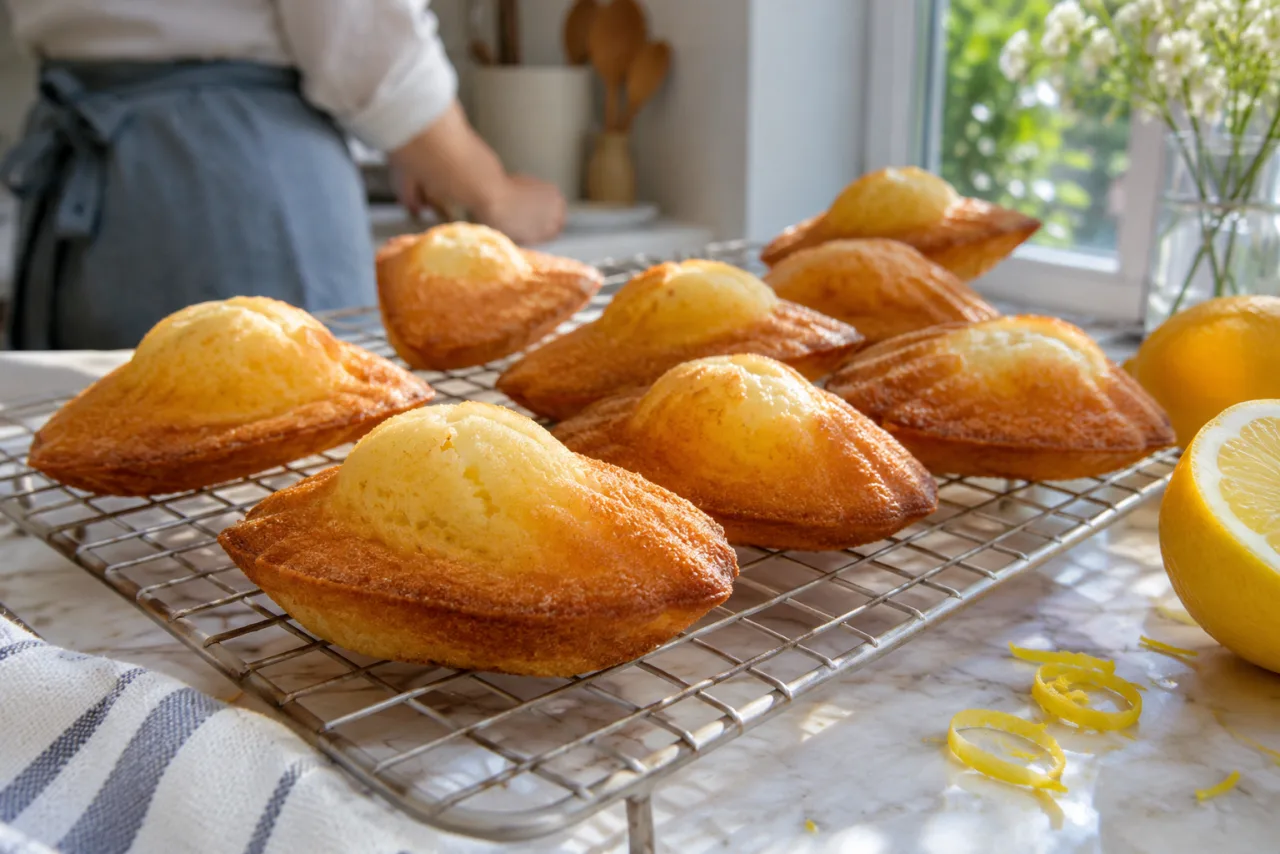
Le carnet de Mamie Jo
Madeleines
- œufseggs3
- sucre en poudresugar130 g
- farineflour150 g
- levure chimiquebaking powder5 g
- beurre fondubutter125 g
- citron non traitélemon1
- Fouetter les œufs et le sucre jusqu’à ce que le mélange blanchisse.Whisk the eggs and sugar until pale.
- Ajouter la farine, la levure et le zeste, puis le beurre fondu tiède.Fold in the flour, baking powder and zest, then the warm melted butter.
- Couvrir et laisser reposer au réfrigérateur.Cover and rest in the fridge. This is the step that makes the bump.
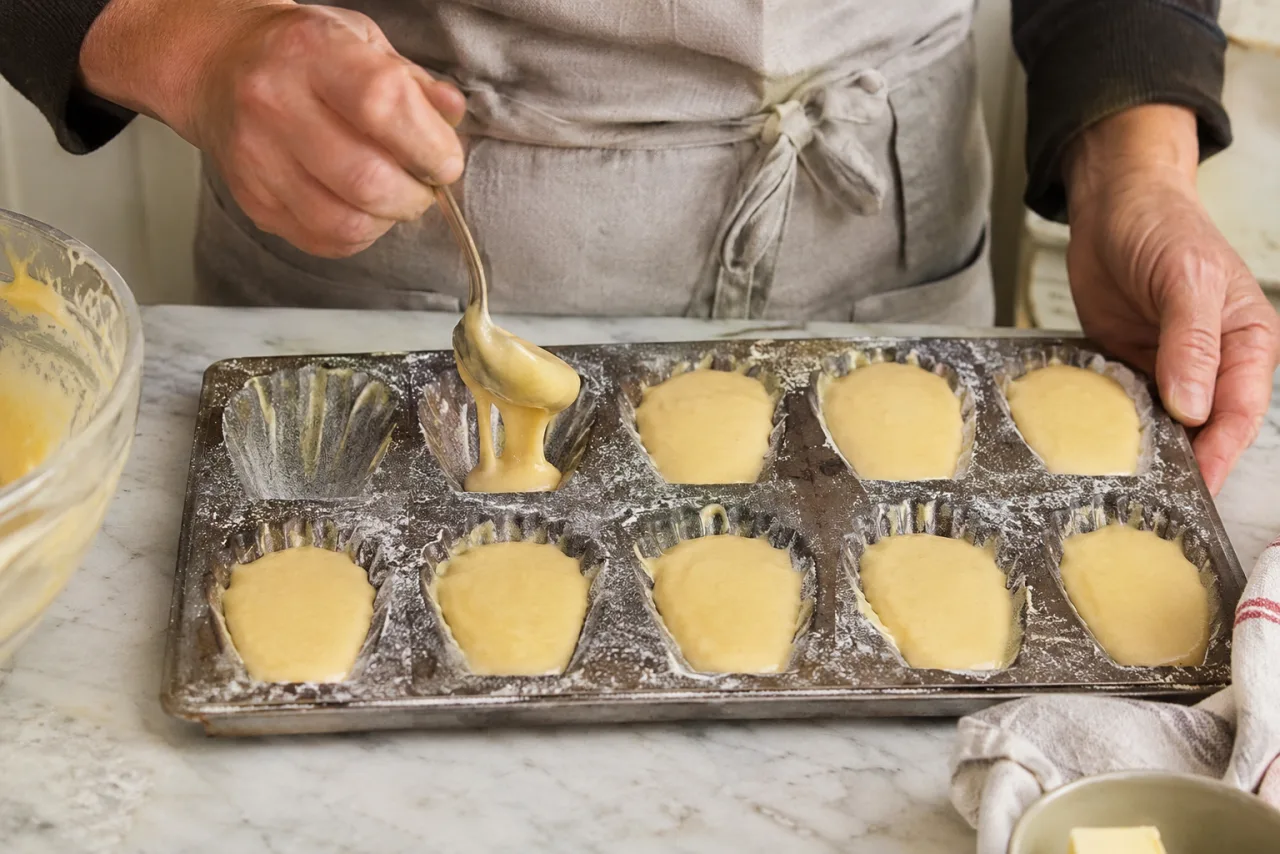
- Beurrer le moule. Remplir chaque empreinte aux trois quarts.Butter the tin. Fill each shell three-quarters full.
- Enfourner à four très chaud. Démouler tout de suite.Bake in a very hot oven until the edges are golden. Turn out at once.
Four 210 °C · 10 min
Jamais sans la bosse !
Shopping list
Madeleines, for 6
What went wrong? Pick the problem
My madeleines…
Came out flat
The batter was not cold enough
pas de bosse
The bump needs a thermal shock. Rest the batter a full hour in the fridge, or overnight, and do not let the filled tin sit on the counter.
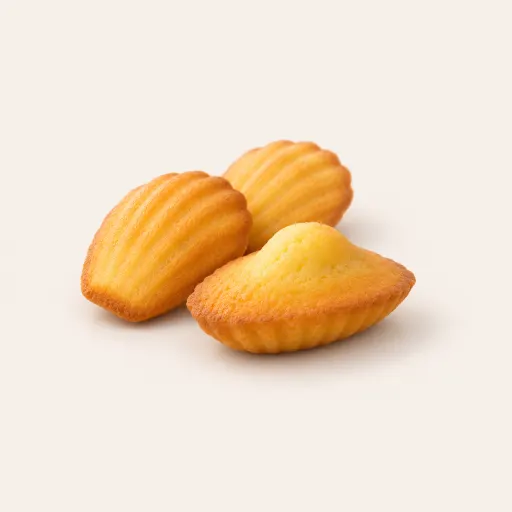 les madeleinesmadeleines, with the bump
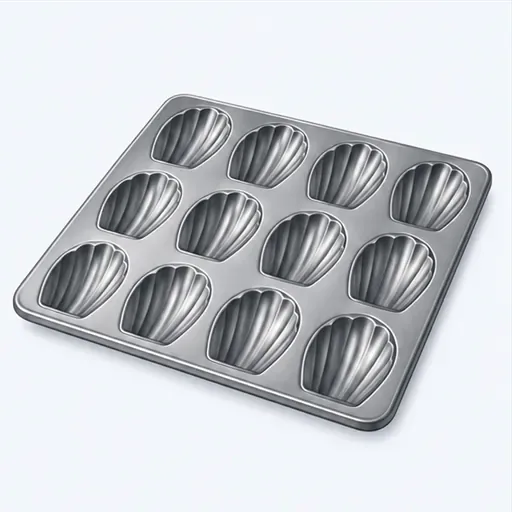 le moule à madeleinesmadeleine tin
- Also check
- The oven was fully hot before they went in: wait for the light to go out.
- And
- Do not spread the batter. A blob in the middle of each shell is right.
💬« Elles n’ont pas de bosse ! » They have no bump!
Are dry
A minute too long
trop cuites
Madeleines carry on cooking in the hot tin. Take them out when the edges are golden and the bump still looks pale, and turn them out at once.
 le beurrebutter
- Keeping
- In a tin, two days. They are at their best within an hour.
- Rescue
- Dip them in tea. Proust did.
💬« Elles sont un peu sèches. » They are a little dry.
Stuck to the tin
Butter and flour the tin
elles collent
Brush every shell with soft butter, dust with flour and tap out the extra. Chill the tin while the batter rests.
- le moulethe tin
 la farineflour
- Silicone
- Nothing sticks, but the bump is smaller and the shells are paler.
💬« Il faut beurrer et fariner le moule. » You have to butter and flour the tin.
Taste of nothing
Flavour the butter
un peu fades
Cook the butter until it smells of hazelnuts, un beurre noisette, before adding it. Or swap the lemon for orange-flower water, the old recipe from Commercy.
 le zeste de citronlemon zest
 le mielhoney
- Classic
- A spoonful of honey in the batter keeps them soft and browns them.
- Modern
- Dip the shell side in melted dark chocolate.
💬« Qu’est-ce que ça sent bon ! » That smells so good!
Why it works
- Cold batter
The outside sets fast while the cold centre is still rising, and pushes up through the middle.
- Hot oven
French ovens are marked in degrees or by thermostat: 210 °C is thermostat 7.
- The tin
Un moule à madeleines, shell-shaped. Metal gives a better bump than silicone.
- Proust’s cake
In French, une madeleine de Proust is any taste or smell that brings back a memory.
Five ways to flavour them
| French | How |
|---|---|
| au citron | The zest in the recipe. Rub it into the sugar with your fingers first and the taste doubles. |
| à la fleur d’oranger | A tablespoon of orange-flower water in place of the zest. The taste of French childhood cakes. |
| au miel | Replace 20 g of the sugar with honey. Softer, and they keep a day longer. |
| au beurre noisette | Cook the butter until it smells of hazelnuts and turns golden, then cool it before adding. |
| coque chocolat | Brush melted dark chocolate into the clean tin, press the baked madeleines back in and chill until set. |
About the tin
- Metal beats silicone
A metal tin conducts heat faster, which is what the bump needs. In silicone they bake, but flatter and paler.
- Butter, then flour
Brush with soft butter, dust with flour, tap out the excess. Do it even if the tin says non-stick.
- Chill the tin too
Ten minutes in the fridge once it is buttered. Cold tin, cold batter, hot oven.
- Three-quarters full
A heaped teaspoon in each shell. Do not spread it: the heat does that.
When they are eaten
Madeleines belong to le goûter, the snack French children have at about four o’clock when school ends, also called le quatre-heures. Adults keep the habit with coffee or tea. They come from Commercy, in Lorraine, where they are still sold in wooden boxes at the station.
- Bake them in the morning
The batter keeps a day or two in the fridge and improves. Mix it in the evening and bake a tray fresh for breakfast.
- Keeping
At their best within hours. In an airtight tin they last two or three days; a few seconds in a warm oven revives them.
Where the time goes
- Mix the batter15 min
- Rest in the fridge1 h
- Butter and fill the tin5
- Bake at 210 °C10
hands onwaiting90 min in all
Twenty minutes of work in an hour and a half. The hour in the fridge is the one step you cannot shorten.
Baking words
| French | English |
|---|---|
| fouetter | to whisk |
| blanchir | to turn pale (eggs and sugar) |
| laisser reposer | to rest |
| enfourner | to put in the oven |
| démouler | to turn out of the tin |
| un sachet de levure | a sachet of baking powder, 11 g |
If you are not shopping in France
- levure chimique→baking powder
One French sachet is 11 g, about 2½ teaspoons. This recipe uses half.
- sucre en poudre→caster sugar
Fine white sugar. Not sucre glace, which is icing sugar.
- farine T45 ou T55→plain flour
The number is the type: T45 and T55 are white, T65 is for bread.