Financiers: the little almond cakes from the Paris bakery
Twelve financiers: brown butter, ground almonds and egg whites. How to take the butter to noisette, what to do with the leftover yolks, and why they are shaped like gold bars.
Brown the butter until it smells of hazelnuts, stir it into almonds, sugar and egg whites, bake twelve minutes. One bowl, no mixer. They use up the egg whites that other recipes leave behind.
Yellow the idea to rememberBlue French to learnRed watch out
Le carnet de Mamie Jo
Financiers
- beurrebutter120 g
- poudre d’amandesground almonds80 g
- sucre glaceicing sugar130 g
- farineflour50 g
- blancs d’œufsegg whites4
- selsalt1
- Faire fondre le beurre et le laisser cuire jusqu’à ce qu’il sente la noisette. Filtrer.Melt the butter and keep cooking until it turns golden-brown and smells of hazelnuts. Strain it.
- Mélanger la poudre d’amandes, le sucre glace, la farine et le sel.Mix the ground almonds, icing sugar, flour and salt.
- Ajouter les blancs d’œufs non battus, puis le beurre noisette tiède.Stir in the egg whites, unbeaten, then the warm brown butter.
- Remplir les moules beurrés aux trois quarts.Fill the buttered moulds three-quarters full.
- Enfourner 12 minutes à 200 °C.Bake for 12 minutes at 200 °C, until the edges are brown and the centre springs back.
Four 200 °C · 12 min
Démouler tièdes.
Shopping list
Financiers, for 12
Half an hour from start to rack
Six minutes to brown the butter, six to mix, four to fill the moulds, twelve in the oven. The batter keeps a day in the fridge, and is better for it.
Plain, burnt or dry: it is nearly always the butter
- They taste plain
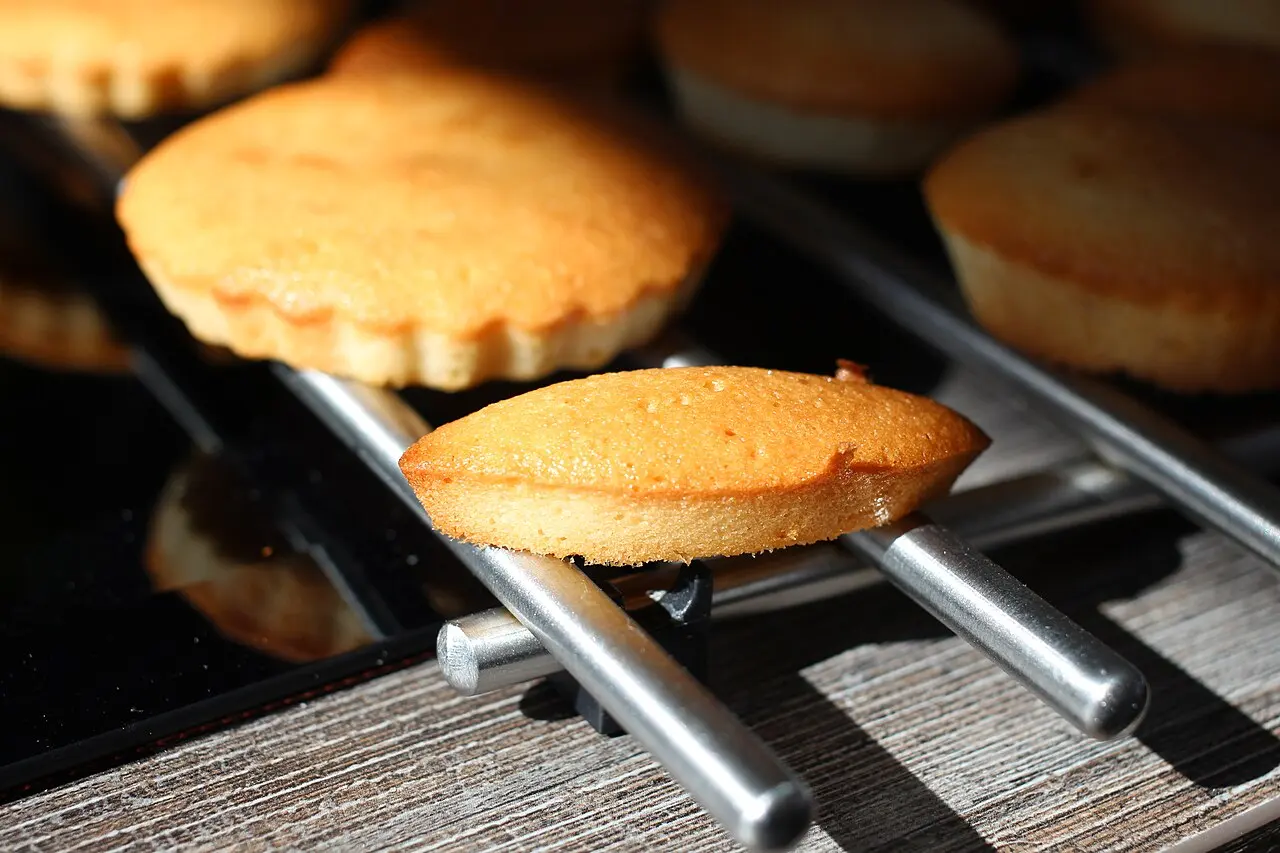
The butter was only melted. It must foam, go quiet, and turn the colour of a hazelnut shell.
- The butter burnt
It goes from brown to black in thirty seconds. Pour it into a cold bowl the moment it smells nutty.
- Dry
A minute too long. Take them out when the middle is still a little soft.
- They stick
Butter the moulds generously, or use silicone ones.
Beurre noisette, by colour
- fondumelted: carry on
- mousseuxfoaming: nearly
- noisettehazelnut: off the heat
- noirblack butter: too far
Four yolks left over
What French cooks do with them
- une crème anglaise pouring custard4 yolks
Four yolks, half a litre of milk, 80 g of sugar.
- une mayonnaise mayonnaise1 yolk
One yolk, a teaspoon of mustard, 20 cl of oil.
- une crème brûlée crème brûlée4 yolks
Four yolks set four small dishes.
- des pâtes à la carbonara carbonara1 each
One yolk per person, off the heat.
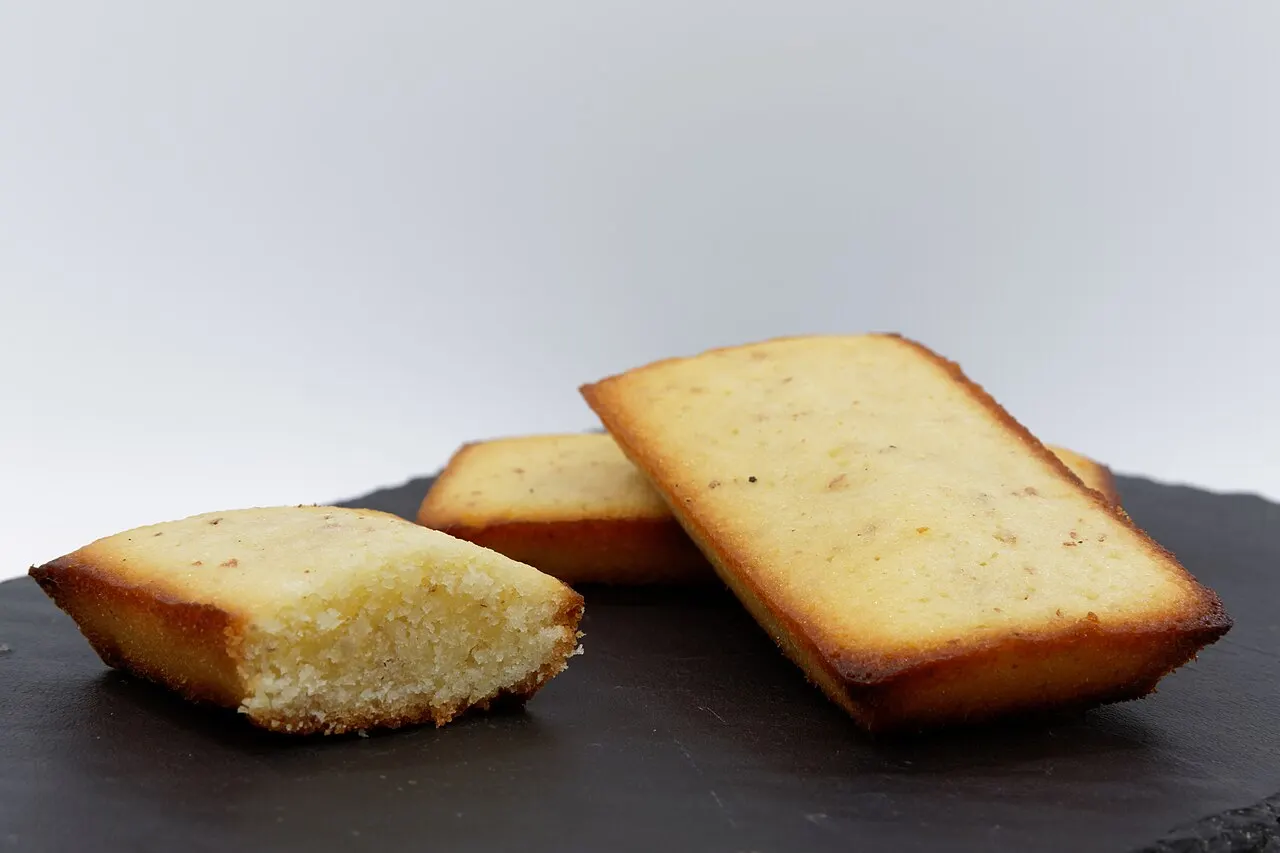
The usual story is that around 1890 a pastry cook called Lasne, whose shop stood near the Paris stock exchange, la Bourse, reshaped an older almond cake into a small ingot that brokers could eat with one hand without marking their fingers. Hence the name. Without the mould, a muffin tin works: fill it a third full.
Batter the day before, and three ways to vary them
- The batter
Make it the day before. Rested batter rises better.
- Keeping them
Three days in a tin. They freeze well.
- Variations
A raspberry pressed into each one before baking; a pinch of matcha; pistachio for a third of the almond.
Checked 19 November 2026. The origin story was read on Wikipédia), which traces it to Pierre Lacam’s 1900 history of pastry and calls the 1890 version a retelling: it is told here as a story. The proportions are the common French ones (more sugar and almond than flour, egg whites only) and were not compared with a named recipe.