C1 · literary scene · eight glosses
L’art de ne pas déranger
Le directeur avait demandé une cérémonie simple. On avait donc déplacé trois réunions, commandé des fleurs et convoqué tout le service. Au premier rang, il examinait le programme avec cette attention qu’il accordait d’ordinaire aux documents déjà signés.
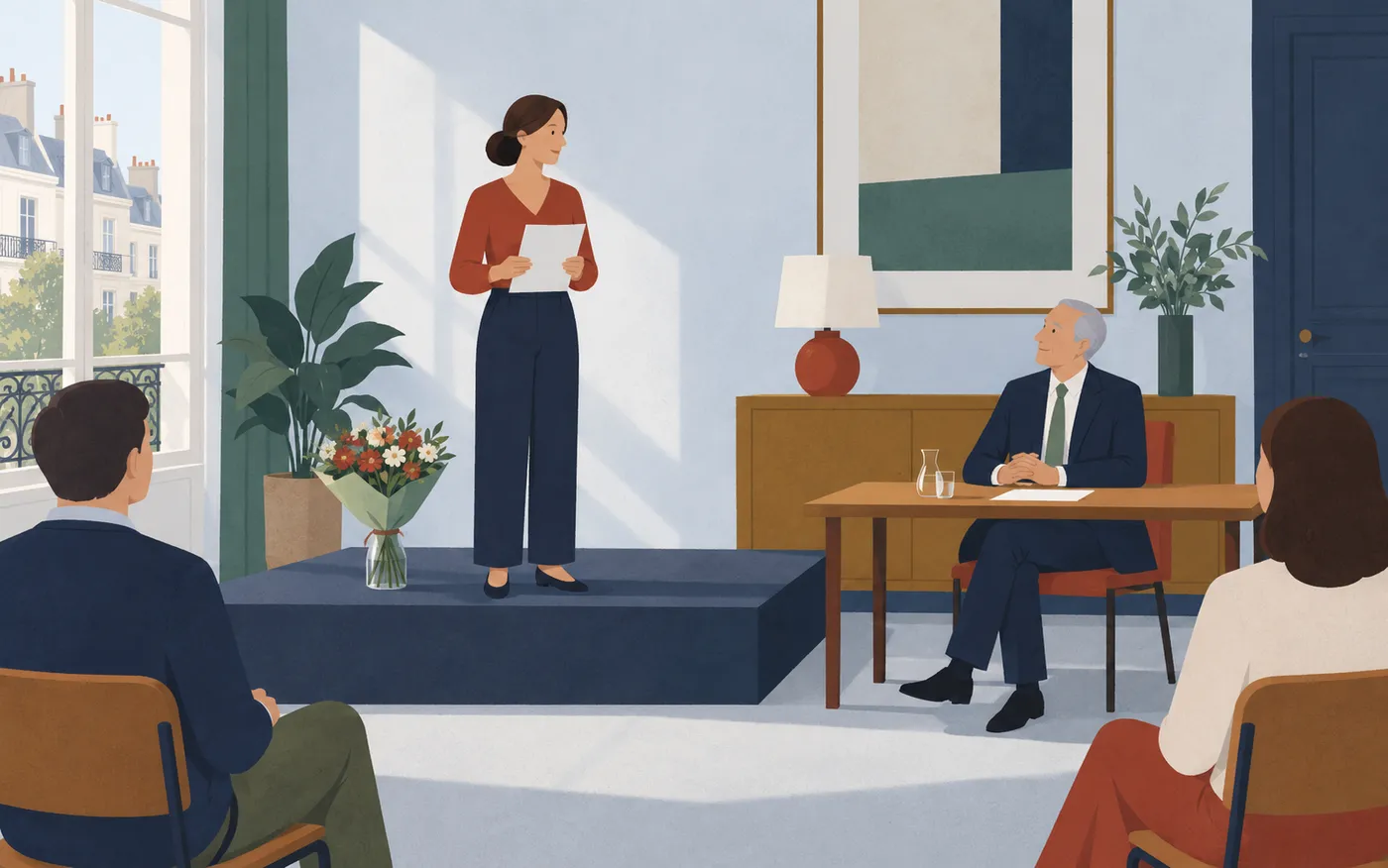
Juliette monta sur l’estrade. Elle avait accepté le discours après deux refus de collègues, dont personne n’avait commenté la coïncidence1. « Nous vous devons beaucoup, commença-t-elle. Vous nous avez notamment appris la retenue2. » Le directeur inclina la tête.
« Grâce à vous, nos réunions n’ont jamais souffert d’un excès3 de discussion. Les décisions nous arrivaient dans un état si achevé que nous pouvions consacrer toute notre énergie à les appliquer. » Elle tourna une page, bien que la suivante fût presque vide. Au fond de la salle, quelqu’un toussa.
Elle évoqua ensuite le rapport collectif dont le directeur avait assuré seul la présentation. « Votre nom restera attaché à4 ce travail. Nos contributions, plus discrètes, en auront constitué la trame5. » Cette fois, le sourire du premier rang se figea. Juliette passa aussitôt aux années de service, qu’elle énuméra avec une exactitude irréprochable.
Les applaudissements partirent près de la porte. Je ne sus s’ils saluaient le directeur, le courage de Juliette ou simplement la fin du discours. Il la remercia pour sa « délicatesse6 ». Elle répondit : « J’ai essayé de rester fidèle à notre manière de travailler. »
En quittant l’estrade, elle me confia son texte. Dans la marge, un mot avait été barré7 : « silence ». Au-dessus, elle avait écrit « retenue ». Je lui rendis la feuille sans question. Elle avait déjà rejoint les collègues qui s’occupaient de débarrasser8 les tables.
Read it in English
The director had asked for a simple ceremony. So three meetings had been moved, flowers ordered and the whole department summoned. In the front row, he examined the programme with the attention he usually gave documents already signed.
Juliette stepped onto the platform. She had agreed to give the speech after two colleagues declined, a coincidence nobody had commented on. "We owe you a great deal," she began. "You have taught us restraint in particular." The director inclined his head.
"Thanks to you, our meetings have never suffered from excessive discussion. Decisions reached us in such a finished state that we could devote all our energy to carrying them out." She turned a page, although the next was almost blank. At the back of the room, someone coughed.
She then mentioned the collective report that the director alone had presented. "Your name will remain associated with this work. Our less visible contributions will have formed its underlying fabric." This time, the smile in the front row froze. Juliette moved straight on to his years of service, listing them with impeccable accuracy.
The applause began near the door. I could not tell whether it honoured the director, Juliette’s courage or simply the end of the speech. He thanked her for her "tact". She replied: "I tried to stay faithful to the way we work."
As she left the platform, she handed me her text. In the margin, one word had been crossed out: "silence". Above it, she had written "restraint". I returned the sheet without a question. She had already joined the colleagues clearing the tables.