Phrasebook

Compare conflicting family memories in French without forcing agreement

Compare different family memories in French: state your recollection, invite another account, name a shared detail and leave uncertainty open.

In short

Mark your memory as your own: Dans mon souvenir… Invite the other account with Comment t’en souviens-tu ? Then separate a shared detail from what remains uncertain. Different recollections need not become a verdict about who is dishonest.

Yellow the idea to rememberBlue French to learn
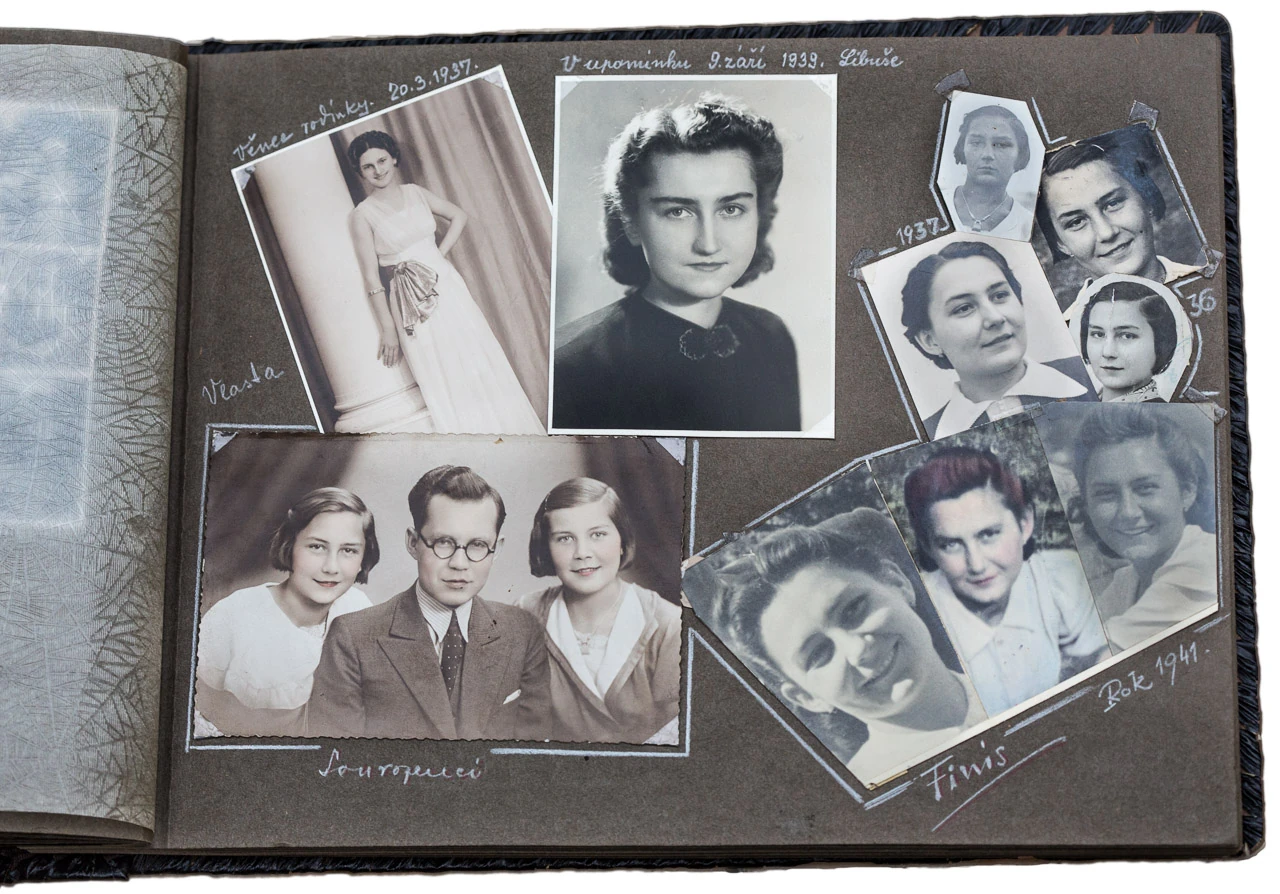
An open family album page with black-and-white portraits and handwritten dates.
A dated photograph may support one detail without settling every part of a family recollection. Photo: Photolis · CC BY-SA 4.0; historical portraits: anonymous, public domain · Wikimedia Commons · converted to WebP

Two relatives remember a childhood move differently. One recalls a rainy departure; the other recalls sunshine. They may be remembering different moments. The four scenes below help you describe the disagreement, find a point of contact and preserve what neither person can currently establish.

1

State your recollection

RelativeIl faisait beau le jour du départ.The weather was fine on the day we left.
YouDans mon souvenir, il pleuvait quand nous avons fermé la maison.In my memory, it was raining when we closed the house.
YouJe me rappelle surtout les manteaux mouillés dans la voiture.I mainly remember the wet coats in the car.
2

Invite the other account

YouComment t’en souviens-tu, toi ?How do you remember it?
RelativeJe revois le soleil sur la place, avant de monter dans le car.I can picture the sunshine on the square before boarding the coach.
YouTu parles peut-être d’un moment plus tard dans la journée.Perhaps you mean a later moment in the day.
3

Identify common ground

RelativeNous étions passés chez notre tante avant de partir.We visited our aunt before leaving.
YouSur ce point, nos souvenirs se rejoignent.On that point, our memories agree.
YouNous nous rappelons tous les deux son panier de provisions.We both remember her basket of food.
4

Leave uncertainty open

RelativeAlors, quelle version garde-t-on ?So which version do we keep?
YouOn peut raconter les deux souvenirs en précisant ce qui diffère.We can tell both memories while specifying what differs.
YouSans autre élément, la météo au moment précis du départ reste incertaine.Without further evidence, the weather at the exact departure time remains uncertain.

Separate recollection from proof

Je revois gives a vivid remembered image. Je suis certain que states a stronger personal conviction, but conviction is not an external record. If a dated photograph arrives, it may help establish a particular moment; it still may not show the entire day. Keep the moment attached to the detail.

Nous ne nous souvenons pas de la même météo au départ, mais nous nous rappelons tous les deux notre passage chez notre tante.

We do not remember the same weather at departure, but we both remember visiting our aunt.

Question 1No account needed
Which phrase marks a personal recollection?

Choose one answer.

Answer and explanation

Dans mon souvenir…. Dans mon souvenir explicitly places the detail within the speaker’s remembered account.

Question 2No account needed
What can “nos souvenirs se rejoignent” identify?

Choose one answer.

Answer and explanation

A shared detail. The phrase can mark agreement on one specified point while other elements remain unresolved.