Connect your choice, earlier expectations, one workplace example and a balanced conclusion. Explain why apprenticeship suited your aim, then show what practice changed. A difficulty strengthens the account when you explain how you responded rather than claiming that the route works perfectly for everyone.
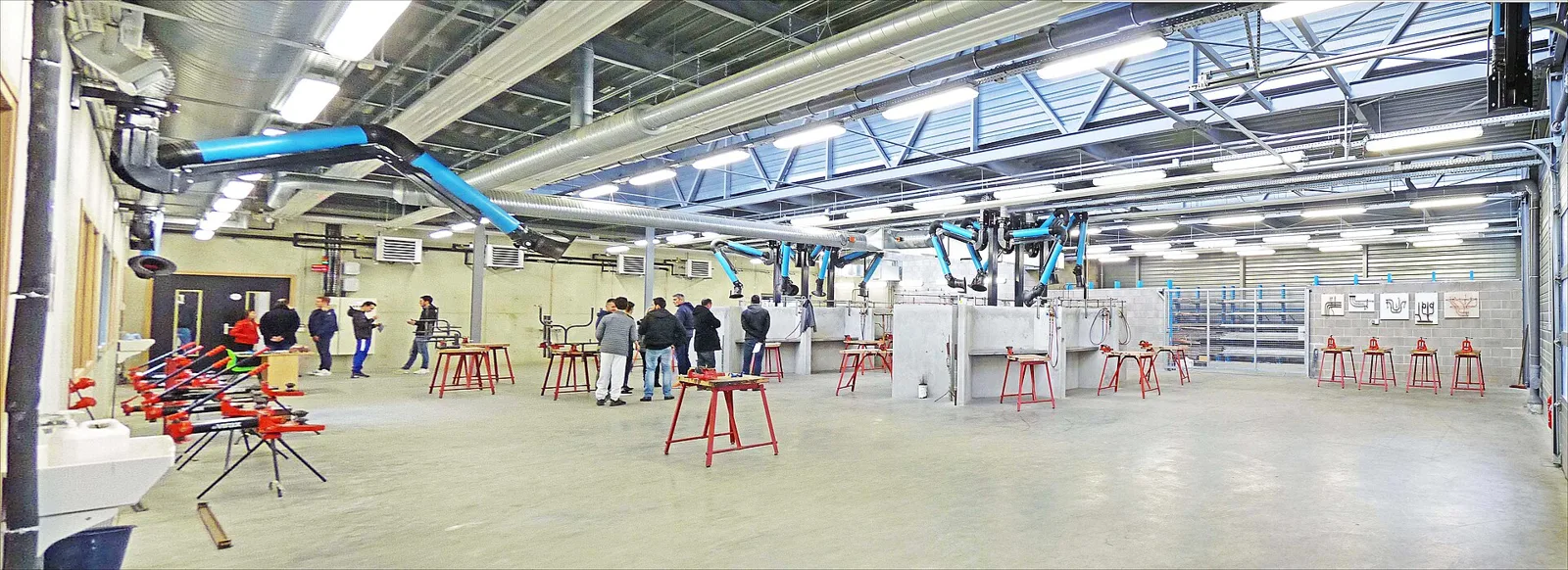
A plumbing workshop in an apprenticeship training centre, photographed in 2017. This provides a training context alongside the bicycle-repair model. Resized and converted to WebP. Le plombier du désert · Wikimedia Commons · CC BY-SA 4.0
This original B1 exam-preparation prompt combines experience and opinion. It asks for at least 160 words, using a concrete example to support the choice. The model describes one learner’s arrangement; use the details of your own course when explaining its rhythm.
B1 · original exam preparationNot an official exam paper
Un forum vous demande pourquoi vous avez choisi une formation en apprentissage. Racontez votre choix, comparez vos attentes avec ce que vous avez découvert dans l’entreprise et donnez un exemple précis. Mentionnez une difficulté et votre manière d’y faire face. Concluez en expliquant à qui ce choix pourrait convenir, sans le présenter comme idéal pour tout le monde. Écrivez au moins 160 mots.
(160 mots minimum)
Explain on a forum why you chose an apprenticeship. Compare your expectations with what you learned in the workplace, give a concrete example, acknowledge a difficulty and your response, and conclude with a qualified view of who it might suit. Write at least 160 words.
Your answer
Nothing you write is saved or sent. Copy it before you leave.
Read a model answer
Après le lycée, j’ai choisi une formation en apprentissage dans un atelier de réparation de vélos. Je voulais apprendre un métier concret, mais je souhaitais aussi comprendre les raisons techniques derrière chaque intervention. Dans ma formation, je passais deux jours au centre et trois jours dans l’entreprise.
Avant de commencer, j’avais imaginé que le travail serait surtout manuel. J’ai pourtant découvert que l’écoute des clients et les explications étaient essentielles. Un jour, une cliente ne comprenait pas pourquoi une pièce devait être remplacée. Mon tuteur m’a montré comment présenter le problème simplement. Après avoir observé cet échange, j’ai essayé d’expliquer moi-même une autre réparation, avec son aide.
Cette formule m’a permis de relier les cours à des situations précises. Cependant, le rythme était parfois fatigant : le soir, je devais encore préparer certains exercices. J’ai donc commencé à organiser mon travail chaque dimanche et à noter mes questions pour le centre de formation.
Je suis satisfait de mon choix, car j’aime apprendre en agissant puis revenir sur ce que j’ai fait. Je le conseillerais à une personne prête à gérer les deux environnements, tout en vérifiant que le métier et l’accompagnement lui conviennent.
Review your draft
Show what “learning at work” means
The customer conversation turns a broad benefit into an observable learning moment. The writer first watches the tutor, then tries an explanation with support. This demonstrates a developing skill without pretending to have mastered every repair or customer interaction independently.
Compare expectation with discovery
J’avais imaginé looks back to the expectation before the training began. J’ai découvert reports the later change in understanding. Pourtant signals that the practical experience was broader than expected. The difficulty paragraph then gives a different dimension: managing work and study rather than merely repeating that the training was useful.
Choose your example before drafting the full text. If the example can show both what you learned and what remained difficult, the reasons will grow naturally from the experience instead of sitting beside it as unsupported slogans.