Phrasebook

Explain French research limitations without dismissing the whole study

Explain French research limitations in four scenes: narrow task, limited sample, alternative explanation and replication, while preserving the finding.

In short

Pair the finding with its particular limit. L’étude montre un avantage sur cette tâche ; son extension à d’autres activités reste à vérifier. This preserves useful evidence while identifying the next question.

Yellow the idea to rememberBlue French to learn
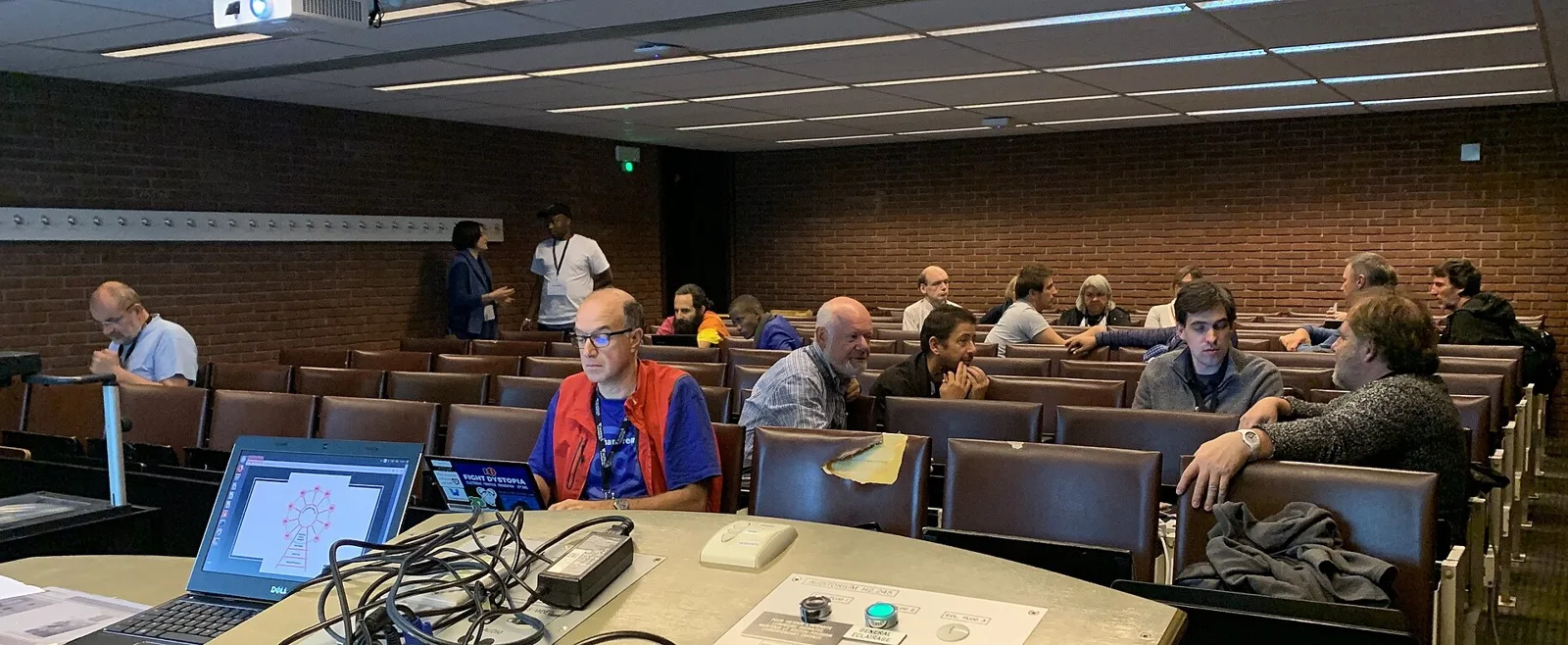
Participants discussing in an auditorium during WikiConvention francophone 2019 in Brussels.
A strategy discussion at WikiConvention francophone 2019 in Brussels. Photo: DRanville (WMF) · CC BY-SA 4.0 · Wikimedia Commons · resized and converted to WebP

A discussion can go wrong in two directions: a narrow finding becomes a universal promise, or a limitation becomes a reason to discard every result. These four scenes keep the observation and the unresolved question in the same exchange. The example compares paper and screen vocabulary exercises among forty adult volunteers, with a higher mean one-week recall score in one group. It has not separated the effect of the medium from participants’ familiarity with it.

1

A narrow task

ListenerCette méthode améliore donc toutes les compétences ?So this method improves every skill?
YouL’avantage mesuré concerne le rappel de mots après une semaine.The measured advantage concerns word recall after one week.
YouD’autres compétences demanderaient des mesures adaptées.Other skills would require appropriate measurements.
2

A limited sample

ListenerPeut-on l’appliquer à tous les élèves ?Can it be applied to all pupils?
YouLes participants étaient quarante adultes volontaires.The participants were forty adult volunteers.
YouLe résultat décrit ce qui a été observé dans ce groupe, mais la généralisation reste à examiner.The finding describes what was observed in that group, but generalisation remains to be examined.
3

An alternative explanation

ListenerLe support explique forcément tout l’écart.The medium necessarily explains the entire gap.
YouLa familiarité avec le support pourrait aussi intervenir.Familiarity with the medium could also play a role.
YouIl faudrait un test qui distingue ces explications.A test distinguishing those explanations would be needed.
4

Need for replication

ListenerPourquoi demander une seconde étude ?Why ask for a second study?
YouPour voir si une autre équipe retrouve le résultat dans des conditions décrites.To see whether another team obtains the finding under described conditions.
YouCela ne retire pas le premier constat ; cela examine sa robustesse.That does not erase the first observation; it examines its robustness.

Choose the evidence that would address the limit

A different sample addresses generalisation to another group. A different outcome measure addresses another skill. A design separating two candidate causes addresses the mechanism. Another team repeating the protocol addresses repeatability. “More research” is useful only when you say which missing question the new work should answer.

Le résultat est clair dans le protocole décrit ; la question ouverte concerne son maintien à plus long terme.

The finding is clear within the described protocol; the open question concerns whether it persists over a longer period.

Question 1No account needed
A study measures one-week recall. Which follow-up addresses duration?

Choose one answer.

Answer and explanation

Measure recall after a longer interval. A later measurement addresses whether the effect persists beyond the original follow-up.

Question 2No account needed
What should a limitation statement preserve?

Choose one answer.

Answer and explanation

The finding actually obtained. A precise limitation bounds the finding rather than deleting it or expanding it.

Use reste à vérifier, ne renseigne pas sur and dans les conditions décrites with named objects. The result is a more informative explanation, not merely a softer tone.