Conjugation table
Grandir conjugation: grandis, grandissons and grandi
Learn grandir for growing up and physical growth. Use grandissons, grandi and seven tense sections, with auxiliary guidance, common mistakes and a quiz.
- A2
- 7 tenses
- Auxiliary: avoir
- Learn this in the A2 notebook →
In short
Grandir has regular -ir forms: je grandis, nous grandissons, ils grandissent. Use avoir for the completed past: j’ai grandi. Grandit is the present il / elle form; grandi without t is the past participle. The verb can describe growing up or becoming larger.
Yellow the idea to rememberBlue French to learn
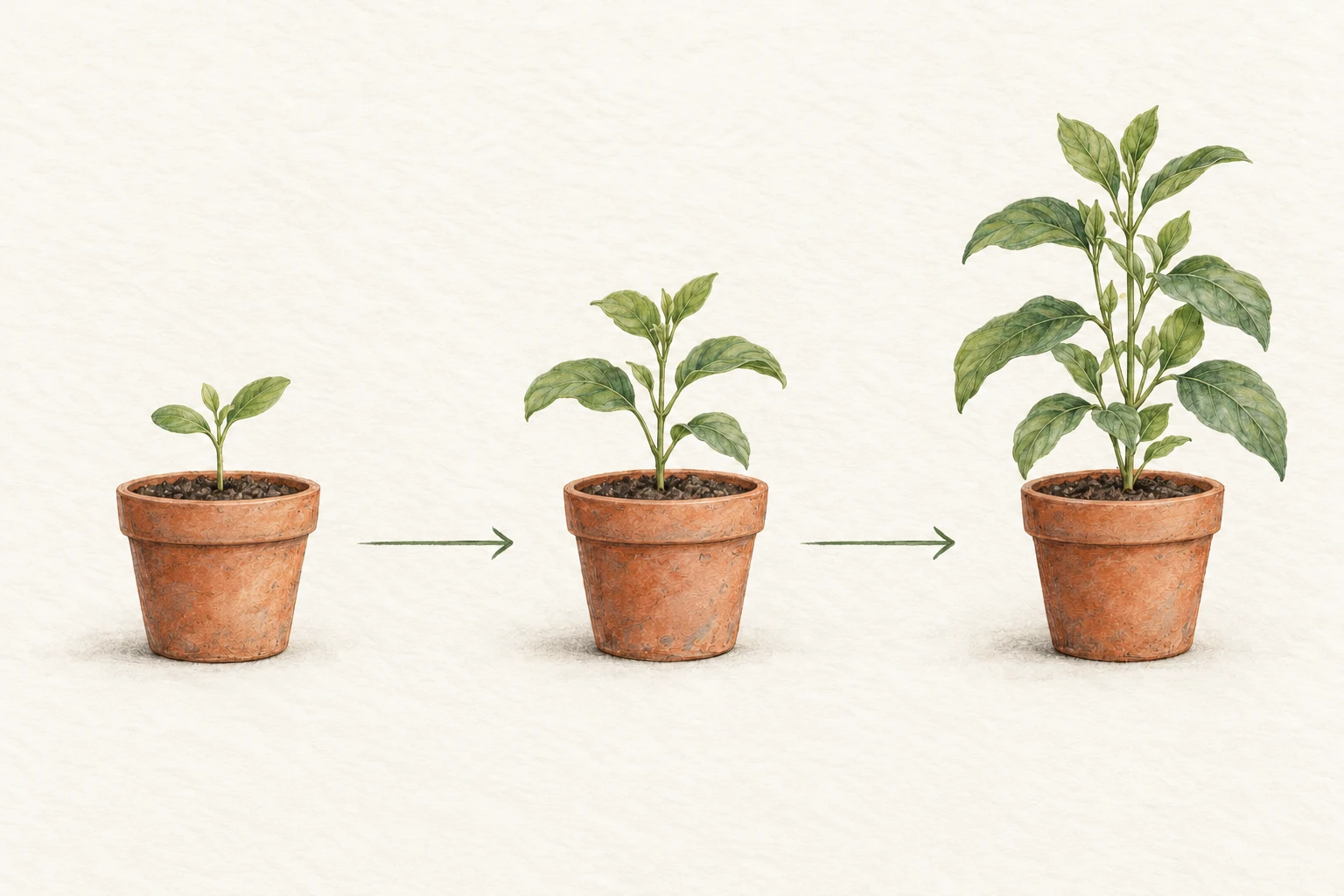
J’ai grandi à Nantes tells someone where you grew up. La plante grandit describes a plant becoming larger. Both use the same regular pattern, with -iss- in the plural present. Start with those forms; the other six sections provide reference material as your range of tenses expands.
- Infinitive
- grandir
- Past participle
- grandi
- Present participle
- grandissant
- Auxiliary
- avoir
PrésentCore forms · growth now or a general process
| je | grandis |
| tu | grandis |
| il / elle / on | grandit |
| nous | grandissons |
| vous | grandissez |
| ils / elles | grandissent |
Les plantes grandissent près de la fenêtre.
The plants grow near the window.
Passé composéReference extension · growing up or a completed increase
| j’ | ai grandi |
| tu | as grandi |
| il / elle / on | a grandi |
| nous | avons grandi |
| vous | avez grandi |
| ils / elles | ont grandi |
J’ai grandi près de la mer.
I grew up near the sea.
ImparfaitReference extension · ongoing growth in the past
| je | grandissais |
| tu | grandissais |
| il / elle / on | grandissait |
| nous | grandissions |
| vous | grandissiez |
| ils / elles | grandissaient |
Nous grandissions dans le même quartier.
We were growing up in the same neighbourhood.
Futur simpleReference extension · growth later
| je | grandirai |
| tu | grandiras |
| il / elle / on | grandira |
| nous | grandirons |
| vous | grandirez |
| ils / elles | grandiront |
Cet enfant grandira dans une autre ville.
This child will grow up in another town.
Conditionnel présentReference extension · a hypothetical situation
| je | grandirais |
| tu | grandirais |
| il / elle / on | grandirait |
| nous | grandirions |
| vous | grandiriez |
| ils / elles | grandiraient |
Avec plus d’espace, cet arbre grandirait plus librement.
With more space, this tree would grow more freely.
Subjonctif présentReference extension · after a subjunctive trigger
| je | grandisse |
| tu | grandisses |
| il / elle / on | grandisse |
| nous | grandissions |
| vous | grandissiez |
| ils / elles | grandissent |
Elle souhaite que ses enfants grandissent près de leurs cousins.
She hopes her children grow up near their cousins.
ImpératifReference extension · uncommon as a literal growth instruction
| (tu) | grandis |
| (nous) | grandissons |
| (vous) | grandissez |
Grandissons ensemble dans le respect des autres.
Let’s grow together in respect for others.
A change does not automatically require être
Grandir describes change, but its compound forms here use avoir: elle a grandi, nous avons grandi. Do not select être merely because a person changes size or grows up. The verb’s construction determines the auxiliary in these examples.
Ma sœur a grandi dans cette ville.
My sister grew up in this town.
Growing up and getting older are not identical
Grandir can describe childhood development, physical growth and, in some contexts, personal maturity. Vieillir focuses on getting older or ageing. An adult can grow in maturity, and a plant can grandir; the useful distinction is the meaning in the sentence rather than a rule that only children can ever be subjects of grandir.
Keep the three short forms apart
| Form | Example | Reason |
|---|---|---|
| Grandis | Tu grandis vite. | Tu present ends in -is. |
| Grandit | Elle grandit vite. | Elle present ends in -it. |
| Grandi | Elle a grandi ici. | The participle after a has no final t. |
| Grandissons | Nous grandissons ensemble. | Nous present includes -iss-. |
The imperative forms exist, but literal growth is not usually something someone can perform on command. Grandis ! may sound like a sharp Grow up! in a conflict. The table uses grandissons in a figurative shared-development message instead of presenting an impatient command as a neutral everyday request.
Make one sentence about a place where you grew up and one about a plant or child growing now. J’ai grandi… and …grandit practise different time references while keeping the participle and present ending distinct.