Plan an A2 French short talk with keyword notes
Turn notes about a favourite garden into a connected A2 French talk. Explore the scene, build useful cues and practise answering follow-up questions.
In short
Write short cues for where, what you do, why you like it and one memory. Keep the links between people, actions and times: première visite avec ma sœur — l’été dernier gives you much more to say than sœur — été.
Yellow the idea to rememberBlue French to learn
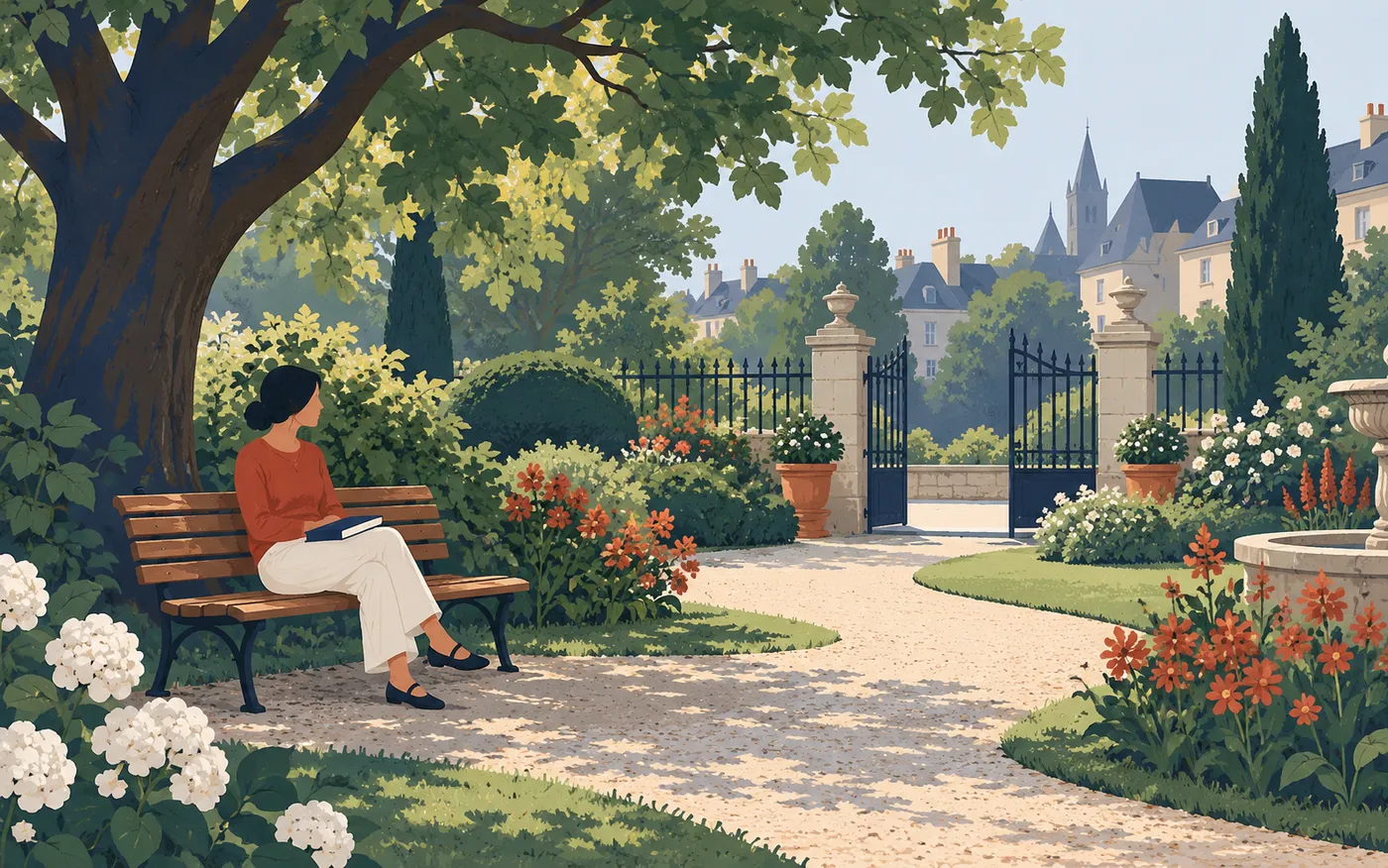
Parlez d’un lieu où vous aimez passer du temps. Dites où il se trouve, ce que vous y faites et pourquoi vous l’aimez. Ajoutez un souvenir.
Talk about a place where you enjoy spending time. Say where it is, what you do there and why you like it. Add a memory.
A garden to talk about: explore, then describe
Find:
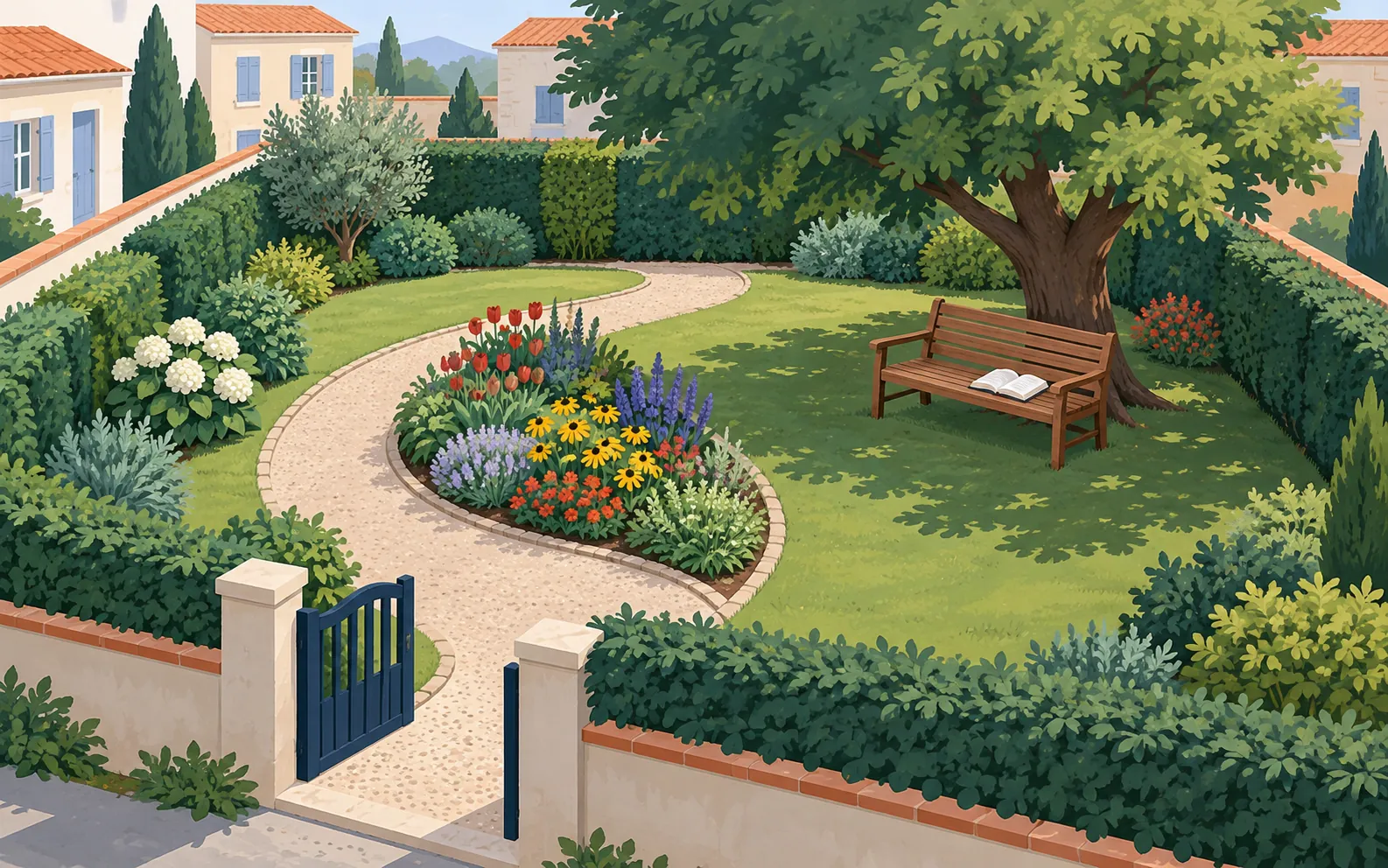
How do you plan a short talk in French with notes?
| Job | Keyword note | One sentence |
|---|---|---|
| Where | petit jardin — près de chez moi | J’aime le petit jardin près de chez moi. |
| Activity | lire — après le travail — banc à l’ombre | J’y lis après le travail, sur un banc à l’ombre. |
| Reason | calme — pause | J’aime cet endroit parce qu’il est calme. |
| Memory | première visite avec ma sœur — été dernier | Je l’ai visité pour la première fois avec ma sœur l’été dernier. |
Cover the last column and speak from the middle one. You can change the sentence while keeping its meaning. For the reason, try C’est un endroit agréable pour faire une pause. The useful note is the idea you want to recover, rather than the first word of a memorised sentence.
Let the next question choose your answer
- Partenaire
Qu’est-ce que tu fais dans ce jardin ?
What do you do in this garden?
- Vous
J’y lis après le travail.
I read there after work.
- Partenaire
Quand est-ce que tu y es allé pour la première fois ?
When did you first go there?
- Vous
L’été dernier, avec ma sœur.
Last summer, with my sister.
The question selects the detail. An activity question needs what you do; a first-visit question needs the memory. If your partner asks who comes with you now, answer from your own experience. The example notes describe the first visit together.