Il reste une chaise: say what space is still available in French
Use il reste to say how many seats or objects are still available. Compare il y a dix chaises with il reste une chaise libre in a room setup.
In short
Il reste une chaise libre means “there is one free chair left”. Il y a dix chaises gives the total number present. Il reste focuses on what is still available after some have been taken. Keep singular reste in this impersonal pattern even before a plural: Il reste deux places.
Yellow the idea to rememberBlue French to learn
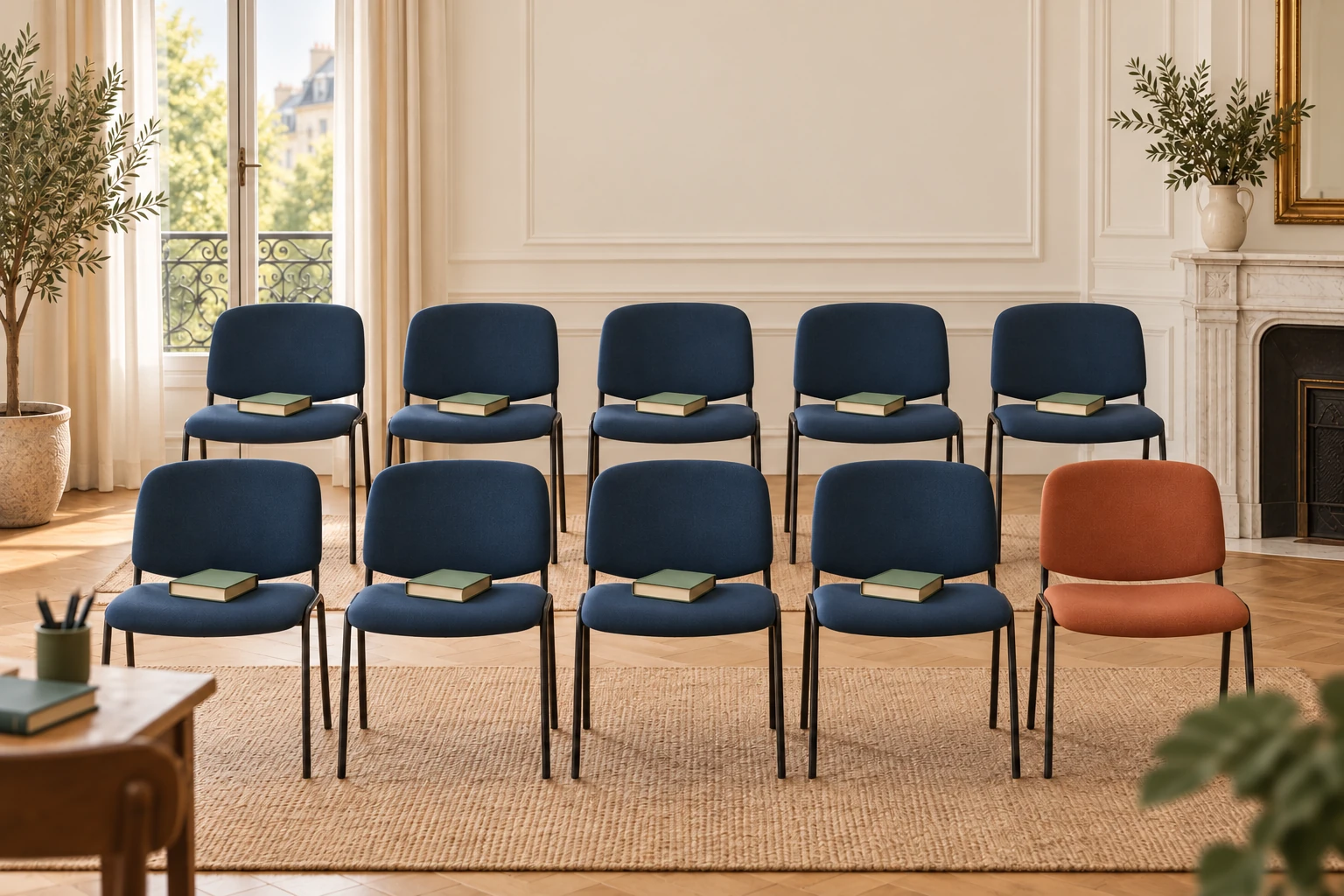
You arrange ten chairs for a workshop. Nine people sit down, leaving one chair free. Both statements can be true at once: Il y a dix chaises dans la salle and Il reste une chaise libre. The first counts the chairs in the room; the second counts the ones still available.
| Detail | French sentence |
|---|---|
| Total chairs present: 10 | Il y a dix chaises. |
| Free chairs after nine people sit: 1 | Il reste une chaise libre. |
| Free chairs after everyone sits: 0 | Il ne reste plus de chaise libre. |
Say what remains available
Libre makes the availability explicit. Il reste une chaise can mean one chair remains in the relevant situation, but it does not always tell you whether someone is sitting on it. In a seating conversation, une chaise libre or une place libre directly names an available option. Une place can refer to a seat or a space, depending on the setting.
Il reste deux places près de la fenêtre.
There are two places left near the window.
The place phrase locates the remaining options. Near the window is a useful detail for someone arriving late. You can offer one directly: Il reste une place ici. Tu peux t’asseoir. The second sentence tells the listener what they may do with the available place.
Why reste stays singular
In il reste, il is an impersonal subject. The verb therefore stays reste whether the following amount is une chaise, deux places or beaucoup de place. A different sentence with a personal plural subject uses another pattern: Deux personnes restent dans la salle means two people remain in the room. That is not the availability construction taught here.
Il y a quatre boîtes sur la table.There are four boxes on the table.
Focus: What is present
Il y a dix chaises dans la salle.
There are ten chairs in the room.
Il reste une boîte vide.There is one empty box left.
Focus: What remains usable
Il reste une chaise libre.
There is one free chair left.
When someone asks whether there is room for them, answer with the available number rather than the total inventory. Il reste une place is a useful starting point. Add ici, près de la fenêtre or au fond de la salle if the person also needs to find that place.