Say you are the eldest of three children in French
Say you are the eldest of three in French. Compare aîné, cadet and benjamin, use feminine forms and describe the youngest in a two-child family.
In short
Say Nous sommes trois enfants. Je suis l’aîné if you are a man, or Je suis l’aînée if you are a woman. L’aîné(e) is the eldest sibling; le benjamin or la benjamine is the youngest. Cadet/cadette expresses a younger position relative to another sibling.
Yellow the idea to rememberBlue French to learn
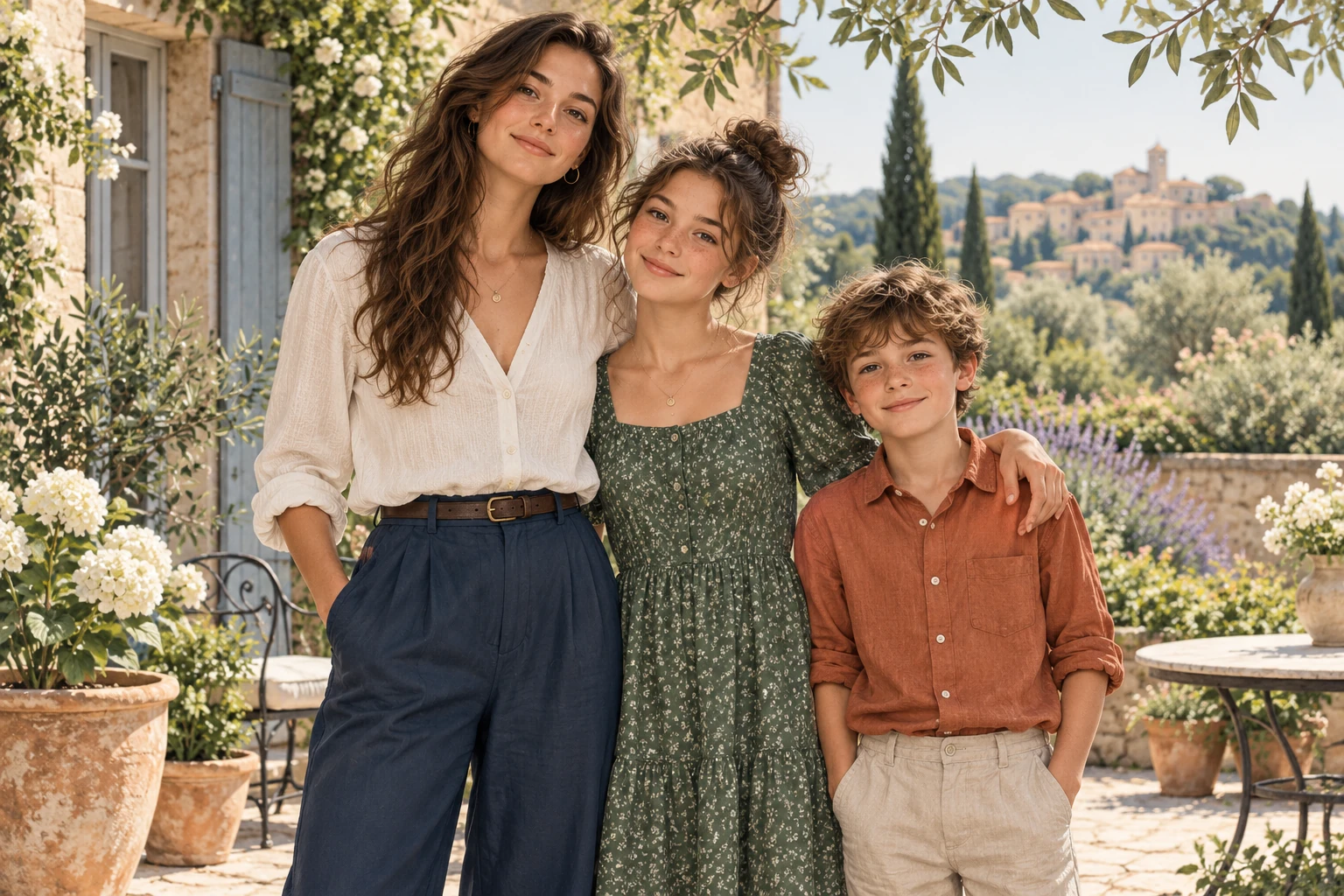
A three-child family
Élise, Nadège and Léo have the same parents. Élise was born first, Nadège second and Léo third. Élise is l’aînée. Léo is le benjamin. Nadège can say Je suis la deuxième : that directly identifies her middle position. Birth-order words compare siblings within this family; they do not compare their ages with cousins or classmates.
| Person | Position | What the person can say |
|---|---|---|
| Élise | First-born | Je suis l’aînée. |
| Nadège | Second-born | Je suis la deuxième. |
| Léo | Youngest | Je suis le benjamin. |
What does cadet or cadette add?
Cadet is masculine and cadette is feminine. Ma sœur cadette means my younger sister; mon frère cadet means my younger brother. Nadège is Élise’s sœur cadette. Léo is Nadège’s frère cadet. This relative use can describe more than one younger sibling, so cadet by itself is less precise than deuxième when your aim is to identify the second child in a three-child family.
J’ai une sœur aînée et un frère cadet.
I have an older sister and a younger brother.
Nadège can use that sentence: her older sister is Élise and her younger brother is Léo. The adjectives agree with sœur and frère. Aînée and cadette take the feminine e endings; aîné and cadet are masculine. The circumflex in aîné appears in aînée too. For the youngest, benjamin becomes benjamine.
What if there are only two children?
In a family with two children, the older child is l’aîné or l’aînée. The younger is le cadet or la cadette and is also the youngest, le benjamin or la benjamine. Suppose Marc is older than his sister Inès. Marc can say Je suis l’aîné. Inès can say Je suis la cadette. She can also say Je suis la plus jeune, a direct way to express being the youngest.
Je suis l’aînée de trois enfants.I am the eldest of three children.
Focus: One compact introduction
Nous sommes trois enfants. Je suis l’aînée.
There are three of us children. I am the eldest.
Je suis la plus jeune.I am the youngest.
Focus: A simple alternative
Ma sœur est plus âgée que moi.
My sister is older than me.
For a first conversation, choose the version you can say comfortably: Nous sommes trois enfants, et je suis l’aîné or Je suis l’aînée. If you have no siblings, Je suis fils unique or Je suis fille unique describes a different family situation; there is no sibling order to compare.