Dialogue
Talking about a childhood place that no longer exists in French
Follow a sixteen-line French conversation about a former bakery that is now a pottery studio. Keep childhood habits, closure and present use clearly separated.
- A2
- 16 lines
- Practice mode
- Learn this in the A2 notebook →
In short
Use Il y avait… for what used to be there and maintenant, c’est… for the current place. La boulangerie a fermé en 2018 states a completed change. In this dialogue, the yellow door remains, but the former bakery is now a pottery studio.
Yellow the idea to rememberBlue French to learn
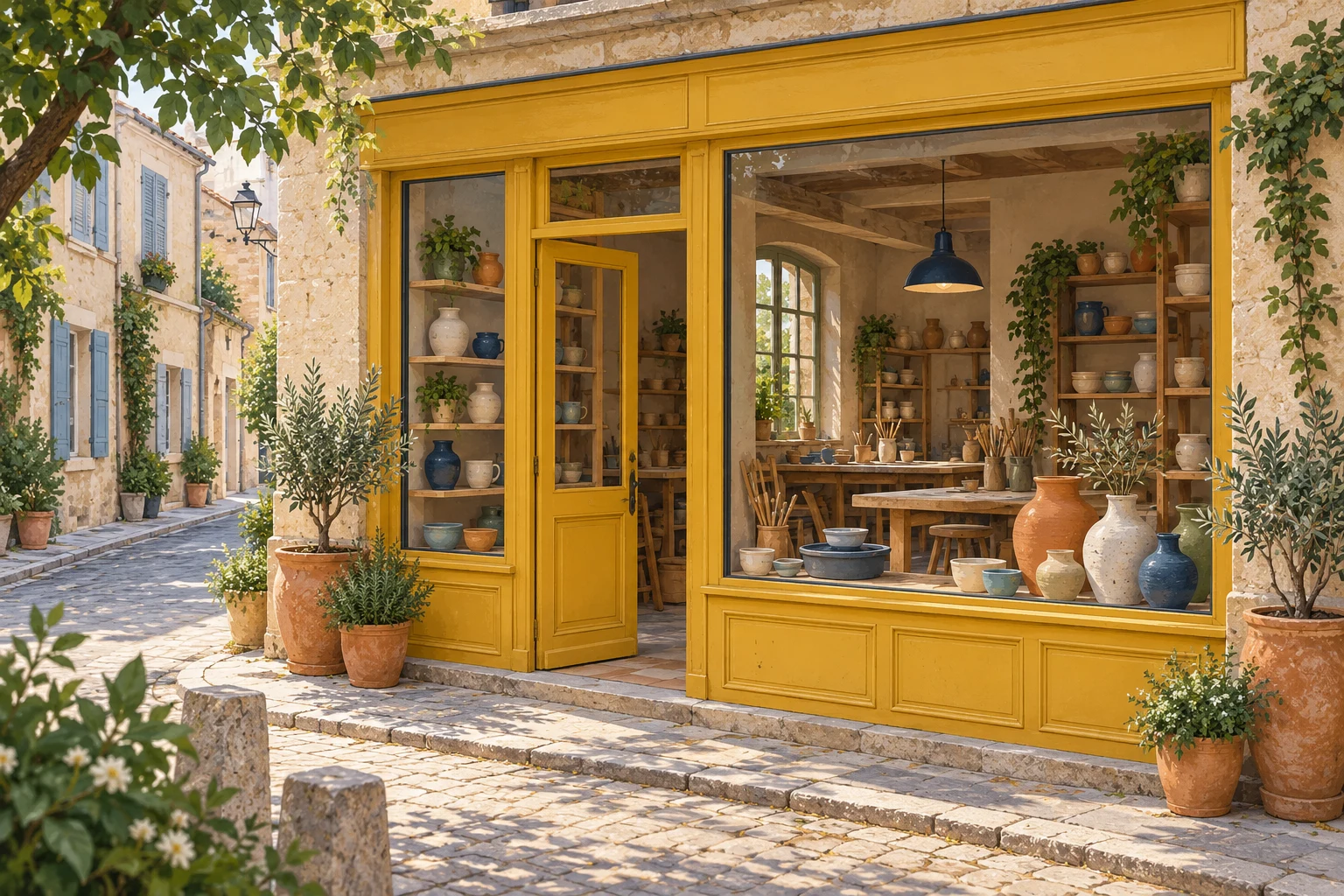
Dina has recently arrived in the neighbourhood. Olivier knows the same street from childhood. His memories help explain the place, but Dina also needs to know what she can do there today. Notice the question On peut encore… ?, which checks whether the old function continues.
- Dina
Tu connais cette petite boutique avec la porte jaune ?
Do you know that little shop with the yellow door?
English
Do you know that little shop with the yellow door?
- Olivier
Oui, quand j’étais enfant, il y avait une boulangerie ici.
English
Yes, when I was a child, there was a bakery here.
- Dina
On peut encore y acheter du pain ?
Can you still buy bread there?
English
Can you still buy bread there?
- Olivier
Non, la boulangerie a fermé en 2018.
English
No, the bakery closed in 2018.
- Dina
Et maintenant, c’est quoi ?
And what is it now?
English
And what is it now?
- Olivier
Depuis 2022, c’est un atelier de céramique.
English
Since 2022, it has been a pottery studio.
- Dina
Ah, je comprends les vases dans la vitrine.
Ah, that explains the vases in the window.
English
Ah, that explains the vases in the window.
- Olivier
Avant, il y avait des baguettes à cet endroit.
English
Before, there were baguettes in that spot.
- Dina
Tu venais souvent dans cette boulangerie ?
Did you often come to this bakery?
English
Did you often come to this bakery?
- Olivier
Tous les samedis, j’achetais le pain avec mon père.
English
Every Saturday, I bought bread with my father.
- Dina
La porte était déjà jaune ?
Was the door already yellow?
English
Was the door already yellow?
- Olivier
Oui, elle était jaune. Mais la vitrine était plus petite.
English
Yes, it was yellow. But the window was smaller.
- Dina
Donc, je cherche une autre adresse pour le pain.
So I need another address for bread.
English
So I need another address for bread.
- Olivier
Oui. La boulangerie actuelle est au coin de la rue des Lilas.
English
Yes. The current bakery is on the corner of Rue des Lilas.
- Dina
Merci ! Et un jour, je vais essayer la céramique ici.
Thanks! And one day, I’m going to try pottery here.
English
Thanks! And one day, I’m going to try pottery here.
- Olivier
Bonne idée. Le lieu a changé, mais il est toujours vivant.
English
Good idea. The place has changed, but it is still lively.
Past background, completed change and present use
| French detail | Time reference | What it establishes |
|---|---|---|
| Il y avait une boulangerie | Childhood background | The former use |
| A fermé en 2018 | Completed change | The bakery stopped operating there |
| Depuis 2022, c’est un atelier | Current situation starting in 2022 | The studio is the present use |
The dates establish the sequence in this exchange. They make the sequence explicit: bakery in Olivier’s childhood, closure, then pottery studio. Depuis connects the studio’s opening period to its current existence. The dialogue leaves the use of the building between those dates unspecified.
Tous les samedis introduces a repeated visit
J’achetais le pain avec mon père describes Olivier’s Saturday routine. It does not mean he buys bread in the pottery studio now. Dina’s practical conclusion—je cherche une autre adresse pour le pain—shows that she separates the memory from today’s shopping options.
A clear local explanation can contain both a memory and an update: Avant, j’achetais le pain ici ; maintenant, on y fait de la céramique. Those contrasting anchors let someone appreciate the history without mistaking it for current directions.