Dialogue
Tu m’étonnes !: why it often means “no wonder”
Read a French dialogue where tu m’étonnes means no wonder, then contrast genuine surprise. Practise the replies and check what the speaker means.
- B1
- 12 lines
- Practice mode
- Learn this in the B1 notebook →
In short
Tu m’étonnes ! often means “No wonder!”, “I’m not surprised!” or “You bet!” in familiar French. Literally, it means “You surprise me”. The next line helps: an obvious cause points to “no wonder”; unexpected news points to genuine surprise.
Yellow the idea to rememberBlue French to learn
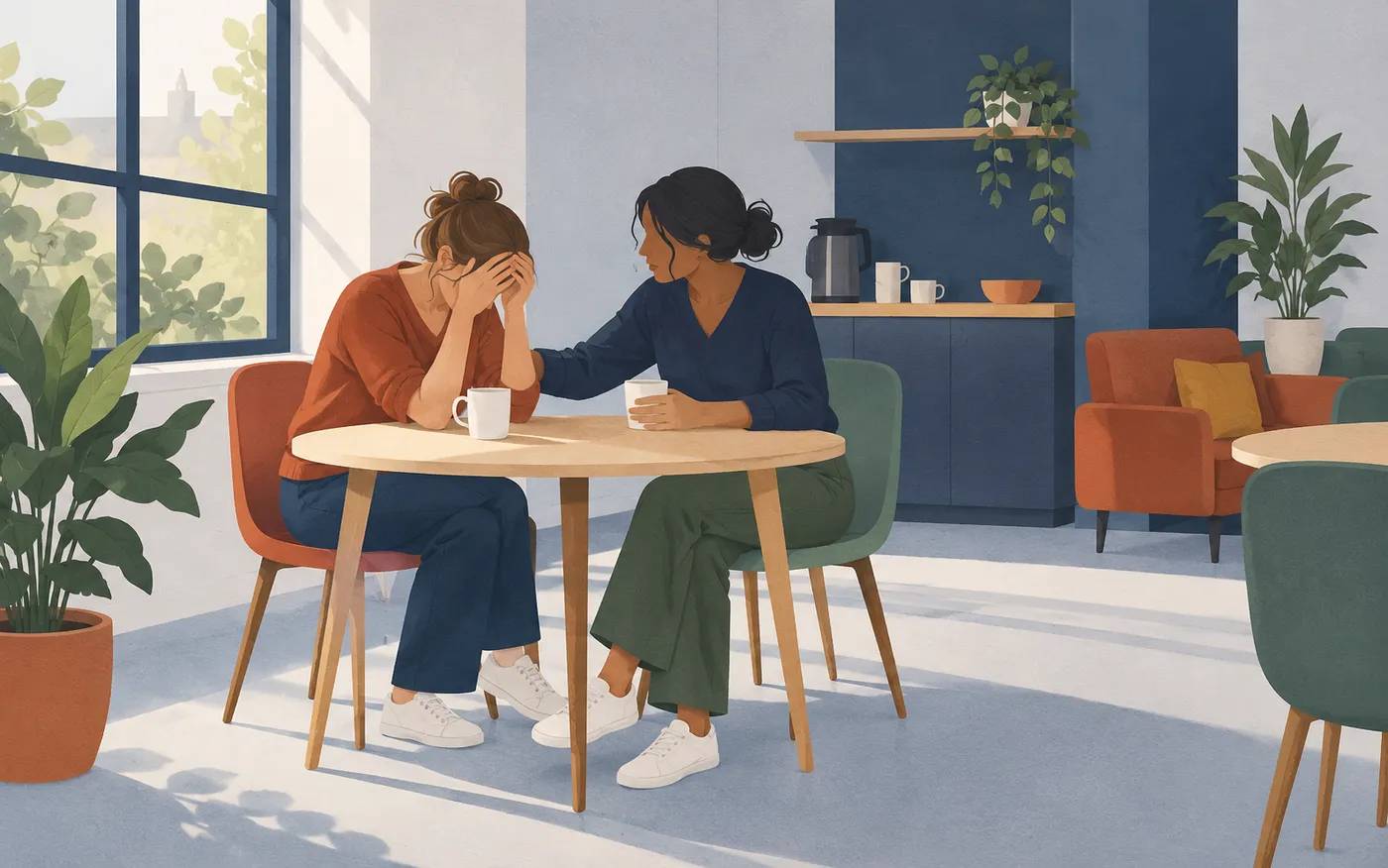
Two colleagues after a long shift
Nora and Samir use tu. Nora is exhausted after a long day, and Samir understands why. Later, Nora mentions something he really did not know. In practice mode, take Samir’s part and use the English cues.
- Nora
Je suis épuisée. J’ai commencé à six heures et je viens de finir.
English
I’m exhausted. I started at six and I’ve only just finished.
- Samir
Tu m’étonnes ! Tu as travaillé toute la journée.
React to the obvious cause: no wonder, she has worked all day.
English
No wonder! You’ve worked all day.
- Nora
Et je n’ai presque pas fait de pause.
English
And I hardly took a break.
- Samir
Ça ne m’étonne pas que tu sois épuisée.
Say you are not surprised she is exhausted.
English
I’m not surprised you’re exhausted.
- Nora
Demain, je ne travaille pas. Je vais enfin me reposer.
English
I’m not working tomorrow. I’m finally going to rest.
- Samir
Tu dois avoir hâte !
Say she must be looking forward to it.
English
You must be looking forward to it!
- Nora
Tu m’étonnes ! Je vais dormir jusqu’à midi.
English
You bet! I’m going to sleep until midday.
- Samir
Et dimanche, tu fais quoi ?
Ask what she is doing on Sunday.
English
And what are you doing on Sunday?
- Nora
Je participe à un concours de chant.
English
I’m taking part in a singing competition.
- Samir
Alors là, tu m’étonnes : je ne savais pas que tu chantais !
Express real surprise and say you did not know she sang.
English
Well, that surprises me: I didn’t know you sang!
- Nora
Je prends des cours depuis deux ans.
English
I’ve been taking lessons for two years.
- Samir
Je comprends mieux ! Bonne chance pour dimanche.
Say you understand better and wish her luck for Sunday.
English
That makes more sense! Good luck for Sunday.
What does tu m’étonnes mean?
| French | Natural English | Clue |
|---|---|---|
| Tu m’étonnes ! Tu as travaillé toute la journée. | No wonder! | A long day explains the exhaustion. |
| Tu m’étonnes ! Je vais dormir jusqu’à midi. | You bet! | Nora strongly confirms she wants the rest. |
| Tu m’étonnes : je ne savais pas que tu chantais ! | That surprises me. | Samir has learnt something unexpected. |
The verb ending stays -es: tu m’étonnes. The m’ comes from me before a vowel. In a neutral reply about a predictable result, say Ça ne m’étonne pas; with a statement after que, use the subjunctive here: Ça ne m’étonne pas que tu sois fatiguée.
Cette réponse m’étonne.
This answer surprises me.
With a named subject such as cette réponse, the ordinary verb expresses surprise.