Reading

A2 French reading: learning to ride a bike as an adult

A personal account in the passé composé and imparfait: Fatou learns to ride a bike at 35. Follow her progress with glosses, a translation and questions.

In short

An A2 first-person text: Fatou never learned to ride a bike as a child and decides to learn at 35. Trace her progress from the first lesson to her first ride to work.

Yellow the idea to rememberBlue French to learn

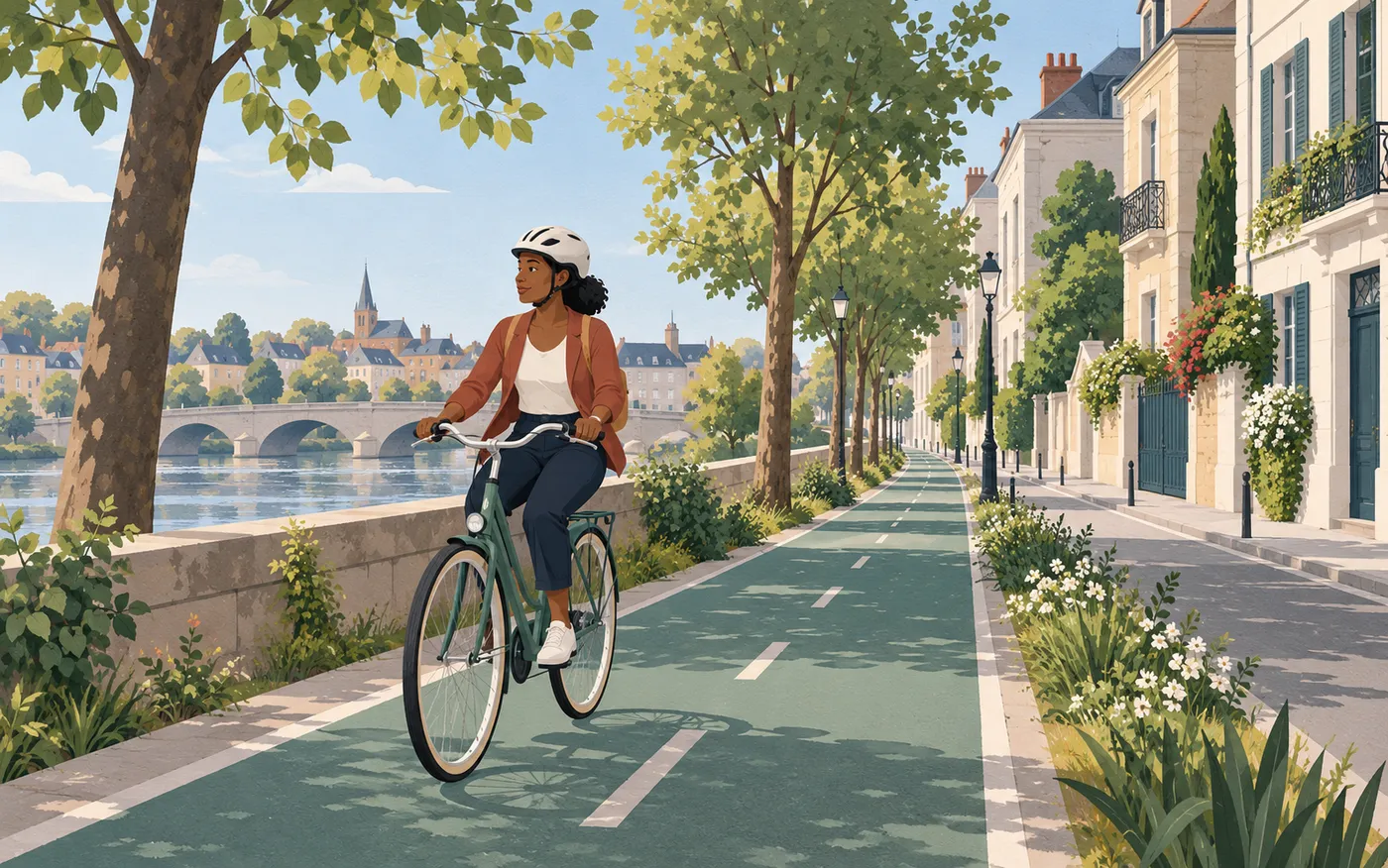
An adult woman cycles along a quiet path beside French townhouses.
Fatou discovers the independence of faire du vélo. Illustration: Atelier

À trente-cinq ans, j'ai appris le vélo

Quand j'étais petite, nous habitions dans un appartement au centre-ville, et je n'ai jamais appris1 à faire du vélo. Pendant des années, j'avais honte2 : tous mes amis savaient rouler.

Au printemps dernier, je me suis inscrite dans une association3 qui enseigne aux adultes. La première leçon a eu lieu sur un parking. On a travaillé l'équilibre4 sans pédales, comme les enfants.

À la troisième leçon, je suis tombée5 une fois, mais je suis remontée tout de suite. Le moniteur m'a appris à freiner6 et à regarder devant moi, pas mes pieds.

Au bout de deux mois, j'ai pris la piste cyclable7 pour aller au travail pour la première fois. Vingt minutes au grand air ! J'étais tellement fière8.

Read it in English

When I was little, we lived in a flat in the city centre, and I never learned to ride a bike. For years I was ashamed: all my friends could ride.

Last spring, I signed up with an association that teaches adults. The first lesson took place in a car park. We worked on balance without pedals, like children.

In the third lesson, I fell once, but I got back on straight away. The instructor taught me to brake and to look ahead, not at my feet.

After two months, I took the cycle lane to go to work for the first time. Twenty minutes in the fresh air! I was so proud.

Her progress
WhenWhat happened
As a childnever learned (lived in a city flat)
Lesson 1balance without pedals in a car park
Lesson 3fell once, learned to brake
After two monthsrode to work on the cycle lane

Faire du vélo is to ride a bike as an activity; rouler is to ride or drive along. Savoir + infinitive foregrounds learned know-how: je sais nager, je sais faire du vélo. Pouvoir can express ability as well as possibility or permission; the context decides which is meant. Je sais nager, mais je ne peux pas venir à la piscine aujourd’hui distinguishes know-how from today’s practical possibility.

Question 1No account needed
Which background detail does Fatou give about her childhood?

Choose one answer.

Answer and explanation

She lived in a city-centre flat.. She says they lived in a city-centre flat. This is a stated background detail; the text does not establish that such housing always prevents learning to ride.

Question 2No account needed
What happened in the third lesson?

Choose one answer.

Answer and explanation

She fell once and learned to brake.. Je suis tombée une fois… le moniteur m'a appris à freiner.

Question 3No account needed
Which sentence explicitly foregrounds “I know how to swim”?

Choose one answer.

Answer and explanation

Je sais nager.. Je sais nager explicitly names learned know-how. Je peux nager is also grammatical and can express ability or possibility in context; it does not make that know-how distinction as explicit.

Sources and further reading