Une porte fermée: French past participles as adjectives
See fermé, ouvert, écrit and cassé describe everyday objects. Compare all four agreement forms, then choose the ending each noun needs.
In short
A past participle used as an adjective agrees with its noun: un sac fermé, une porte fermée, des sacs fermés, des portes fermées. First learn the participle, then add the adjective endings.
Yellow the idea to rememberBlue French to learn
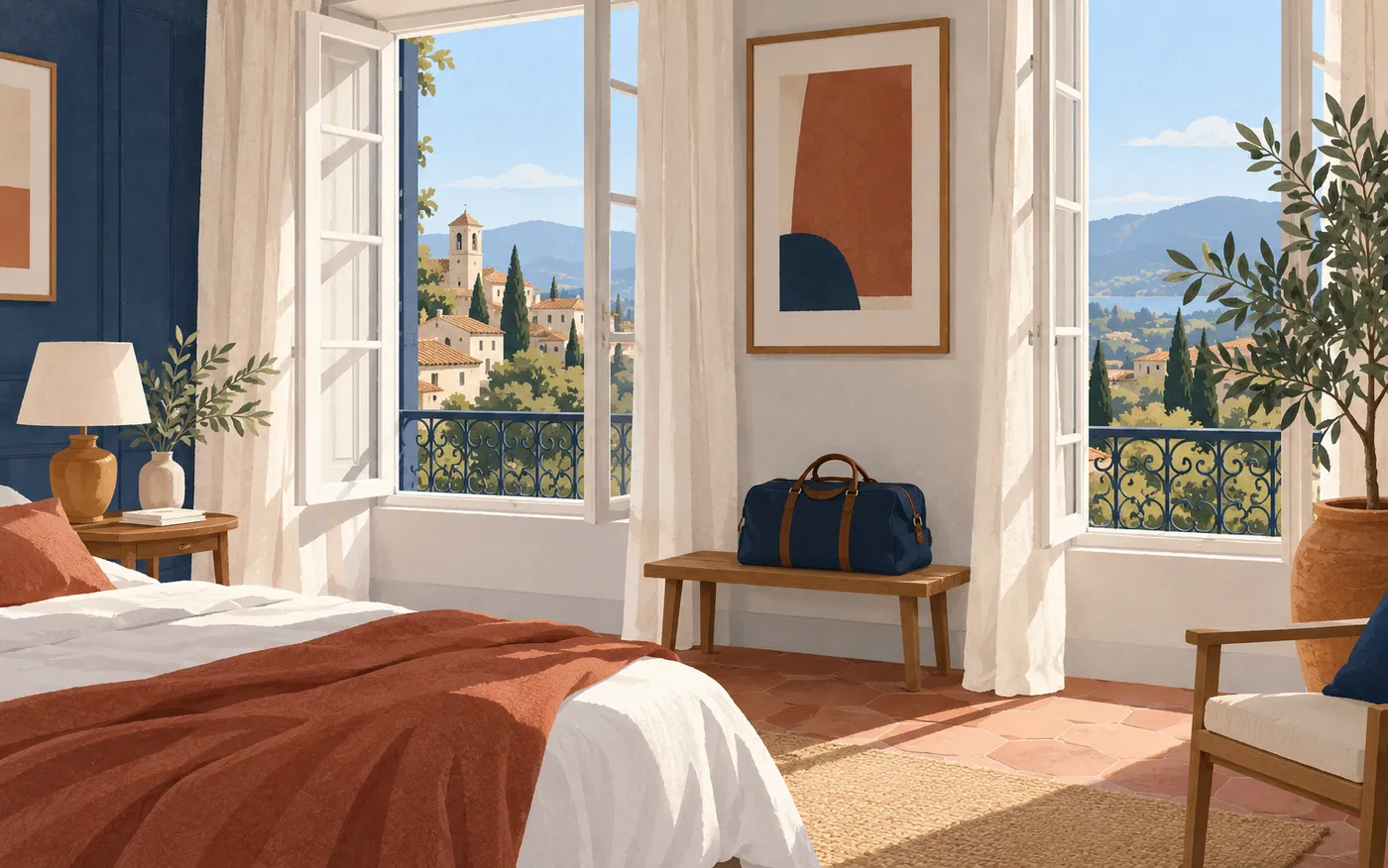
Objects you can describe
Match the object and its condition
Find:
How does a past participle agree as an adjective?
| Base | Masculine singular | Feminine singular | Masculine plural | Feminine plural |
|---|---|---|---|---|
| fermer → fermé | fermé | fermée | fermés | fermées |
| écrire → écrit | écrit | écrite | écrits | écrites |
| ouvrir → ouvert | ouvert | ouverte | ouverts | ouvertes |
| surprendre → surpris | surpris | surprise | surpris | surprises |
The masculine base surpris already ends in -s, so the masculine plural stays surpris. With écrit, the feminine écrite makes the final consonant audible. The written plural -s is usually silent in these forms.
Two participles in one sentence
Elle a fermé les fenêtres ouvertes.
She closed the open windows.
Fermé belongs to a fermé. Ouvertes describes fenêtres.
The object les fenêtres follows a fermé, so fermé stays unchanged. The adjective ouvertes agrees with the feminine plural noun it describes. In Les fenêtres sont fermées, the participle also agrees with fenêtres; the sentence can describe their closed condition.
Nous avons gardé les réponses écrites.
We kept the written answers.
Écrites describes the answers. Gardé is part of the verb group.