French fish labels: caught where, farmed where, and was it defrosted?
Read the species, production method and catch or farming area first. A French shop or landing port does not tell you where the fish came from.
1Bar commun — Dicentrarchus labrax
2Pêché
3Mer du Nord — FAO 27, sous-zone IV
4Chaluts
5Décongelé
- A sample counter sign for sea bass, not a real batch. The second name identifies the species even when common names vary.
- Caught at sea. The same species can be sold as élevé, farmed, so do not assume a species name tells you the method.
- The catch area in this example. The North Sea is a more useful answer than the whole Northeast Atlantic.
- Trawls: a category of fishing gear. This is not the name of the boat or a judgment about stock health.
- Previously frozen and sold thawed, where that declaration applies. Read it as a statement about handling, not origin.
At a French fish counter, read the small lines underneath the species. A wooden sign saying arrivage du jour tells you about the arrival, not the catch area. A big price card may not carry all the information either: for loose fish, the EU rules allow the required details to be given elsewhere on a sign or poster. Ask which information belongs to the fish you are pointing at, not just which sign is nearest.
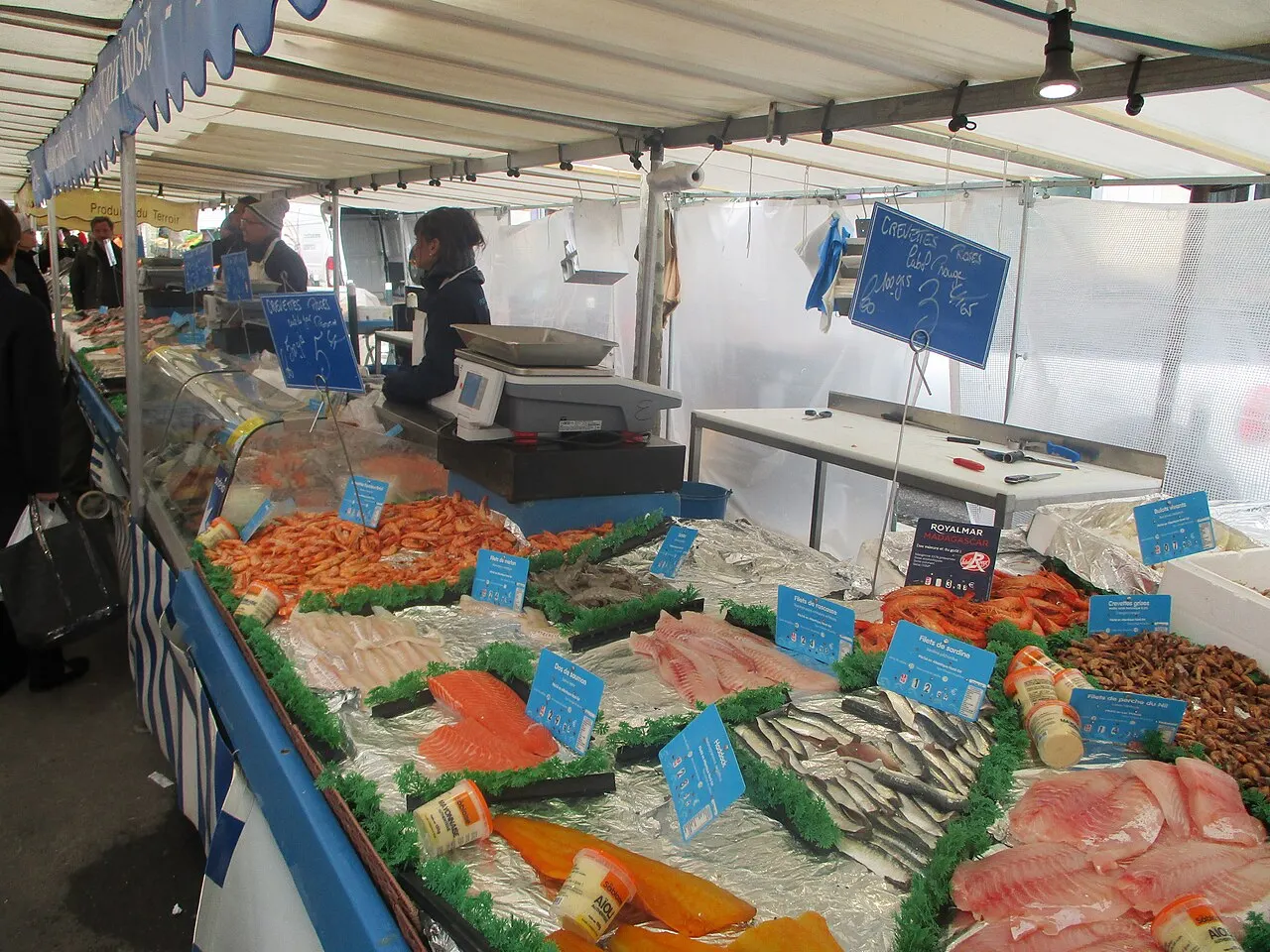
Catch area, farm and landing port are different answers
What the location on the sign actually locates
- Pêché en mer du NordA wild sea catch. Here the name points to a subarea within the Northeast Atlantic, not to a French port.
- Pêché en eaux doucesA freshwater catch. Look for the river, lake or other body of water and the country.
- Élevé en FranceA farmed product. The farming country on a fish label has a defined meaning; it is not the address of the shop.
- Débarqué à LorientLanded at a port. Useful detail, but not a replacement for the catch area.
Articles 38 and 39 of the EU rules distinguish catch, farming and voluntary port information. For farmed fish, the country shown is where it gained more than half its final weight or spent more than half the rearing period.
Same fish name, different questions
Wild sea bass
bar pêché- Which sea or subarea? Look below the species line.
- Which gear category? A trawl and a hook are different even when the fish name is identical.
- Can the seller point to the details for this particular batch?
Farmed sea bass
bar élevé- Which farming country is named? Do not look for a sea-catch subarea.
- If a French town appears on the packet, read the verb beside it: packed, landed or farmed?
- Compare like with like before deciding on the price.
The DGCCRF guide explicitly gives sea bass as an example of a species sold from both wild and farmed batches.
The other words that change what you buy
| French on the display | What it answers | What it does not answer |
|---|---|---|
| Lignes et hameçons | Hooks and lines, one gear category under Annex III. | It does not identify the boat or independently certify a particular stock. |
| Chaluts | Trawls, another gear category in Annex III. | The broad category alone does not tell you every detail of deployment. |
| FAO 27 | The Northeast Atlantic. The French guide lists finer areas such as North Sea and Bay of Biscay. | It is not a country code or the port where the fish was unloaded. |
| Décongelé | Sold thawed. Article 35 requires it where applicable. | No such word is not proof it was never frozen. The rules include exceptions, such as certain products frozen for safety or thawed before processing. |
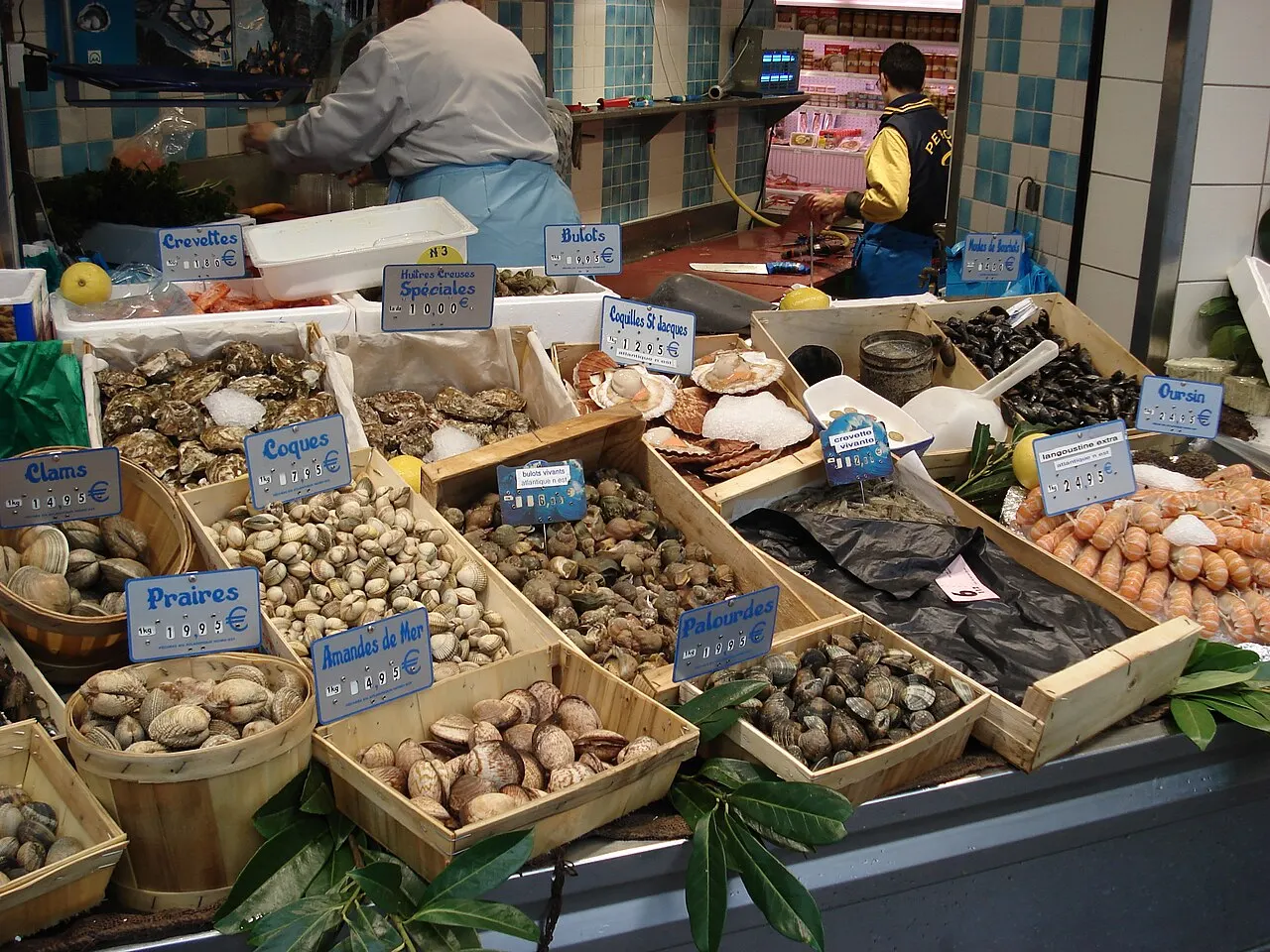
Smoked in France does not mean farmed in France
Three lines on a pack of smoked salmon
- Saumon de l’Atlantique
The name of the fish, not a claim that this fish was wild-caught.
Find pêché or élevé elsewhere on the pack before deciding. - Élevé en Écosse
Example of a farming origin.
Distinguish the origin line from the address of the seller or processor. - Fumé en France
The smoking was done in France.
Look for the origin separately. The DGCCRF salmon guide lists the information to check on packs.
The smaller distinctions are most useful when they make you change what you ask. The method tells you how the fish was produced. The place tells you where it was caught or farmed under the rules. The gear category is one more piece of information about a wild catch, not an all-purpose environmental score. If you cannot find a detail, ask the seller to show it rather than inferring it from a flag or a picture of a boat.
Ask while the fish is still on the ice
Four questions that get a usable answer
- The main sign only gives the species
« Ce poisson est-il pêché ou élevé ? »
Is this fish wild-caught or farmed?
- You have a port name but want the fishing area
« Dans quelle zone a-t-il été pêché ? »
In which area was it caught?
- There are two lots side by side
« Cette étiquette correspond à quel lot ? »
Which batch does this label refer to?
- You want to know how it was handled
« Est-ce que ce poisson a été décongelé ? »
Has this fish been defrosted?
A last look before asking for a fillet
- 1Match the sign to the fish.
The same species can be on two trays. Find the batch you are buying before you start comparing origins or prices.
- 2Check which weight is being sold.
If you want fillets rather than a whole fish, ask Vous pouvez me le lever en filets ? Then check whether the price is for the whole fish or the portion on the scale.
- 3Ask about a missing detail rather than assuming.
For an unfamiliar species, show the scientific name if the common name is unclear. If the seller cannot find the piece of information you need, choose a clearly labelled alternative.
Checked 20 November 2026. The worked label is an illustration. Labelling requirements were read in the DGCCRF guide and EU rules, articles 35, 38 and 39; the salmon comparison uses the DGCCRF salmon guidance.