Sorting game
French narrative tense choices: a door was open versus someone opened it
Distinguish three French door descriptions: an existing open state, a door opening and a named person opening it. Sort explicit contexts without inventing an agent.
- A2
- 9 words to sort
- 3 boxes
- Tap to play
- Learn this in the A2 notebook →
In short
La porte était ouverte describes its state; la porte s’est ouverte reports an opening; Nora a ouvert la porte names the person who opened it. A sentence about an open state does not tell you when or by whom the opening happened.
Yellow the idea to rememberBlue French to learn
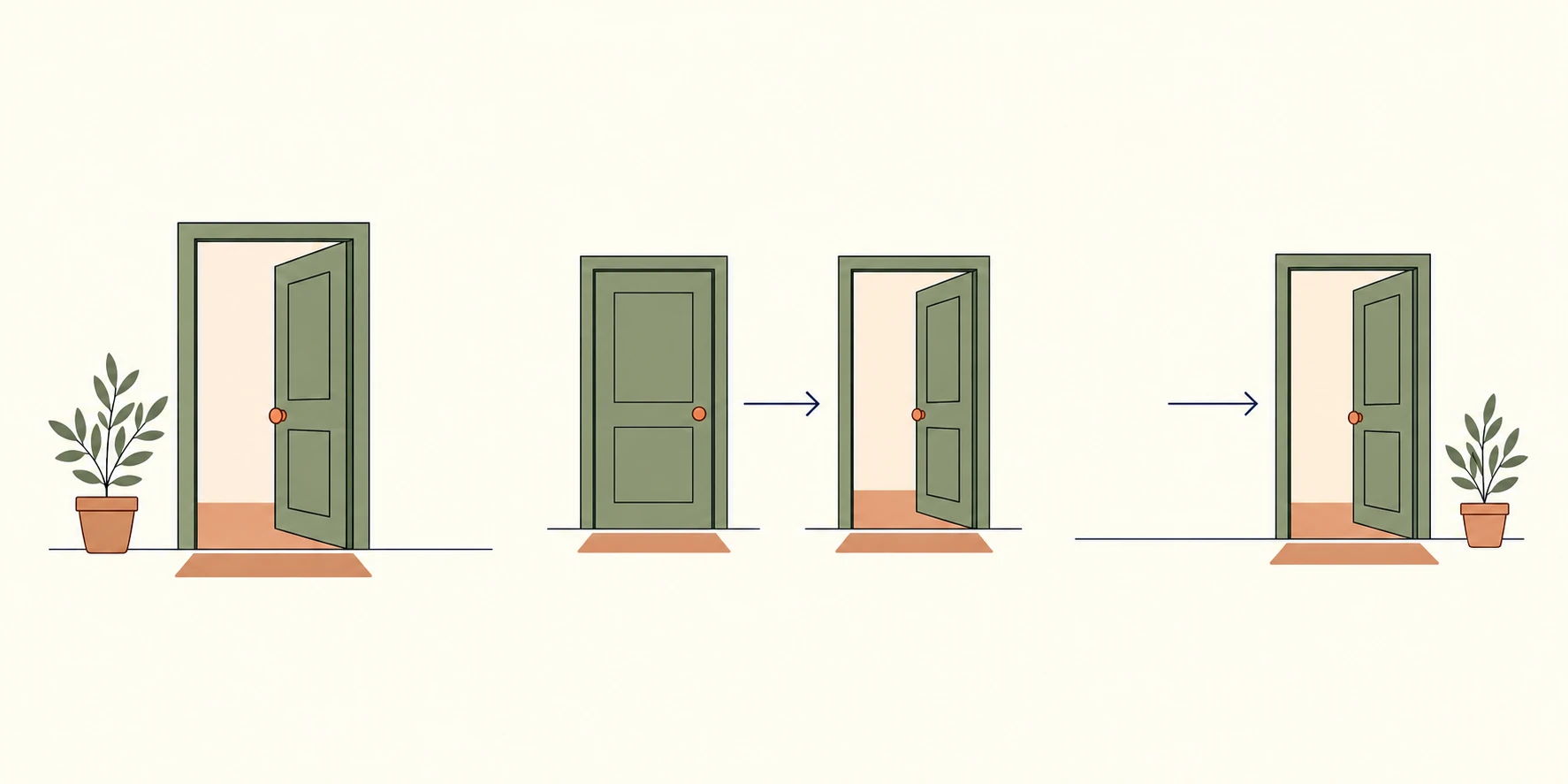
The three expressions can appear in accounts of the same place while answering different questions. What was the door like? What changed? Who did the action? The sorting task gives enough context to identify the information actually stated in each sentence.
| Question answered | French model | Information supplied |
|---|---|---|
| What state was it in? | La porte était ouverte. | Open state at the relevant time |
| What changed? | La porte s’est ouverte. | An opening event, without a named actor |
| Who opened it? | Nora a ouvert la porte. | A named subject performs the opening |
Tap a word, then the box it belongs in.
Open is a property in the state examples
In la porte était ouverte, ouverte describes the door. The e agrees with the feminine noun porte. Depuis un moment strengthens the already-open reading in the first item. The sentence does not narrate the earlier action that created the state.
S’est ouverte reports the change without naming an agent
La porte s’est ouverte makes the door the grammatical subject of the opening event. It may operate automatically, or the account may simply leave the person unnamed. The construction does not establish that nobody touched it. Read the extra context before adding any explanation of the cause.
A ouvert names an agent as the subject
Le gardien a ouvert la porte, puis le groupe est entré.
The caretaker opened the door, then the group went in.
Le gardien identifies the actor. La porte is the following direct object. Ouvert has no added e in this sentence; the object follows the avoir construction. Compare that spelling with ouverte in the state and door-subject examples, while keeping the meaning difference central.
When retelling an event, choose the sentence that matches your evidence. A visible open door supports a state description. Seeing it move supports an opening event. Seeing Nora act lets you name the agent.