Original C2 departure story
La place de la valise
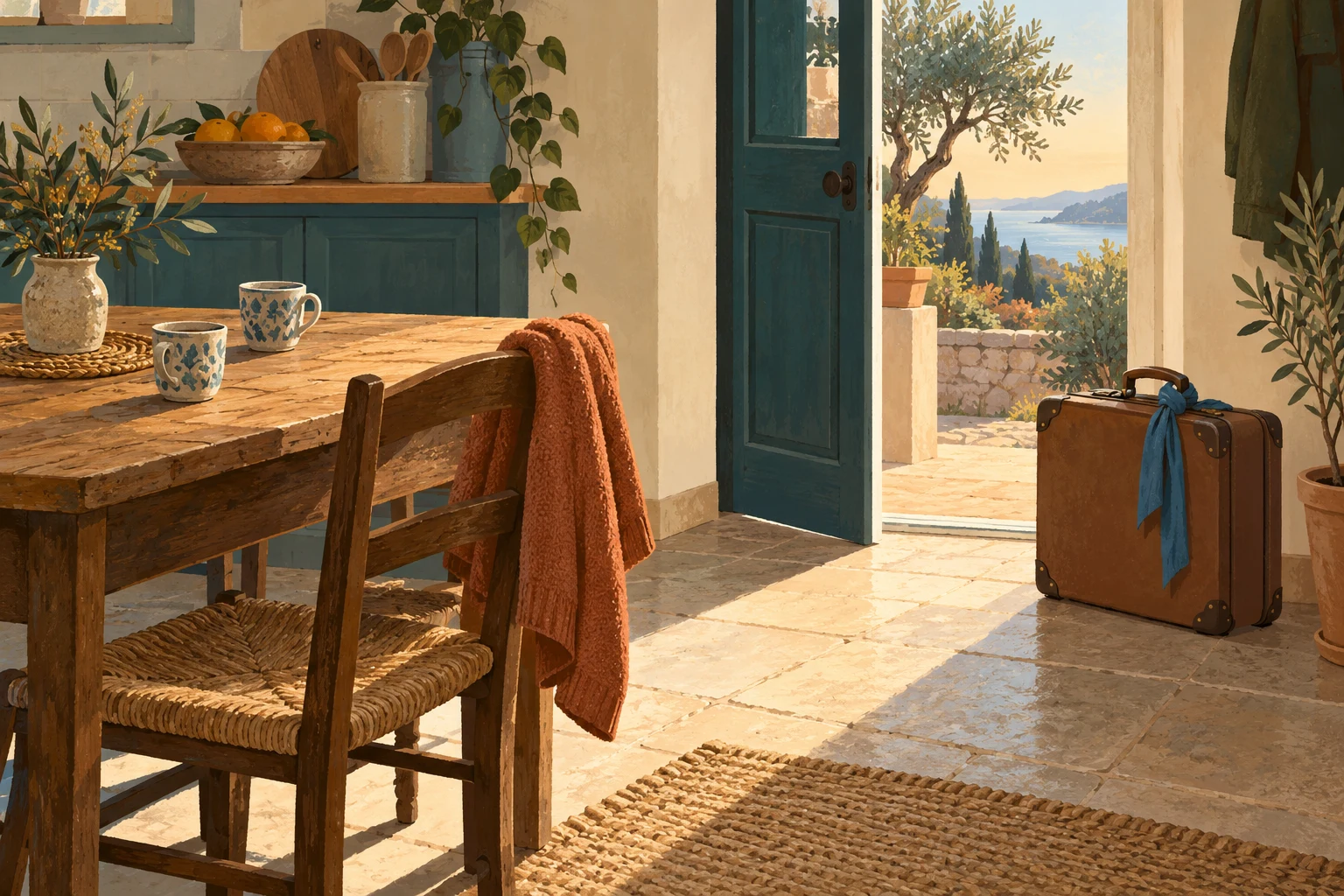
Elle a posé la petite valise près de la porte, sur le carreau qui restait toujours plus froid que les autres. La poignée tenait avec un ruban bleu. Elle avait voulu le remplacer la veille, puis elle avait rangé les ciseaux. Dans la cuisine, deux tasses attendaient encore, mais elle n’a rempli que celle qui portait une fêlure1.
Son frère est descendu avec une chaussette à la main. Il cherchait l’autre depuis plusieurs minutes. Elle lui a montré le dessous de la chaise, sans se lever. Il a ri, puis il a demandé si le train aurait une voiture-restaurant. Elle a répondu qu’elle ne savait pas. La question est restée entre eux pendant qu’il renouait ses lacets2.
À six heures, il a pris la valise. Elle lui a tendu une boîte de biscuits, trop grande pour la poche de son manteau. Il l’a glissée sous son bras. Sur le seuil3, il a voulu dire quelque chose ; elle lui a remis le col en place. Le ruban bleu dépassait de sa main.
Elle l’a suivi jusqu’au portail. Une voiture passait, puis une autre. Ils ont attendu pour traverser ; elle ne traversait pourtant pas avec lui. Quand il a rejoint l’arrêt, elle est revenue lentement vers la maison. Dans l’entrée, elle a déplacé ses chaussures pour ne plus laisser de place à la valise. Puis elle les a remises comme avant. La tasse fêlée était toujours tiède. Elle l’a prise à deux mains et s’est assise près de la fenêtre, du côté où la route disparaissait derrière les arbres.
Read it in English
She put the small suitcase near the door, on the tile that was always colder than the others. The handle was held together with a blue ribbon. She had wanted to replace it the previous day, then had put away the scissors. Two cups were still waiting in the kitchen, but she filled only the one with a hairline crack.
Her brother came downstairs with a sock in his hand. He had been looking for the other one for several minutes. Without getting up, she pointed beneath the chair. He laughed, then asked whether the train would have a dining car. She replied that she did not know. The question hung between them while he retied his shoelaces.
At six o’clock, he took the suitcase. She handed him a biscuit tin, too large for his coat pocket. He tucked it under his arm. On the threshold he wanted to say something; she straightened his collar. The blue ribbon stuck out from his hand.
She followed him to the gate. A car went by, then another. They waited to cross; she was not crossing with him, however. When he reached the stop, she slowly returned to the house. In the hall, she moved her shoes so there was no longer room for the suitcase. Then she put them back as before. The cracked cup was still warm. She took it in both hands and sat near the window, on the side where the road disappeared behind the trees.