Conjugation table
Mettre conjugation: mets, mettons, mis and mettrai
Study mettre in seven tenses: singular mets and met, plural mettons and mettent, the past participle mis and the future stem mettr-. Includes practice.
- A2
- 7 tenses
- Auxiliary: avoir
- Learn this in the A2 notebook →
In short
Mettre means “to put” and also “to put on” clothes. Use je mets, tu mets, il met, then nous mettons, vous mettez, ils mettent. The past is j’ai mis; the future is je mettrai.
Yellow the idea to rememberBlue French to learn
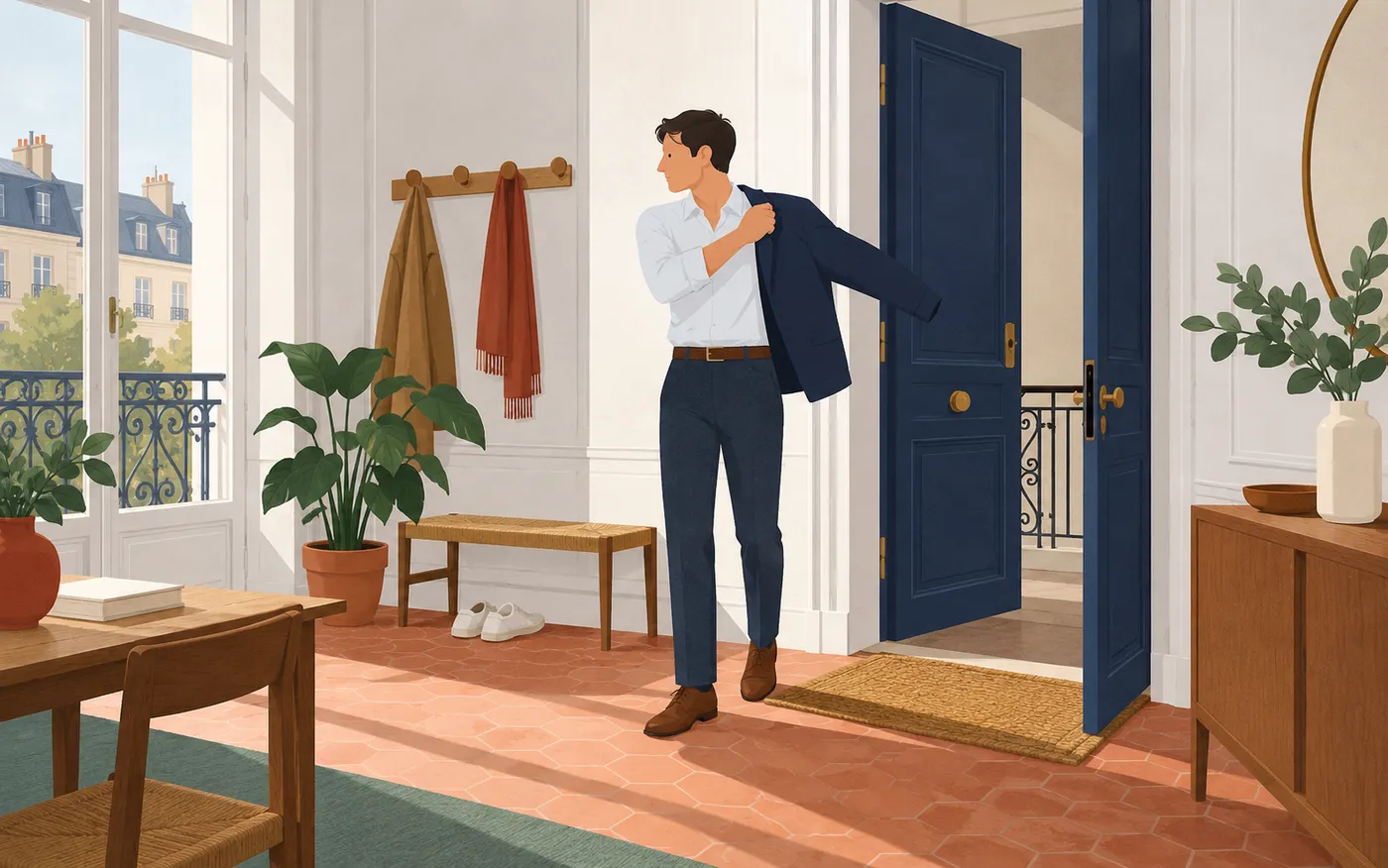
Study first: seven tense tables
- Infinitive
- mettre
- Past participle
- mis
- Present participle
- mettant
- Auxiliary
- avoir
PrésentNow and regular habits
| je | mets |
| tu | mets |
| il / elle / on | met |
| nous | mettons |
| vous | mettez |
| ils / elles | mettent |
Je mets une veste pour sortir.
I put on a jacket to go out.
Passé composéA completed past action
| j’ | ai mis |
| tu | as mis |
| il / elle / on | a mis |
| nous | avons mis |
| vous | avez mis |
| ils / elles | ont mis |
Elle a mis les clés sur la table.
She put the keys on the table.
ImparfaitPast habits and background
| je | mettais |
| tu | mettais |
| il / elle / on | mettait |
| nous | mettions |
| vous | mettiez |
| ils / elles | mettaient |
Nous mettions nos chaussures dans l’entrée.
We used to put our shoes in the hall.
Futur simpleWhat will happen
| je | mettrai |
| tu | mettras |
| il / elle / on | mettra |
| nous | mettrons |
| vous | mettrez |
| ils / elles | mettront |
Tu mettras ton manteau avant de partir.
You will put your coat on before leaving.
Conditionnel présentWhat would happen
| je | mettrais |
| tu | mettrais |
| il / elle / on | mettrait |
| nous | mettrions |
| vous | mettriez |
| ils / elles | mettraient |
Je mettrais cette veste avec un jean.
I would wear this jacket with jeans.
Subjonctif présentAfter a trigger such as il faut que
| que je | mette |
| que tu | mettes |
| qu’il / elle / on | mette |
| que nous | mettions |
| que vous | mettiez |
| qu’ils / elles | mettent |
Il faut que nous mettions la table.
We need to lay the table.
ImpératifInstructions and encouragement
| (tu) | mets |
| (nous) | mettons |
| (vous) | mettez |
Mets tes chaussures !
Put your shoes on!
Does mettre have one t or two?
The present singular keeps one t: mets, mets, met. All three plural forms use mett-, and that stem continues in the imperfect and subjunctive: nous mettions, que vous mettiez. The future and conditional use mettr-: je mettrai, je mettrais. The participle is a separate short form, mis. With avoir and an object after the verb, it stays mis: Elle a mis sa veste.
| Pattern | Example | Meaning |
|---|---|---|
| mettre + clothing | Je mets ma veste. | I put on my jacket. |
| mettre + thing + place | Nous mettons les clés ici. | We put the keys here. |
| mettre + time + à + infinitive | Je mets dix minutes à me préparer. | It takes me ten minutes to get ready. |
| mettre la table | Tu mets la table ? | Will you lay the table? |
What are you putting on?
Find:
What mistakes do learners make with mettre?
- Vous metez votre veste.Vous mettez votre veste.
The present plural uses mett- with two ts.
- Il mets son manteau.Il met son manteau.
The third-person singular has no final -s.
- J’ai metté la table.J’ai mis la table.
The past participle is mis, used with avoir.
- Demain, nous metterons un pull.Demain, nous mettrons un pull.
Use the future stem mettr- directly before -ons.
Recall the forms, then use them
1 · Write only the verb form; include the auxiliary for the past
- nous · Présent
- ils / elles · Présent
- tu · Passé composé
- vous · Imparfait
- nous · Futur simple
- je · Conditionnel présent
- que nous · Subjonctif présent
- qu’ils / elles · Subjonctif présent
- (tu) · Impératif
2 · Complete the sentences in the tense shown
- Tous les matins, elle une veste. (présent)
- Hier, nous la table ensemble. (passé composé)
- Il faut que tu tes chaussures. (subjonctif présent)
- Si j’avais froid, je un manteau. (conditionnel présent)