Paris to Strasbourg: the fastest way, the cheapest way, and which ticket to buy
Train, low-cost train, slow train, coach or car from Paris to Strasbourg: how long each takes, what each costs, which station, and the French you need to book.
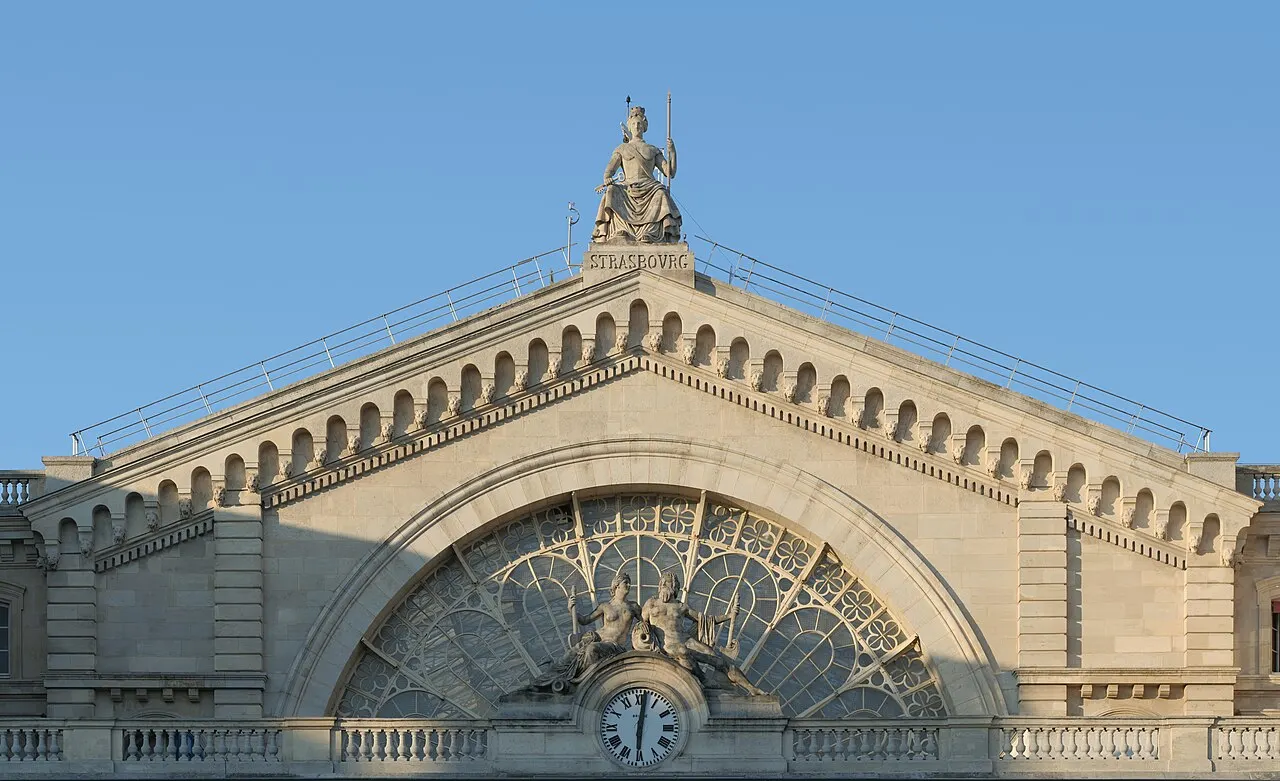
Take the direct TGV from Paris Gare de l’Est: about 1 h 46, roughly twenty trains a day, from around 6 am to 8 pm. Booked weeks ahead it can cost under 20 €; bought the day before, often over 80 €. The coach is the cheapest at short notice and takes five to six hours.
Yellow the idea to rememberBlue French to learnRed watch out
Five ways, side by side
| How | Booked early | Booked late | Where to buy |
|---|---|---|---|
| TGV INOUI | from about 15 to 30 € | 50 to 130 € | SNCF Connect |
| OUIGO, the low-cost TGV | from about 16 to 20 € | rises, but less | ouigo.com |
| Regional train (TER) | from about 40 € | the same: the fare is fixed | ter.sncf.com or SNCF Connect |
| Coach | from about 18 € | 35 to 55 € | FlixBus or BlaBlaCar Bus |
| Car | fuel plus about 40 € of tolls | the same | Toll calculator at autoroutes.fr |
There is no flight worth taking: by the time you have reached the airport, the train has arrived.
Which one is for you
Pick by what matters most
- You have a date and can book aheadun billet OUIGO ou Prem’s
The cheapest fast seats go first. Book on ouigo.com or SNCF Connect as soon as you know the day; sales open several months ahead.
under 20 € is common - You are leaving tomorrowle car
Train prices have climbed. The coach (FlixBus, BlaBlaCar Bus) or the fixed-price regional train is now the bargain.
from about 18 € - Your plans may changeun billet échangeable
On TGV INOUI, pay a little more for a ticket you can change or refund. OUIGO’s cheapest seats cannot be refunded.
read the fare line - You want to see the countryle TER
The slow direct TER crosses Champagne and Lorraine, never sells out, and costs the same on the day.
about 5 hours
Buying the ticket
- Prices move like airline prices
A fast train is cheapest when sales open and dearest on the day. Midweek trains are usually cheaper than Friday and Sunday evening ones.
- Luggage
INOUI lets you bring two cases and a bag at no charge. On OUIGO a cabin bag and a handbag are included; a large case is a paid extra: 5 € when you book, 20 € at the station.
- No ticket office needed
The ticket is a QR code on your phone. On TGVs, gates at the platform scan it; on TER you just board.
At Gare de l’Est
- 1Arrive twenty minutes early
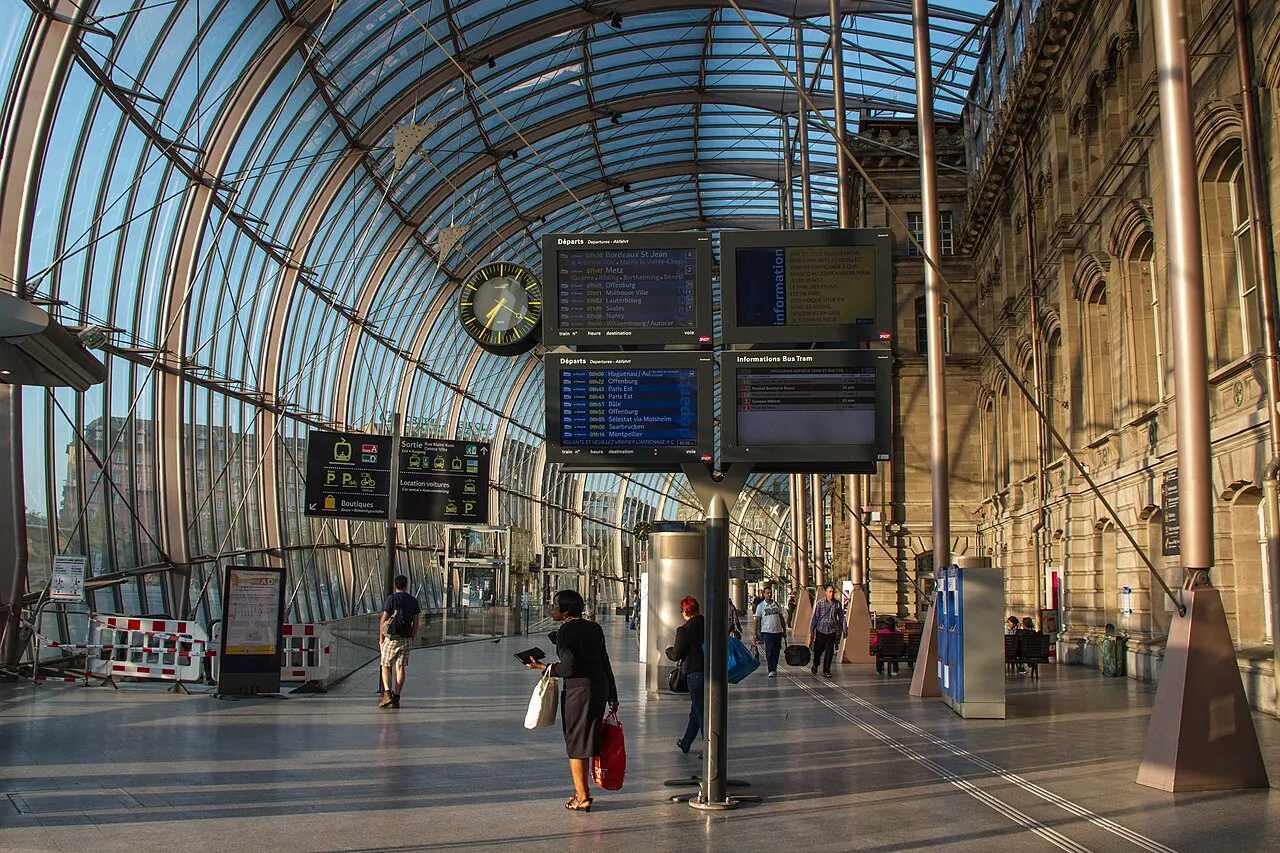
The platform number (la voie) appears on the boards about twenty minutes before departure, not earlier.
- 2Find your coach before you walk
The screen on the platform shows where each coach (la voiture) stops. Your coach and seat numbers are on the ticket.
- 3Scan at the gate
Gates close two minutes before departure on TGV INOUI. OUIGO asks you to be there earlier: the time is on the ticket.
- 4Keep the ticket to hand
It is checked again on board.
Arriving in Strasbourg
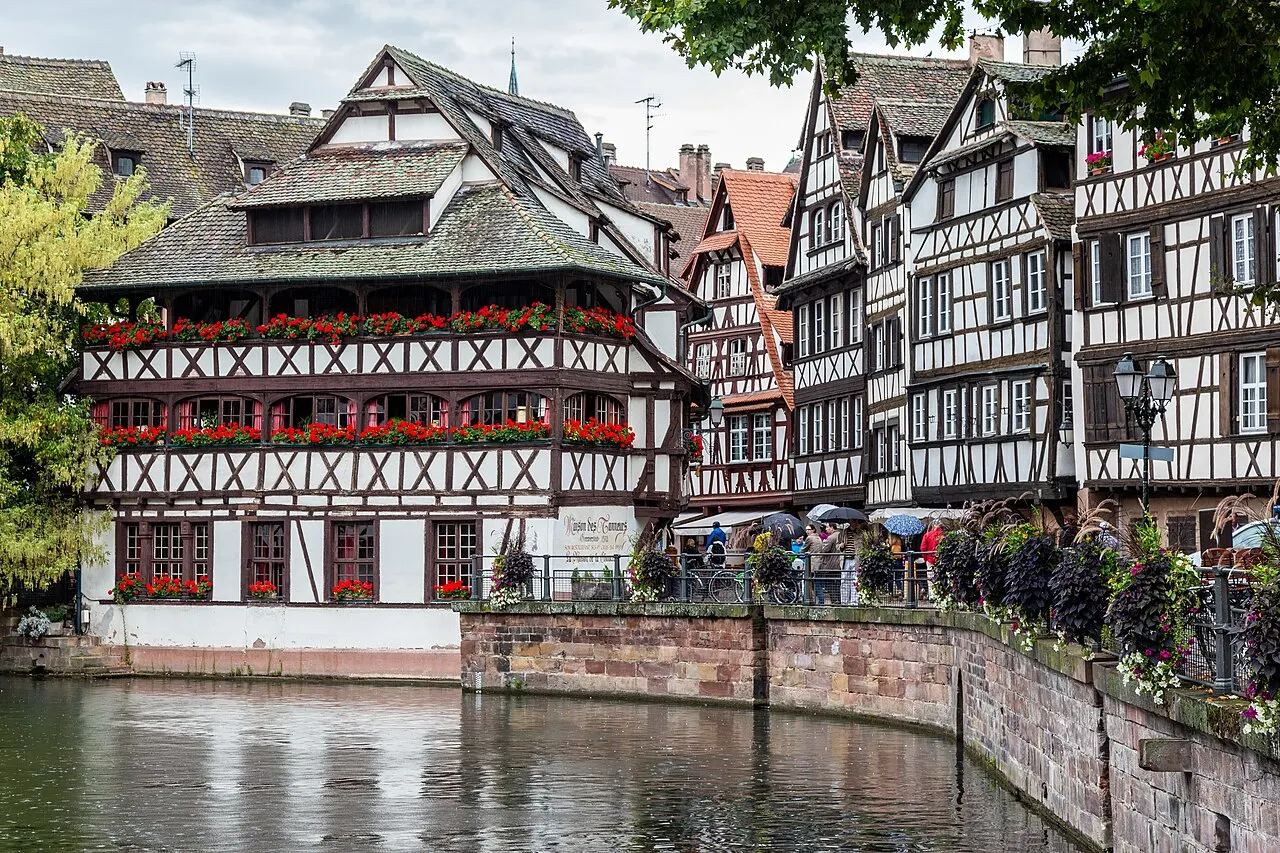
The station is at the edge of the old town. La Petite France, the quarter of canals and half-timbered houses, is about ten minutes on foot; the cathedral is about fifteen. With luggage, trams A and D run from the lower level of the station to Homme de Fer, the central stop, two stops away.
- As a day trip
It works: a train before 8 am and one back after 6 pm give nine hours in the city.
- In December
During the Christmas market, trains and hotels fill weeks ahead and fares rise. See our guide to the market.
- Going on to Germany
Kehl is across the Rhine by tram D. Some Paris trains continue to Stuttgart, Munich or Frankfurt.
The French on the booking screen
| French | English | What it changes |
|---|---|---|
| un aller simple | one way | Two singles often cost the same as a return. |
| un aller-retour | return | |
| échangeable, remboursable | can be changed, can be refunded | Check for sans frais (no fee) and until when. |
| placement libre | no reserved seat | Normal on TER. |
| voiture 12, place 45 | coach 12, seat 45 | |
| la voie | the platform | Shown twenty minutes before. |
| direct, 1 correspondance | direct, one change | Filter for direct: journeys with a change can take three hours. |
At a ticket desk
« Bonjour, un aller simple pour Strasbourg, demain matin, s’il vous plaît. »
Hello, a single to Strasbourg tomorrow morning, please.
« Vous avez une carte de réduction ? »
Do you have a discount card?
« Non, je n’en ai pas. »
« Le train de 7 h 55 est complet. Il reste de la place à 9 h 25. »
The 7.55 is full. There are seats on the 9.25.
« D’accord, celui de 9 h 25. »
Checked 20 November 2026. OUIGO’s luggage rule and its 5 € and 20 € charges were read on OUIGO’s own page. The best Paris to Strasbourg time has been 1 h 45 since 2016 (French Wikipedia, on the high-speed line). No fare here is a quote: the fare ranges are what booking sites showed when this was written and change daily, the number of trains and the coach times were not re-read, and the 40 € of tolls is an estimate, so use the calculator.
- SNCF ConnectTGV INOUI and TER times and tickets.sncf-connect.com
- OUIGOThe low-cost high-speed trains.ouigo.com
- TERRegional trains: times and fixed fares.ter.sncf.com
- FlixBusCoaches from Paris Bercy.flixbus.fr
- BlaBlaCar BusThe other coach company.blablacar.fr
- CTSStrasbourg trams and buses.cts-strasbourg.eusite officiel
- Visit StrasbourgThe tourist office.visitstrasbourg.frsite officiel