Phrasebook

Present French sources that cannot be combined into one figure

Explain in French why two figures cannot be pooled: different periods, populations, definitions or missing denominators, in four practical scenes.

In short

Say Ces chiffres ne portent pas sur le même périmètre, then name the mismatch: period, population, definition or denominator. On peut les présenter séparément offers a useful alternative to a single combined figure.

Yellow the idea to rememberBlue French to learn
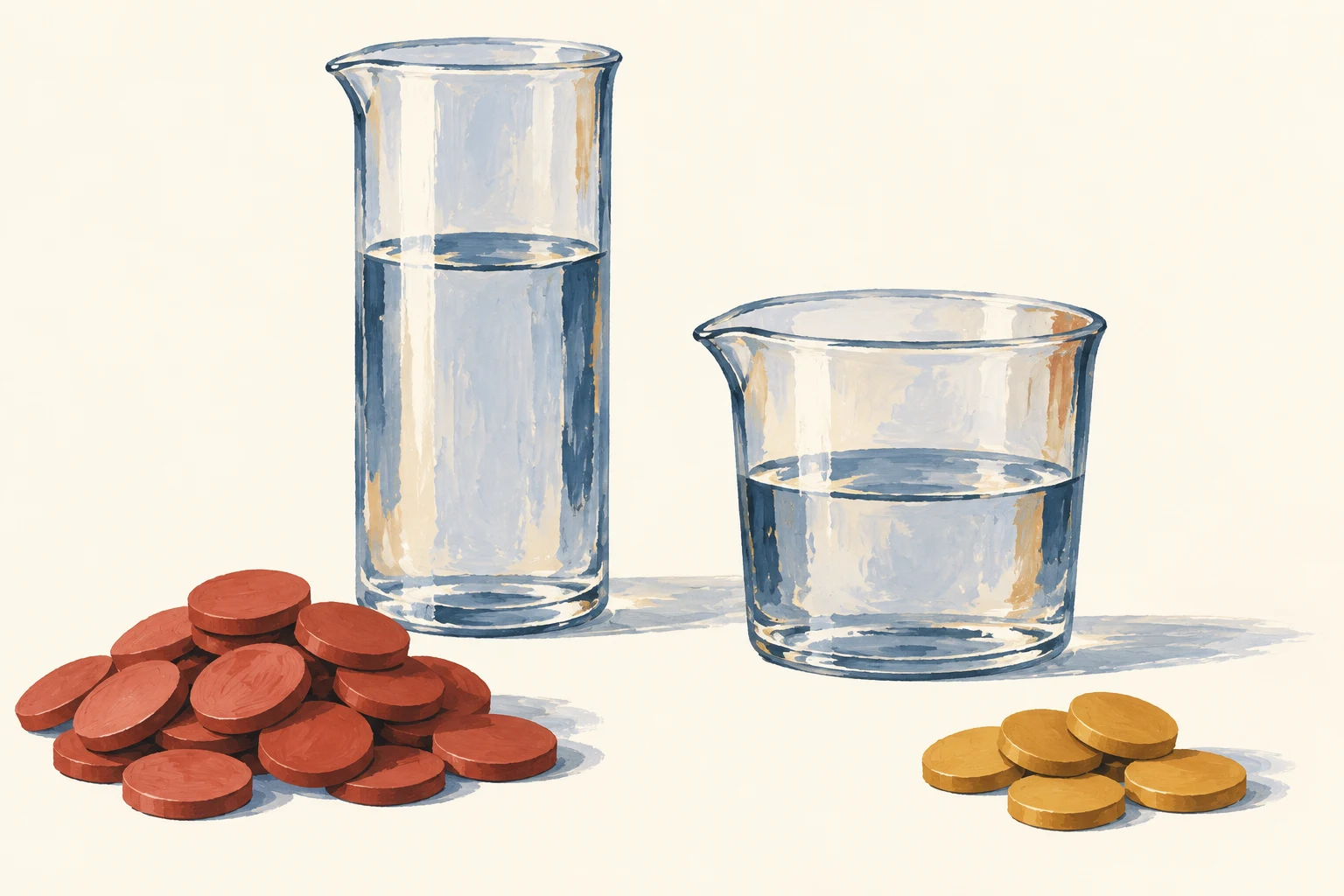
Unequal vessels and counter groups suggest different comparison bases.
State the different populations or measures before combining figures. Illustration: Atelier

A colleague asks for one number for the slide. One survey covers last year’s users; the other covers this year’s subscribers. Both figures may be useful, but a total or average would conceal what each one measures. The phrases below make the obstacle concrete and keep the discussion moving towards an accurate presentation.

1

Different periods

One figure covers January; the other covers the whole year.

ColleaguePeut-on calculer une moyenne avec ces deux chiffres ?Can we calculate an average using these two figures?
YouPas directement : le premier porte sur janvier, le second sur l’année entière.Not directly: the first covers January, the second the entire year.
YouPrésentons les périodes séparément, ou cherchons des données mensuelles comparables.Let’s show the periods separately, or look for comparable monthly data.
2

Different populations

Users and subscribers are different groups.

ColleagueLes deux enquêtes concernent bien nos voyageurs ?Both surveys do concern our passengers, don’t they?
YouOui, mais l’une interroge tous les usagers, tandis que l’autre ne vise que les abonnés.Yes, but one surveys all users, whereas the other targets subscribers only.
YouIl faudrait isoler les abonnés dans la première enquête pour comparer ce groupe.We would need to isolate subscribers in the first survey to compare that group.
3

Different definitions

A delay is counted from different thresholds.

ColleagueLe taux de retard a donc doublé ?So the delay rate has doubled?
YouLes seuils diffèrent : cinq minutes dans un document, dix dans l’autre.The thresholds differ: five minutes in one document, ten in the other.
YouLa définition du retard doit être harmonisée avant de conclure à une hausse.The definition of a delay must be harmonised before concluding there has been an increase.
4

Missing denominator

A percentage appears without its base.

ColleagueCe taux de satisfaction semble meilleur.This satisfaction rate seems better.
YouSur combien de réponses ce pourcentage est-il calculé ?How many responses is this percentage calculated from?
YouSans l’effectif correspondant, nous ne pouvons pas pondérer les deux taux.Without the corresponding number, we cannot weight the two rates.

Reject the calculation, then offer a route forward

Pas directement is useful when the data might become comparable after further work. En l’état means in their present form: En l’état, ces taux ne peuvent pas être regroupés. This focuses on the material available, rather than declaring the whole study useless. Ask for a missing base, a common time window or a matching subgroup. If none is available, retain separate labelled figures.

Les résultats suggèrent des tendances différentes, mais les populations interrogées ne sont pas identiques.

The results suggest different trends, but the populations surveyed are not identical.

Question 1No account needed
Which question seeks a denominator?

Choose one answer.

Answer and explanation

Sur combien de réponses ce taux est-il calculé ?. The number of responses supplies the base of the percentage. A report date does not supply that base.

Question 2No account needed
What does en l’état qualify?

Choose one answer.

Answer and explanation

The data in their current form. En l’état limits the judgement to the material currently available and leaves room for further information.

Built from