How to check a French noun’s gender when the article hides it
Find masculine and feminine clues in French sentences, see what l’ and les hide, and check why mon amie is feminine with pictures and a quiz.
In short
Look for un/une or le/la attached to the noun. L’ and les hide the gender, while an adjective can reveal it: l’appartement est petit is masculine and la cuisine est petite is feminine.
Yellow the idea to rememberBlue French to learn
How do you find the gender of a French noun?
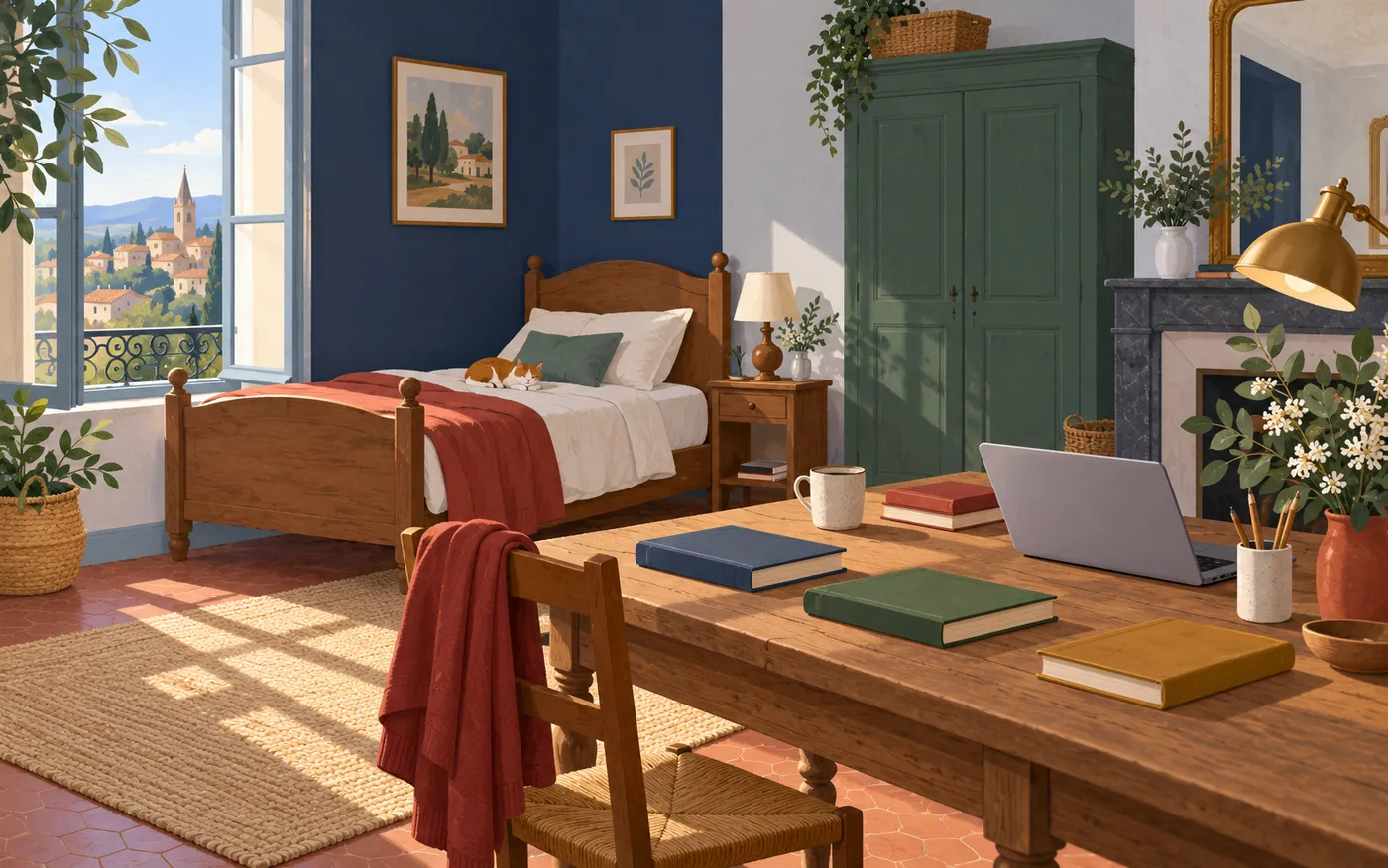
Four nouns from the housing lesson
Find:
| Sentence | Gender clue | Conclusion |
|---|---|---|
| Une petite table. | une / petite | Table is feminine. |
| Un petit lit. | un / petit | Lit is masculine. |
| Une pièce calme. | une | Calme has the same form in both genders. |
| L’appartement est grand. | grand | L’ hides the gender; grand reveals masculine agreement. |
A noun’s gender belongs to the noun. A large table is still feminine: une grande table. A small bed is still masculine: un petit lit. Size and appearance help you picture the object; the article tells you its grammatical gender.
Why is it mon amie, not ma amie?
Mon amie est patiente.
My female friend is patient.
Before the vowel in feminine amie, use mon. The noun stays feminine.
Marc cherche sa table. Léa cherche son lit.
Marc is looking for his table. Léa is looking for her bed.
Sa follows feminine table; son follows masculine lit.
To identify an owner, read the context. Son lit can mean his bed or her bed. First find the possessed noun, then check its gender; keep the owner as a separate question.