Cheat sheet

Le, la, l’ or les: French definite articles at a glance

Choose le, la, l’ and les with a printable rule sheet. Compare known objects, general likes and au/du contractions, then try four quick questions.

In short

Use le for a masculine singular noun, la for a feminine singular noun and les for a plural noun. Le and la become l’ before a vowel or mute h. These articles mean “the”, and French also uses them for general likes: J’aime le café.

Yellow the idea to rememberBlue French to learnRed watch out

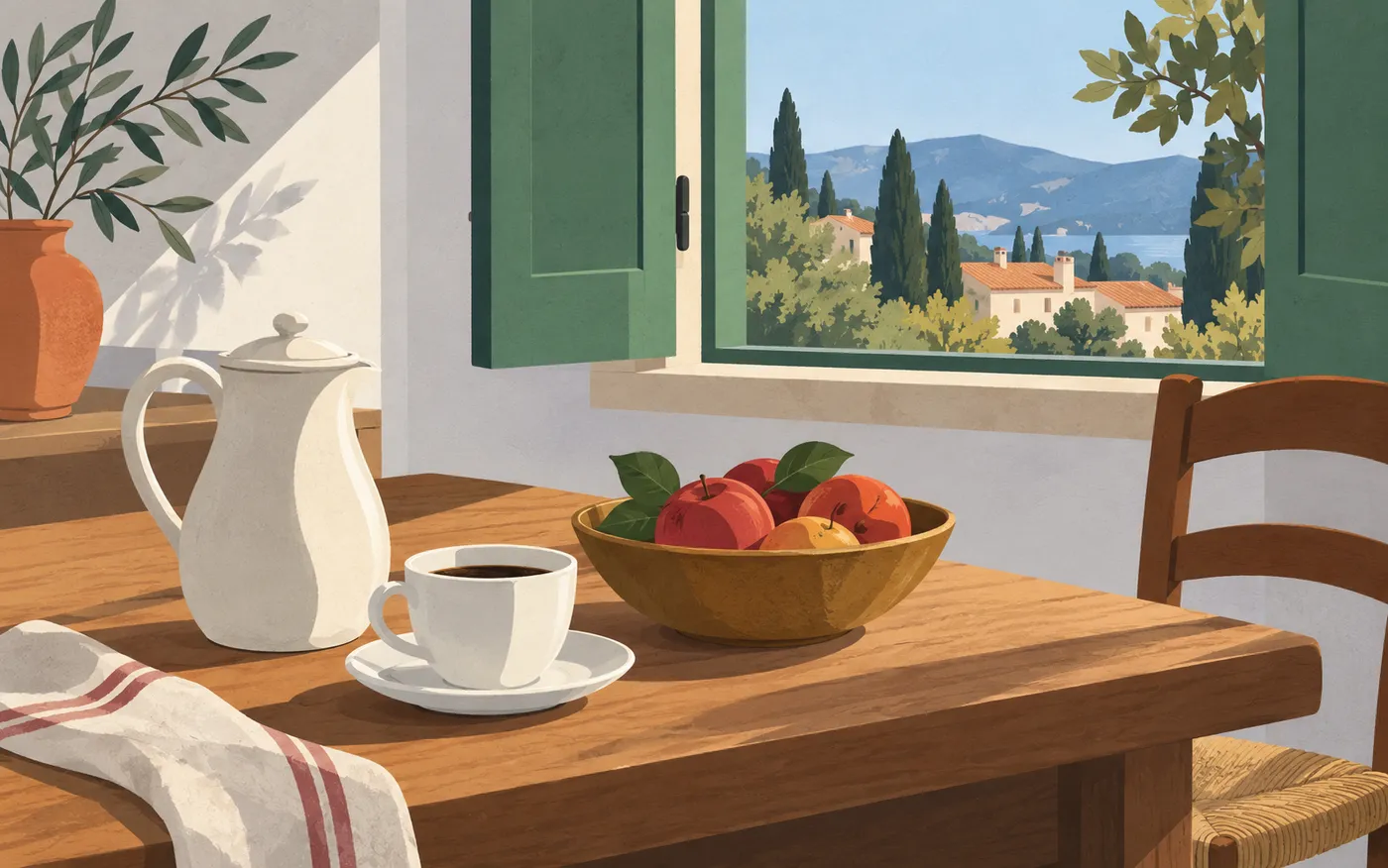
A coffee cup and fruit bowl on a breakfast table.
J’aime le café uses the article for a general liking. Illustration: Atelier

Les articles définis · fiche pratique

1 · Choose the noun’s gender and number

The noun decides the article. Learn the pair together: le magasin, la boutique. The person speaking can use either pair.

le magasinthe shop · masculine singular
la boutiquethe shop · feminine singular
les magasins / les boutiquesthe shops · plural

Le magasin est ouvert.The shop is open.

Les boutiques sont fermées.The shops are closed.

2 · Use l’ before a vowel or mute h

Both genders use l’: l’école is feminine and l’hôtel is masculine. Put the apostrophe next to the noun.

L’école est près de l’hôtel.The school is near the hotel.

L’amie de Nora arrive.Nora’s friend is arriving.

3 · Keep le or la before an aspirated h

Learn the whole phrase: le héros, la honte. This kind of h blocks elision; it is still silent.

Le héros arrive à la fin.The hero arrives at the end.

4 · Identify something the listener can recognise

Use the definite article for something already mentioned or clear in the situation.

J’ai acheté un sac. Le sac est bleu.I bought a bag. The bag is blue.

Fermez la porte, s’il vous plaît.Close the door, please.

5 · Use it for general likes and dislikes

English often leaves out an article here. French keeps one before the noun: le café, la musique, les romans.

J’aime le café.I like coffee.

J’adore les romans.I love novels.

Je n’aime pas le bruit.I don’t like noise.

6 · Combine à and de with le and les

Use these contractions whenever à or de meets the definite articles le or les. Keep à la, à l’, de la and de l’ as they are.

à + le → auto / at the
à + les → auxto / at the · plural
de + le → duof / from the
de + les → desof / from the · plural

Je vais au marché.I’m going to the market.

Le prix des chaussures est affiché.The price of the shoes is displayed.

Coffee in general, or some coffee now?

J’aime le café.I like coffee.

Focus: coffee as a general category

J’aime aussi le thé.
I also like tea.

Je bois du café.I’m drinking some coffee.

Focus: an amount of coffee

Ce matin, je prends du thé.
This morning, I’m having some tea.

You will also meet du as de + le: la porte du magasin means “the shop door”. Read the whole phrase to see its job. After a general dislike, the definite article stays: Je n’aime pas le café.

Question 1No account needed
Complete “The windows are open”.___ fenêtres sont ouvertes.

Choose one answer.

Answer and explanation

Les. The noun for windows is plural, so choose the plural article. The adjective meaning open is also plural.

Question 2No account needed
Say that you like coffee in general.J’aime ___ café.

Choose one answer.

Answer and explanation

le. The first option names coffee as a general category after the verb for liking. The second describes an amount.

Question 3No account needed
Choose the phrase meaning “at the museum”.

Choose one answer.

Answer and explanation

au musée. The noun for museum is masculine. The preposition and masculine singular article combine in the second option.

Question 4No account needed
Complete the article before the mute h in hôtel.___ est près de la gare.

Choose one answer.

Answer and explanation

L’hôtel. The noun for hotel starts with a mute h, so the singular article loses its vowel and takes an apostrophe.