B1 · Eight glosses and full translation
Le dimanche, jusqu’à quelle heure ?
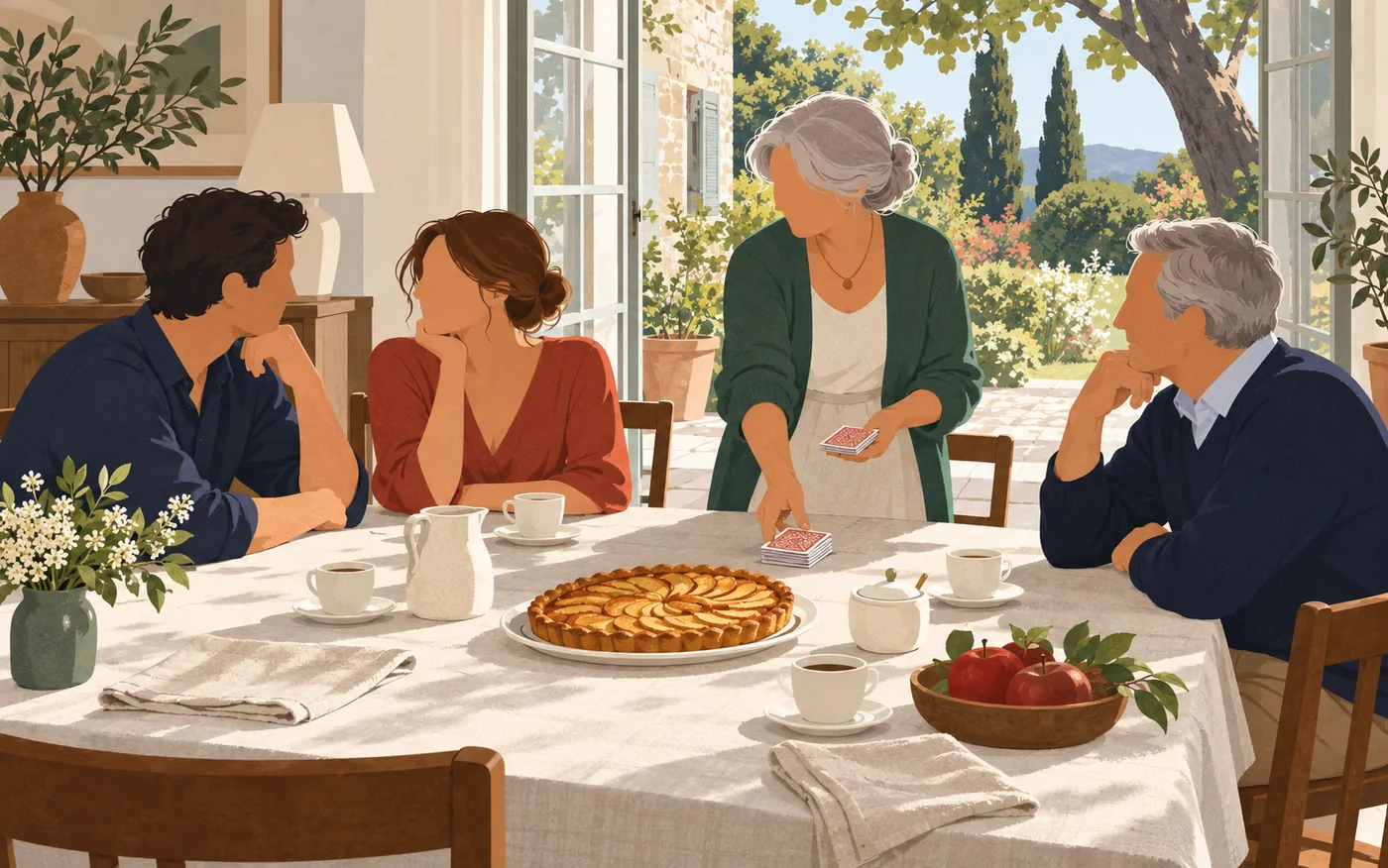
Dans la famille de Léon, le déjeuner du dimanche commençait à treize heures et finissait rarement avant dix-sept heures. Après le dessert, sa mère sortait un jeu de cartes. Personne ne regardait l’heure. Du moins, c’était ce que Léon avait toujours cru.
Quand sa nouvelle compagne, Inès, est venue pour la première fois, elle a apporté une tarte et beaucoup de bonne volonté1. À quinze heures, elle a demandé quand ils pensaient partir. Elle avait promis de rejoindre sa sœur pour une promenade. Léon a ressenti une petite gêne2 : il avait oublié de lui expliquer leur habitude3.
Sa mère a posé les cartes. « Tu t’ennuies avec nous ? » a-t-elle demandé. Inès a répondu doucement : « J’ai passé un très bon moment. J’aimerais simplement pouvoir prévoir la suite de ma journée. » Le père de Léon a souri. Il aimait ces déjeuners, mais aurait parfois préféré une partie de cartes plus courte. Pour lui, la durée4 du repas ne mesurait pas l’affection.
Léon a proposé un compromis5 : annoncer à l’avance qui resterait jouer et qui partirait après le dessert. Sa mère a hésité, puis elle a demandé à Inès si elle reviendrait le dimanche suivant. Cette question montrait ce qui lui importait le plus : la présence6 de ses proches.
La semaine suivante, Inès est revenue avec sa sœur, invitée pour le café. À seize heures, elles sont parties marcher. Léon est resté pour une partie, puis les a rejointes. Sa mère a rangé les cartes sans reproche7. Le rituel avait changé, mais chacun avait trouvé sa place8.
Read it in English
In Léon’s family, Sunday lunch began at one and rarely ended before five. After dessert, his mother brought out a pack of cards. Nobody watched the time. At least, that was what Léon had always believed.
When his new partner, Inès, came for the first time, she brought a tart and plenty of goodwill. At three, she asked when they thought they would leave. She had promised to meet her sister for a walk. Léon felt a little awkward: he had forgotten to explain their usual routine.
His mother put down the cards. “Are you bored with us?” she asked. Inès replied gently: “I’ve had a lovely time. I’d just like to be able to plan the rest of my day.” Léon’s father smiled. He enjoyed these lunches, but would sometimes have preferred a shorter card game. For him, the length of the meal did not measure affection.
Léon suggested a compromise: saying in advance who would stay to play and who would leave after dessert. His mother hesitated, then asked Inès whether she would come back the following Sunday. The question showed what mattered most to her: having her loved ones there.
The following week, Inès came back with her sister, who had been invited for coffee. At four, they went out walking. Léon stayed for one game, then joined them. His mother put away the cards without a critical word. The ritual had changed, but everyone had found their place.